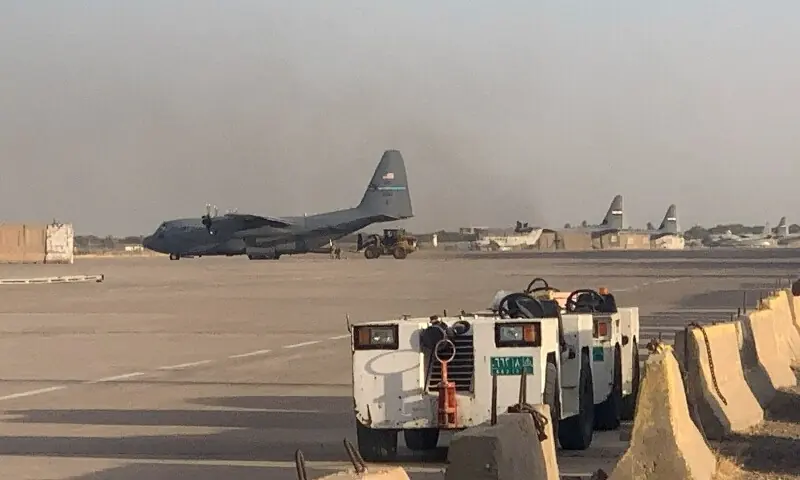
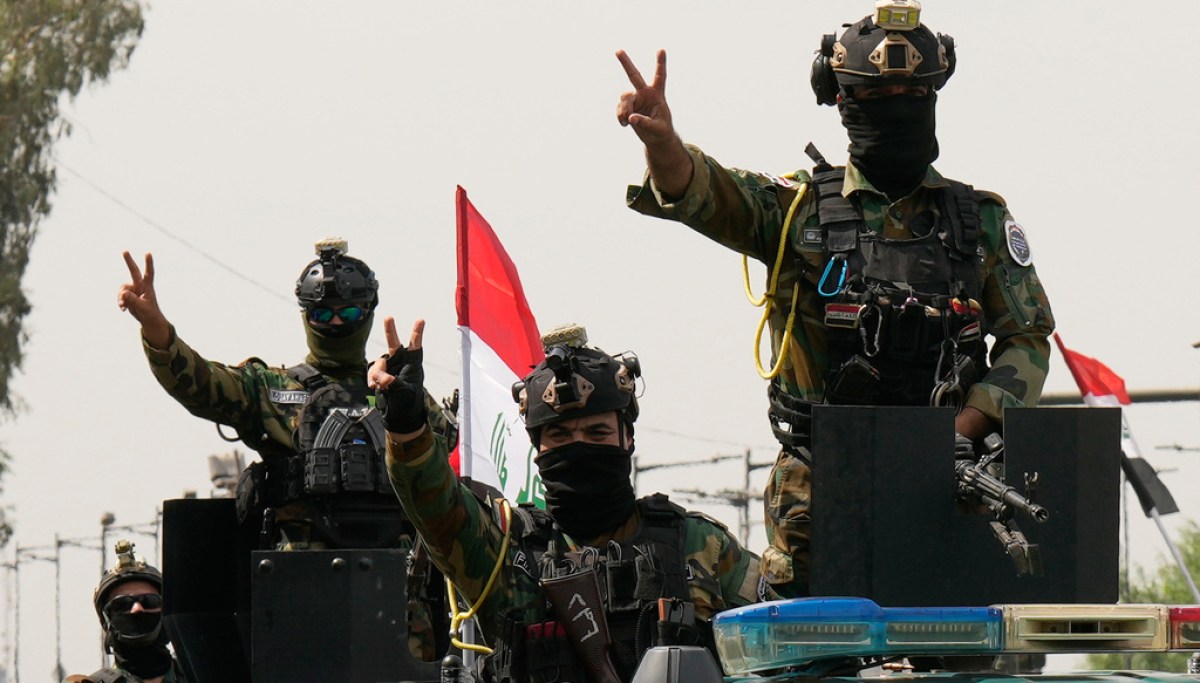
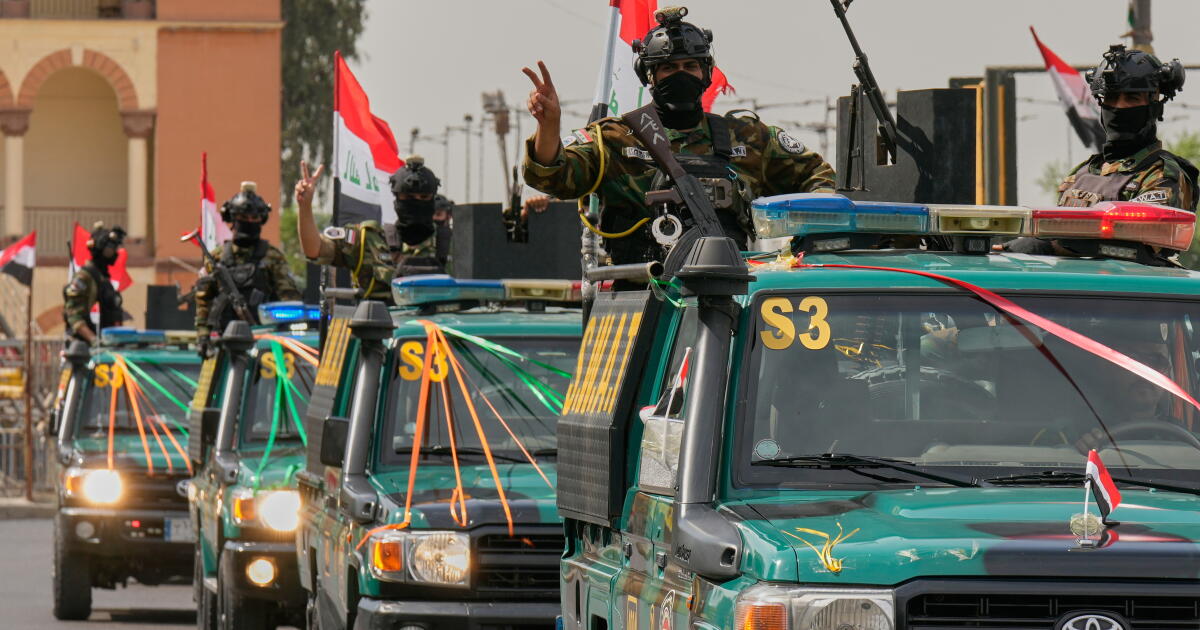
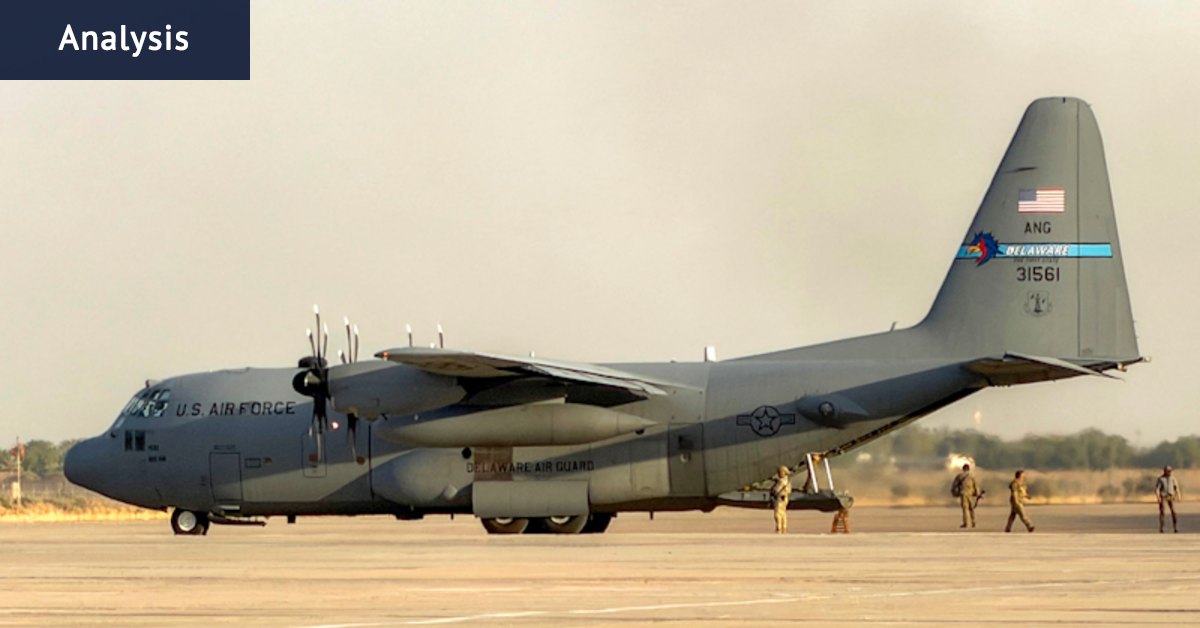
Iraq is set to hold four “Sovereignty Days”, a national holiday marking the complete withdrawal of US troops from the country and underscoring the deep symbolism of the exit after more than two decades of foreign intervention.
asserted
Iraq → set → intervention
Wednesday’s withdrawal deadline affirmed the exodus of a few hundred remaining US soldiers in the country, who have served in advisory roles in a coalition operation against ISIL (ISIS) first launched in 2015.
asserted
who → affirm → 2015
Recommended Stories
list of 3 items- list 1 of 3Rubio warns of Iraq ‘Balkanisation’: Is that a real threat?
asserted
that → warn → Balkanisation
While the exit plan predates Prime Minister Ali al-Zaidi, it fits into his wider vision of reasserting Iraqi state authority.
asserted
it → predate → authority
That encompasses accelerating efforts to disarm all militias in the country by June 2027, including several powerful pro-Iran groups who have launched attacks throughout the region amid the US-Israeli war with Iran.
asserted
who → encompass → Iran
Speaking at the United Nations General Assembly (UNGA) last week, al-Zaidi said his government was “striving to ensure that the state is the ultimate decision-maker in matters of peace and war, and that weapons and tools of power remain in the hands of its constitutional institutions”.
asserted
weapons → speak → institutions
He added, “With the end of the international coalition’s mission in Iraq, we are moving our relationship with our strategic partners to a new phase, moving from military cooperation to economic and development cooperation in service of our common interests.”
asserted
we → add → interests
Indeed, the US withdrawal appears to be part of a strategy by al-Zaidi to “politically weaken” influential militias, including those linked to Iran, according to Douglas Silliman, the former US ambassador to Iraq and Kuwait.
uncertain
withdrawal → appear → Iraq
Those militias have long pointed to the presence of the US military, and other foreign actors like Turkiye, as a pillar justification for maintaining their own weapons stores and chains of command.
asserted
militias → point → command
Some have already indicated they will refuse to hand over their arms.
asserted
they → indicate → arms
“The prime minister is clearly trying to build a political case to Iraqis that these forces that are more beholden to Iran, and have used weapons without government authorisation, no longer have a political reason to have those weapons,” said Silliman, who serves as president of the Arab Gulf States Institute.
asserted
who → try → Institute
It is a high-stakes gambit, leaving room for Iran to assert greater influence in the country and opening the door to a potentially catastrophic domestic standoff down the line.
asserted
Iran → leave → line
It also creates the potential for increased pressure from the US if Iraq-based groups continue to target Washington’s assets.
asserted
groups → create → assets
“It’s going to be a very difficult series of decisions,” Silliman said. “Both for the militias and for Prime Minister al-Zaidi and his defence team.”
asserted
Silliman → go → Zaidi
Iraq navigates new security reality
How the Iraqi government navigates the end of the US-led coalition’s deployment, dubbed “Operation Inherent Resolve”, will have wide-ranging implications for the future security of Iraq.
asserted
navigates → navigate → Iraq
The country has remained relatively stable in recent years following the 2017 territorial defeat of ISIL, despite being enveloped by conflict and insecurity on its borders.
asserted
country → remain → borders
That stability has generally persisted since the US began its troop withdrawal in 2020 under US President Donald Trump, with the remaining military personnel consolidating at an airbase in Erbil, in northern Iraq’s semi-autonomous Kurdish region, at the end of 2025.
asserted
personnel → persist → 2025
To be sure, al-Zaidi has already sought to build in some safeguards amid the wider effort to disarm and integrate militias into Iraqi government forces, pushing back on an initial September 30, 2026 deadline to June 2027 to bring all weapons under state control.
asserted
Zaidi → seek → control
Al-Zaidi told The New York Times earlier this month that both the US and Iran-aligned militias have given assurances that they will refrain from any attacks for 90 days following the US withdrawal, in an effort to prevent the situation from devolving in the short term.
asserted
they → tell → term
Still, Renad Mansour, director of the Iraq Initiative at Chatham House, said militias aligned with Iran’s “axis of resistance” in the region ultimately remain “in full-on war mode, working with the IRGC [Islamic Revolutionary Guard Corps] in the region.
asserted
militias → say → region
And so they will continue to target US and US interests.”
asserted
they → continue → interests
While al-Zaidi has promised continued integration and cooperation with the US and other Western allies, there is likely disquiet behind the rhetoric, Mansour assessed, with some seeing the US’s erstwhile presence in the country as having served as a bulwark against a wider policy pivot.
asserted
some → promise → pivot
“The anxiety from the Iraqi government now is that the US might not need Iraq any more, or might, in the worst case, view Iraq as a pariah state, too close to Iran, and therefore another target,” he said.
uncertain
he → need → Iran
The targeting could eventually come in the form of sanctions or in an escalation of US and Israeli strikes on Iraqi territory, Mansour said.
uncertain
Mansour → come → territory
Mohammad Salih, a non-resident senior fellow at the Foreign Policy Research Institute and an expert on Iraq, also agreed that enthusiasm for the US troop withdrawal was likely more subdued within some segments of the Iraqi government than public statements – and national holidays – suggest.
asserted
statements → agree → government
Salih assessed an underlying wariness to change the security status quo at a time of regional upheaval, pointing to the continued threat from ISIL sleeper cells, shifting cross-border dynamics in a post-Assad Syria, as well as the US-Israel war with Iran.
asserted
Salih → assess → Iran
“The official rhetoric tries to signal that Iraq is more or less fine, that it can take care of itself, and that it seeks stronger commercial and diplomatic ties with the US – that there is no need for the US military presence,” he said.
“But in reality, there is a great deal of concern that Iraq could be the next theatre of some major regional development,” he told Al Jazeera.
uncertain
he → try → Jazeera
The operational implications of the end to the US-led anti-ISIL mission remain difficult to assess.
asserted
implications → lead → mission
In the wake of the withdrawal, the two countries appear to be reverting to a 2008 Strategic Framework and Security Agreement, signed under the administration of US President George W Bush, Salih said.
asserted
Salih → appear → Bush
The deal pledges continued, if non-binding, US security support for Iraq.
asserted
deal → pledge → Iraq
Neither the Iraqi government nor the Pentagon have given a clear picture of what shape security cooperation could take going forward, particularly when it comes to the intelligence and logistical support that buoyed ISIL’s territorial defeat.
uncertain
that → give → defeat
However, a regional source with knowledge of the situation told Al Jazeera the relationship is “likely to become less centred on a visible military footprint and more focused on intelligence, training, technical support, capacity-building and institutional cooperation”.
asserted
relationship → tell → intelligence
The source called the change a “test of whether a relationship built for a period of military intervention can evolve into a more conventional partnership between sovereign states”.
asserted
relationship → call → states
Several experts noted that Iraqi security forces – including its military, police, counterterrorism forces, and militias who fought as part of the Popular Mobilisation Forces – have taken major strides in responding to ISIL.
asserted
who → note → ISIL
That may potentially minimise any operational fallout from the physical exit of US personnel.
uncertain
That → minimise → personnel
People I talk to in the military are quite confident that they can take on most threats against the sovereignty of Iraq,” former Ambassador Silliman said.
asserted
Silliman → talk → Iraq
But while the Iraqi parliament approved a partial cabinet in May, several key security roles, including minister of defence, remain unfilled.
uncertain
roles → approve → defence
The Iraqi government also continues to lack a substantial air defence capability of its own, which could prove a major weakness if the domestic security situation were to spiral, Silliman said.
“This is one area where there will be vulnerabilities because it is clear that the pro-Iran militias have been willing to use drones and rockets and missiles against Iraqi targets inside Iraq, and as of right now, the Iraqi military doesn’t really have a way to defend against that,” he said.
uncertain
he → continue → that
Kurdish officials have been among the most vocal critics of the US withdrawal, pointing to a barrage of attacks on Iraq’s semi-autonomous Kurdish region by Iran and Iran-aligned militias thwarted by US anti-missile and anti-drone weapons this year.
asserted
officials → point → weapons
While experts say the US may maintain limited air-defence capabilities in Iraq to protect its diplomatic assets, the military has reportedly removed its Erbil-based Patriot and C-RAM defensive systems from the country as part of the withdrawal.
uncertain
military → say → withdrawal
…and 17 more, not listed.
 The Aporia