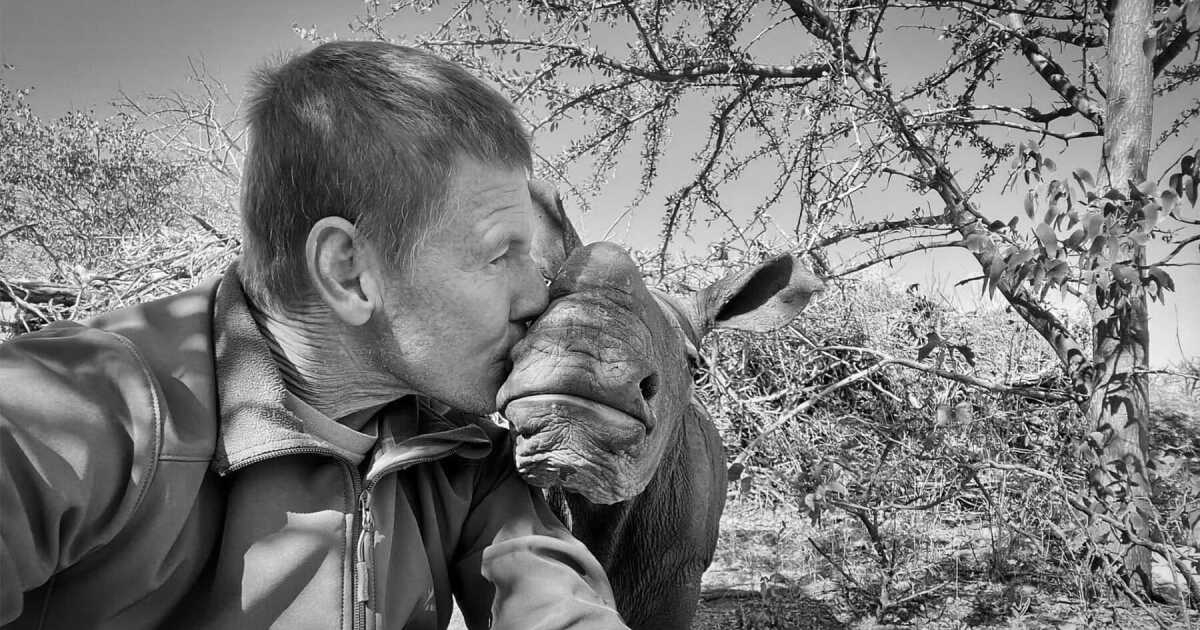
Photo via Los Angeles Times

Jaco Muller, who turned his 15-year-old son's idea into 197 rhino births, has died

Read the original at Los Angeles Times ↗
Cite

Butler, R. A. (2026, September 30). Jaco Muller, who turned his 15-year-old son's idea into 197 rhino births, has died. Los Angeles Times. https://www.latimes.com/science/story/2026-09-29/jaco-muller-who-turned-his-sons-idea-into-197-rhino-births-dies

Dated when The Aporia collected the article, usually within hours of publication. Check the original for its exact date and byline.

Los Angeles Times · collected 2026-09-30 · by Rhett Ayers Butler

Quick Summary

Jaco Muller, who turned his son's school project into a successful rhino-breeding program that resulted in 197 births over twelve years, died at age 53 when his gyrocopter crashed near Outjo, Namibia. Starting with the Rhino Momma Project in 2010, Muller aimed to save white rhinos by breeding them securely and exploring regulated horn trade as a way to fund conservation efforts. Despite controversy, he exported 42 rhinos to Texas for further breeding programs and used tourism income from Kifaru Lodge to support security and care.
Written by AI on 2026-09-30, from this article's own text only (the story summary below draws on all the coverage).

AI analysis

Story summary

Jaco Muller, who turned his son's school project into a successful rhino breeding program, has died. In 2010, Muller started the Rhino Momma Project in Namibia's Kunene region after his then-15-year-old son suggested it as part of a school assignment. The project aimed to breed more white rhinos (Ceratotherium simum) and secure them enough to reproduce, with the goal of replenishing populations across Africa. By 2025, the initiative had resulted in 197 rhino births. Muller used innovative methods like a gyrocopter to monitor his property for poachers. In response to increasing poaching threats, he dehorned some rhinos to protect them from being targeted by poachers who sought their horns for illegal trade.

Written for “Rhino Conservation Efforts Loss” on 2026-11-01, grounded in this article and the 0 other(s) covering the same event.

Story

📰 Rhino Conservation Efforts Loss
Environment · 1 article(s) covering the same event.

Compared with similar articles

Nothing to compare against. No article is close enough to this one for the pipeline to have linked or judged the pair.
How this article was measured signals, leaning charts, publisher record, byline, topics and claims

Signals How these are calculated →

Claims extracted
26
sentences that state something as happening or true
Uncertain
8%
2 of 26 hedged ("reportedly", "may", "according to")
Leaning
Leans right
of the writing, not the subject · beta estimate
Publisher signals
95/100
Los Angeles Times's corrections and hedging, across everything collected from it. Not a measure of accuracy.
Outlets on this story
1
Environment
Same framing elsewhere
1
articles that frame the event the way this one does
Analyzed 2026-09-30 · how these are computed

How this is being covered How these are calculated →

Article leaning vs. publisher reliability
Source leaning vs. consistency

Publisher

Los Angeles Times · 259 article(s) · 0 correction(s) detected
No corrections detected for this publisher. That may mean careful reporting, or simply that nothing has been checked.

Who wrote this

Rhett Ayers Butler
1 article(s) here · 1 carrying a prediction
🔮 Muller believed that breeding more white rhinos (Ceratotherium simum), keeping them secure enough to reproduce, and then replenishing populations across Africa could help save the species.
The only article under this byline in the corpus.

Topics

Help Our Rhinos Now Horn Kifaru Lodge Namibia the Rhino Momma Project

Subjects

Muller PERSON · 8× Namibia GPE · 4× Arabian NORP · 1× Help Our Rhinos Now ORG · 1× Horn PERSON · 1× Jaco Muller PERSON · 1× Kifaru Lodge ORG · 1× Outjo GPE · 1× Texas GPE · 1× the Rhino Momma Project ORG · 1×

Narrative

Muller often used a gyrocopter, which is something like a helicopter but has different physics, to survey the reserve from the air, looking for signs of intrusion and checking on rhinos across the property.
framing: assertive · carried by 1 article(s) · first seen 2026-09-30
🔮 Muller believed that breeding more white rhinos (Ceratotherium simum), keeping them secure enough to reproduce, and then replenishing populations across Africa could help save the species.
2026-09-30 · Los Angeles Times
Jaco Muller, who turned his 15-year-old son's idea into 197 rhino births, has died · assertive framing

Claims (26 extracted, 2 hedged)

In 2022, poachers in Namibia had taken 14 white rhinos from private farms in six weeks, so farm owners started removing their horns. asserted
owners → take → horns
That can take away the incentive to hunt the animals, because poachers want the horns. asserted
poachers → take → horns
One cow had a horn 34 inches long. asserted
cow → have → horn
Jaco Muller, an antelope breeder, said he was nearly in tears when it was removed. asserted
it → say → tears
“It is such a magnificent animal,” he said at the time. asserted
he → say → time
For Muller, the sight of a dehorned rhino was preferable to finding a dead one. asserted
sight → dehorn → one
The idea for breeding rhinos came from his son, then 15, as a school project. asserted
idea → breed → project
In 2010, Muller converted the family’s breeding operation into what became the Rhino Momma Project in Namibia’s Kunene region. asserted
what → convert → region
Muller believed that breeding more white rhinos (Ceratotherium simum), keeping them secure enough to reproduce, and then replenishing populations across Africa could help save the species. uncertain
breeding → believe → species
So he built a breeding program with a rhino-custodianship farm and the nonprofit Help Our Rhinos Now, or Horn. asserted
he → build → Rhinos
The first calf was born in 2013; by 2025, the project had become one of Namibia’s larger privately run rhino-breeding operations. asserted
project → bear → operations
Kifaru Lodge, which Muller opened in 2018, brought in money from tourists to help cover security and rhino care. asserted
Muller → open → tourists
Muller also supported legalizing the trade in rhino horn. asserted
Muller → support → horn
His argument was that prohibition let criminals collect the profits while farm owners and conservation groups paid for security. asserted
owners → let → security
He compared harvesting horn to shearing sheep: The animal would survive, the horn would grow back and a regulated market might finance protection. uncertain
market → compare → protection
“Right now, only poachers make money from horns,” he said in 2025. asserted
he → make → 2025
That was, and remains, a controversial argument. asserted
That → remain → ?
Opponents question whether a legal trade would enable laundering of poached rhino horns or increase demand. asserted
trade → question → demand
For Muller, the case came from the economics of a breeding program: horns were valuable, and protecting the animals was expensive. asserted
protecting → come → animals
He believed rhinos needed populations outside Namibia as well. asserted
rhinos → believe → Namibia
In a controversial move in 2024, 42 white rhinos from Kifaru Lodge were exported to Texas. asserted
rhinos → export → Texas
He cited the Arabian oryx, which survived through captive breeding and reintroduction, as an example. asserted
which → cite → example
Muller often used a gyrocopter, which is something like a helicopter but has different physics, to survey the reserve from the air, looking for signs of intrusion and checking on rhinos across the property. asserted
which → use → property
On Sept. 19, Muller, 53, was killed when the gyrocopter crashed while he was monitoring rhinos and wildfire flare-ups near Outjo. asserted
he → kill → Outjo
By then, the school-project idea had become a herd of rhinos: The project had recorded 197 births since its first calf arrived in 2013. asserted
calf → become → 2013
Butler is the founder of Mongabay, an independent news organization focused on nature. asserted
Butler → focus → nature

💬Give feedback
🕘History 🎫Support