Photo via The Sydney Morning Herald

One EV sold every 100 seconds: More electric cars to hit Australia’s roads

Read the original at The Sydney Morning Herald ↗
Cite

Toscano, N. (2026, September 30). One EV sold every 100 seconds: More electric cars to hit Australia’s roads. The Sydney Morning Herald. https://www.smh.com.au/business/consumer-affairs/one-ev-sold-every-100-seconds-more-electric-cars-to-hit-australia-s-roads-20260930-p611br.html?ref=rss&utm_medium=rss&utm_source=rss_feed

Dated when The Aporia collected the article, usually within hours of publication. Check the original for its exact date and byline.

The Sydney Morning Herald · collected 2026-09-30 · by Nick Toscano

Quick Summary

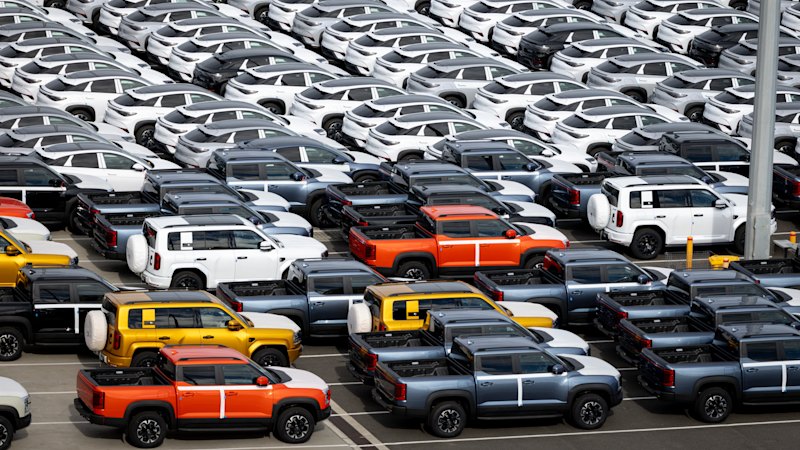
In Australia, an electric vehicle was sold every 100 seconds in the first half of this year, with sales reaching a record high of 157,958 units—more than double the number from the same period last year. This marks a significant shift towards EVs, which now make up over 25% of new car sales in Australia, driven by factors such as rising fuel prices and the influx of more affordable models from China.
Written by AI on 2026-09-30, from this article's own text only (the story summary below draws on all the coverage).

AI analysis

Story summary

In the first half of 2023, an electric vehicle was sold every 100 seconds in Australia, marking a significant surge in EV adoption. The Electric Vehicle Council reported that 157,958 EVs were sold from January to June, more than double the number (72,476) during the same period in 2022. Fully battery-electric vehicles accounted for 103,716 of those sales, while plug-in hybrids made up the remaining 54,241. This rapid increase expanded EVs' share of Australia's new car market to over 25%, compared to just 10% a year prior.

Factors contributing to this growth include improved vehicle availability, better affordability, and rising petrol prices, which highlight the cost-saving benefits of electric cars. Despite concerns about range limitations for long-distance travel in such an expansive country like Australia, many barriers are now being overcome as more affordable EV models enter the market. However, despite this progress, electric trucks remain a small portion (less than 1%) of total truck sales, indicating further opportunities for growth in the broader transportation sector.

Written for “Electric Car Sales Surge Australia” on 2026-10-31, grounded in this article and the 2 other(s) covering the same event.

Story

📰 Electric Car Sales Surge Australia
Technology · 3 article(s) covering the same event. Compare every outlet's account →

Compared with similar articles

This article reads unscored and hedges 17% of its claims. Each row says how that neighbour differs.
ABC News (AU)
Hedges 4 of 26 claims Outlet record 68/100
The Guardian
Hedges 2 of 20 claims Outlet record 66/100
NPR
Hedges 12 of 104 claims Outlet record 60/100
“The articles discuss different aspects of electric vehicle sales in Australia, with Article A focusing on recent high sales figures and Article B reflecting on the impact of the end of an EV tax credit one year prior.”
The Sydney Morning Herald
Hedges 0 of 20 claims Outlet record 61/100
“The articles describe different events: one about EV sales in Australia and another about Ampol acquiring an EV charging network.”
How this article was measured signals, leaning charts, publisher record, byline, topics and claims

Signals How these are calculated →

Claims extracted
24
sentences that state something as happening or true
Uncertain
17%
4 of 24 hedged ("reportedly", "may", "according to")
Leaning
not political
takes no side on a contested political question
Publisher signals
61/100
The Sydney Morning Herald's corrections and hedging, across everything collected from it. Not a measure of accuracy.
Outlets on this story
3
Technology
Same framing elsewhere
1
articles that frame the event the way this one does
Analyzed 2026-09-30 · how these are computed

How this is being covered How these are calculated →

Article leaning vs. publisher reliability
Source leaning vs. consistency

Publisher

The Sydney Morning Herald · 5654 article(s) · 15 correction(s) detected
Running correction rate · 15 correction(s)

Who wrote this

Nick Toscano
15 article(s) here · 1 carrying a prediction
🔮 Mining giant Fortescue Metals Group has warned a protracted stand-off with Beijing over the price of Australia’s biggest export commodity, iron ore, may force it to curtail production at its huge mines across the Pilbara if the deadlock does not break soon.
🔮 “Everyone, regardless of their role or seniority, is expected to meet the standards set by our values,” the spokesperson said.
🔮 Labor last week introduced its long-awaited domestic gas-reservation bill to parliament, which would compel the nation’s largest liquefied natural gas exporters to set aside up 20 per cent of their annual export volumes for local customers from 2028.
🔮 An international mining giant has taken its $38 billion pursuit of Australia’s largest gold producer directly to local investors, offering them the muscle to build a globally competitive gold behemoth and hoping their pressure will help force the board to the negotiating table.
🔮 Worries about the volatile situation in the Middle East are threatening to override hopes that a deal between US President Donald Trump and Russian President Vladimir Putin to partially ease the US ban on Russian diesel could help relieve tightening supplies and lower prices ahead of the US midterm elections.
🔮 The decision to allow a massive NSW coal mine to run until 2045 will be fought in court, legal experts predict, after the High Court struck down a separate approval for failing to grapple with the climate impact of Australian coal being burned in foreign power plants.
🔮 Approval for a major coal mine expansion has been declared invalid by the High Court in a decision that will force NSW planning authorities to reckon with emissions from Australian coal burnt overseas.
🔮 Under the trial, they will be allowed to recover 70 per cent of the costs through regulated charges paid by all electricity consumers on their power bills, with the federal government footing the remainder.
🔮 The war in the Middle East is delivering a huge windfall for Australian gas exporters, as new figures suggest soaring prices could add $23 billion to their combined revenue this year and reverse what was expected to be a period of decline.
🔮 Fuel giant Ampol has struck a deal to acquire one of Australia’s most extensive electric-vehicle charging networks, a move that will more than triple the number of charging bays it owns just as local sales of battery-powered cars surge to record highs.
Also by Nick Toscano
Nothing else under this byline is closely related to this article, so these are simply their most recent.
All 15 articles by Nick Toscano →

Topics

Australia Iran NRMA the Electric Vehicle Council’s the United States

Subjects

Australia GPE · 4× Australians NORP · 2× NRMA ORG · 2× the Electric Vehicle Council’s ORG · 2× Chinese NORP · 1× Electric Vehicle Council ORG · 1× Iran GPE · 1× Julie Delvecchio PERSON · 1× Peter Khoury PERSON · 1× the United States GPE · 1×

Narrative

The EV sales surge was down to a “powerful combination” of greater vehicle availability, improved affordability and the growing awareness that EVs provided “one of the best ways to cut the cost of living right now”, Electric Vehicle Council chief executive Julie Delvecchio said. “Against the backdrop of extreme fuel volatility this year, more and more Australians are voting with their wallets by switching to an EV,” she said.
framing: assertive · carried by 1 article(s) · first seen 2026-09-30
🔮 There were also concerns among some motorists about whether car batteries could deliver the range and performance needed to travel the nation’s vast distances.
2026-09-30 · The Sydney Morning Herald
One EV sold every 100 seconds: More electric cars to hit Australia’s roads · assertive framing

Claims (24 extracted, 4 hedged)

An electric vehicle was sold every 100 seconds somewhere in Australia during the first half of this year, as an influx of cheaper models and soaring petrol and diesel prices propelled EVs into the mainstream of the nation’s car market. asserted
influx → sell → market
A record 157,958 electric vehicles were sold in the six months to June, more than double the number of sales during the same period a year earlier, according to the Electric Vehicle Council’s latest annual figures, released on Wednesday. uncertain
vehicles → sell → Wednesday
Fully battery-electric vehicles accounted for 103,716 of those sales, while the remaining 54,241 were plug-in hybrids. All told, electric vehicles have now expanded their share of Australia’s new car market from 10 per cent last year to more than 25 per cent – or one in four new cars sold – as of last month. asserted
vehicles → account → month
The rapid shift marks a dramatic turnaround for a country long seen as a global laggard in electric vehicle adoption, which has been hampered by limited models and higher sticker prices relative to other markets. asserted
which → mark → markets
There were also concerns among some motorists about whether car batteries could deliver the range and performance needed to travel the nation’s vast distances. uncertain
batteries → be → distances
Today, many of those barriers are falling away, and the market has turned with extraordinary speed. asserted
market → fall → speed
EV sales have soared this year as more motorists have sought to insulate themselves from sharply rising petrol and diesel prices due to the war between the United States and Iran cutting off global oil supplies. asserted
war → soar → supplies
At the same time, an influx of lower-cost, predominantly Chinese, brands has introduced models priced close to – and in some cases below – comparable petrol and diesel-powered vehicles. asserted
influx → introduce → vehicles
The EV sales surge was down to a “powerful combination” of greater vehicle availability, improved affordability and the growing awareness that EVs provided “one of the best ways to cut the cost of living right now”, Electric Vehicle Council chief executive Julie Delvecchio said. “Against the backdrop of extreme fuel volatility this year, more and more Australians are voting with their wallets by switching to an EV,” she said. asserted
she → grow → EV
The shift is increasingly being reflected in consumer sentiment. asserted
shift → reflect → sentiment
A major new survey of more than 42,000 members of the NRMA, released last month, found drivers of petrol and diesel vehicles were now more anxious about high fuel costs than electric vehicle owners were about one of the biggest worries among prospective EV buyers: that they may not be able to find a place to charge. uncertain
they → release → place
NRMA spokesman Peter Khoury said the sales growth indicated that longstanding barriers to EV adoption were evaporating, and 2026 would be remembered as the tipping point. asserted
2026 → say → point
“This is not a flash in the pan,” he said. asserted
he → say → pan
However, despite the accelerating uptake of passenger EVs, the Electric Vehicle Council’s analysis finds that the transition is “happening at a crawl” when it comes to electric vans and light trucks, which still account for less than 1 per cent of their respective markets. asserted
which → accelerate → markets
“Freight electrification is the biggest unseized opportunity in Australia’s transition,” the report said. asserted
report → unseize → transition
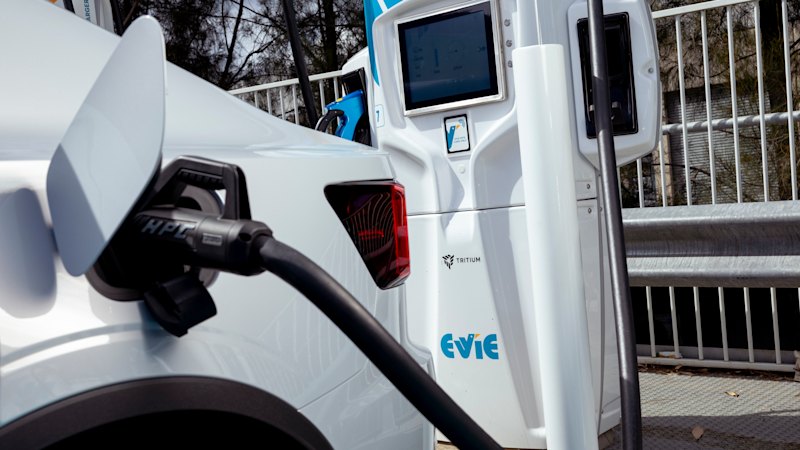
This year’s EV boom is also introducing greater urgency for governments, electric utilities and automakers to ensure the availability of public EV-charging infrastructure keeps pace with demand. asserted
availability → introduce → demand
The EV Council report finds that Australia’s public charging network has expanded to more than 4000 locations, up 235 per cent from its previous count in June 2025. asserted
network → find → June
However, the “greatest risk is that the pace and quality of charging development fail to keep up with EV uptake”, it said. asserted
it → fail → uptake
“This would not only mean too few chargers, but also queues at busy locations, persistent black spots, unreliable equipment, slow repairs and limited options for people who cannot charge at home. asserted
who → mean → home
Charging problems were “highly visible” it added, raising the risk that even a relatively small number of poor experiences could have an outsize effect on public confidence, particularly as more Australians become first-time EV owners. uncertain
Australians → add → confidence
To sustain momentum in Australia’s EV transition, the EV Council is calling on governments to expand financial incentives for electric trucks and vans, and establish equity-focused support to help lower-income households switch to electric transport. asserted
households → sustain → transport
It is also calling for a nationally coordinated road map to guide the charging network rollout, and a “fair” federal road-user charge that will help make up for lost fuel-excise revenue, with funds to be delivered into local charging infrastructure. asserted
that → call → infrastructure
Federal Energy Minister Chris Bowen said Australia’s August monthly auto sales figures showing full EVs (27,078) had outpaced petrol-only vehicles (25,824) for the first time ever was a “landmark moment”. asserted
EVs → say → time
“Australians have seen through the scare campaigns and are voting with their wallets for cars that are cheaper to run, cleaner and reduce their exposure to international petrol prices shocks,” he said. asserted
he → see → shocks

💬Give feedback
🕘History 🎫Support