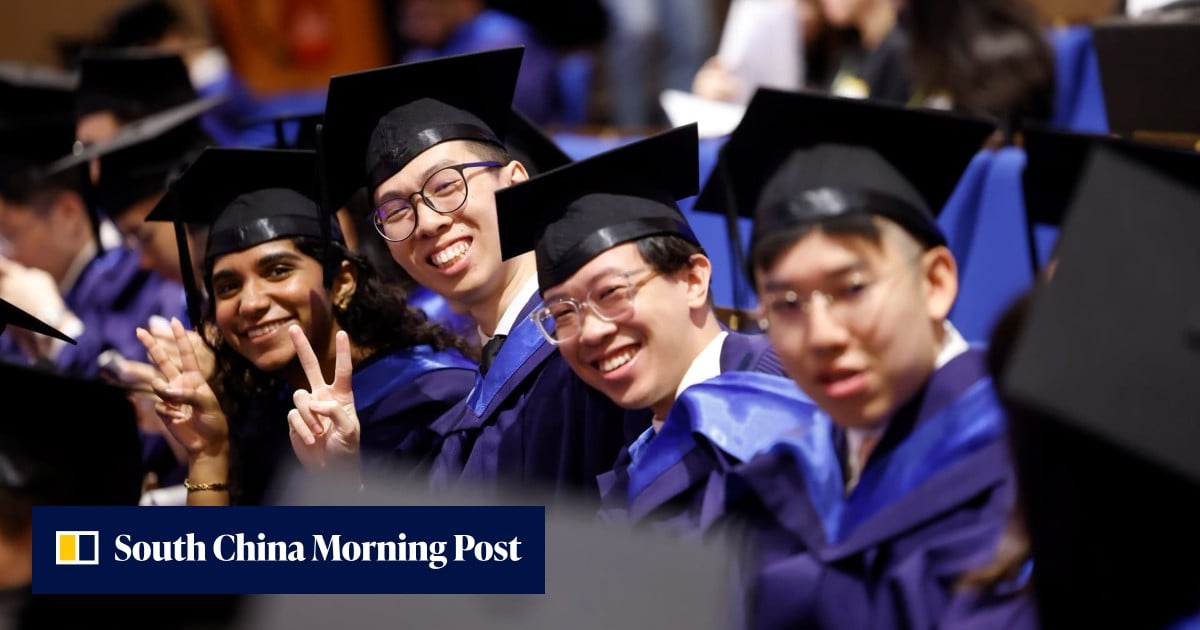
Photo via South China Morning Post

Can pay-as-you-earn funding fix Southeast Asia’s higher education debt problem?

Read the original at South China Morning Post ↗
Cite

Tan, V. (2026, September 30). Can pay-as-you-earn funding fix Southeast Asia’s higher education debt problem? South China Morning Post. https://www.scmp.com/week-asia/people/article/3369266/can-pay-you-earn-funding-fix-southeast-asias-higher-education-debt-problem?utm_source=rss_feed

Dated when The Aporia collected the article, usually within hours of publication. Check the original for its exact date and byline.

South China Morning Post · collected 2026-09-30 · by Vincent Tan

Quick Summary

A Singapore-based initiative called Global Financing for Education (GFE) has launched a Pay It Forward scheme that links tuition fees to graduates' future income, aiming to alleviate higher education debt in Southeast Asia. Under this program, which began public rollout in September, students receive funding with repayments set at 3 to 10 percent of their income over one to ten years, capped at twice the initial amount. The scheme aims to mitigate financial risk for students but faces criticism from economists who worry about potential biases in selecting beneficiaries and whether it might exclude those pursuing lower-earning professions.
Written by AI on 2026-09-30, from this article's own text only (the story summary below draws on all the coverage).

AI analysis

Story summary

In September, Global Financing for Education (GFE) launched a "Pay It Forward" scheme in Singapore that offers education funding linked to graduates' future income. Under this program, students receive financial support for their studies and agree to repay 3 to 10 percent of their post-graduation earnings over one to ten years. Repayments are capped at twice the initial loan amount.

The initiative aims to address a financing gap in higher education by leveraging private finance to assist Southeast Asian students who might otherwise struggle with student debt. However, economists have raised concerns about potential biases in selection criteria and whether this model could disproportionately disadvantage those pursuing lower-earning career paths.

Written for “Higher Education Debt Crisis” on 2026-11-02, grounded in this article and the 0 other(s) covering the same event.

Story

📰 Higher Education Debt Crisis
Education · 1 article(s) covering the same event.

Compared with similar articles

Nothing to compare against. No article is close enough to this one for the pipeline to have linked or judged the pair.
How this article was measured signals, leaning charts, publisher record, byline, topics and claims

Signals How these are calculated →

Claims extracted
5
sentences that state something as happening or true
Uncertain
20%
1 of 5 hedged ("reportedly", "may", "according to")
Leaning
Leans left
of the writing, not the subject · beta estimate
Publisher signals
63/100
South China Morning Post's corrections and hedging, across everything collected from it. Not a measure of accuracy.
Outlets on this story
1
Education
Same framing elsewhere
1
articles that frame the event the way this one does
Analyzed 2026-09-30 · how these are computed

How this is being covered How these are calculated →

Article leaning vs. publisher reliability
Source leaning vs. consistency

Publisher

South China Morning Post · 3600 article(s) · 7 correction(s) detected
Running correction rate · 7 correction(s)

Who wrote this

Vincent Tan
16 article(s) here · 1 carrying a prediction
🔮 Separated by thousands of miles, overseas Filipinos must balance remembering their dead with the pain of missing their families back home This year, she is arranging prayers from afar for her late father and four siblings, but will once again miss the gathering back home.
🔮 Analysts say repair and servicing work plus hybrids, which pair a petrol engine with an electric motor, could offer a lifeline, but without stronger government support and better access to Chinese manufacturers, the EV transition threatens to hollow out the region’s established supply base.
🔮 Analysts point to tariffs, agricultural access and political differences as potential hurdles but say individual industries could make gains But better access to Brazil and other Mercosur markets is far from assured, with trade experts pointing to difficult negotiations over tariffs and agricultural access, as well as political differences within the bloc.
🔮 “Who knows, it might be the start of a new habit,” he said.
🔮 Will different state laws hobble its goal?
🔮 When society minimises the bond owners share with an animal, owners can be left to suffer in silence, counsellors say “Maybe that is what I have been grieving all along …
🔮 But economists say its private-sector structure raises questions about selection criteria and whether students pursuing lower-earning careers could ultimately be excluded.
🔮 Why small quakes in Malaysia’s Sabah could be sounding seismic alarms
🔮 Malaysia’s stark choice as AirAsia losses mount Rival carriers lack commercial incentive to take over unprofitable routes, which could force the government into a subsidy dilemma, analysts say That reality could leave the government facing a stark choice: allow domestic flight services to shrink or step in with subsidies for essential routes, rather than assuming competitors will automatically fill any void left by the country’s largest budget airline.
Also by Vincent Tan
Nothing else under this byline is closely related to this article, so these are simply their most recent.
All 16 articles by Vincent Tan →

Topics

GFE Global Financing for Education’s Singapore

Subjects

GFE ORG · 1× Global Financing for Education’s ORG · 1× Singapore GPE · 1×

Narrative

A Singapore scheme linking tuition to graduate income is testing if private finance can fill the ‘missing middle’ in regional student loans Global Financing for Education’s (GFE) Pay It Forward scheme, publicly launched in September, provides students with funding for their education in return for 3 to 10 per cent of their subsequent income for one to 10 years.
framing: assertive · carried by 1 article(s) · first seen 2026-09-30
🔮 But economists say its private-sector structure raises questions about selection criteria and whether students pursuing lower-earning careers could ultimately be excluded.
2026-09-30 · South China Morning Post
Can pay-as-you-earn funding fix Southeast Asia’s higher education debt problem? · assertive framing

Claims (5 extracted, 1 hedged)

Can pay-as-you-earn funding fix Southeast Asia’s higher education debt problem? asserted
funding → pay → problem
A Singapore scheme linking tuition to graduate income is testing if private finance can fill the ‘missing middle’ in regional student loans Global Financing for Education’s (GFE) Pay It Forward scheme, publicly launched in September, provides students with funding for their education in return for 3 to 10 per cent of their subsequent income for one to 10 years. asserted
scheme → link → years
The income-linked repayments graduates make to GFE are typically capped at twice the original funding amount. asserted
graduates → link → amount
The arrangement shifts the risk of weak employment or low earnings from students to the financing pool. asserted
arrangement → shift → pool
But economists say its private-sector structure raises questions about selection criteria and whether students pursuing lower-earning careers could ultimately be excluded. uncertain
students → say → careers
💬Give feedback
🕘History 🎫Support