Democratic congressional members and candidates are already planning to use any midterm election gains to expand health coverage, including boosting Affordable Care Act subsidies, reversing Medicaid cuts, and lowering the Medicare eligibility age.
asserted
members → plan → age
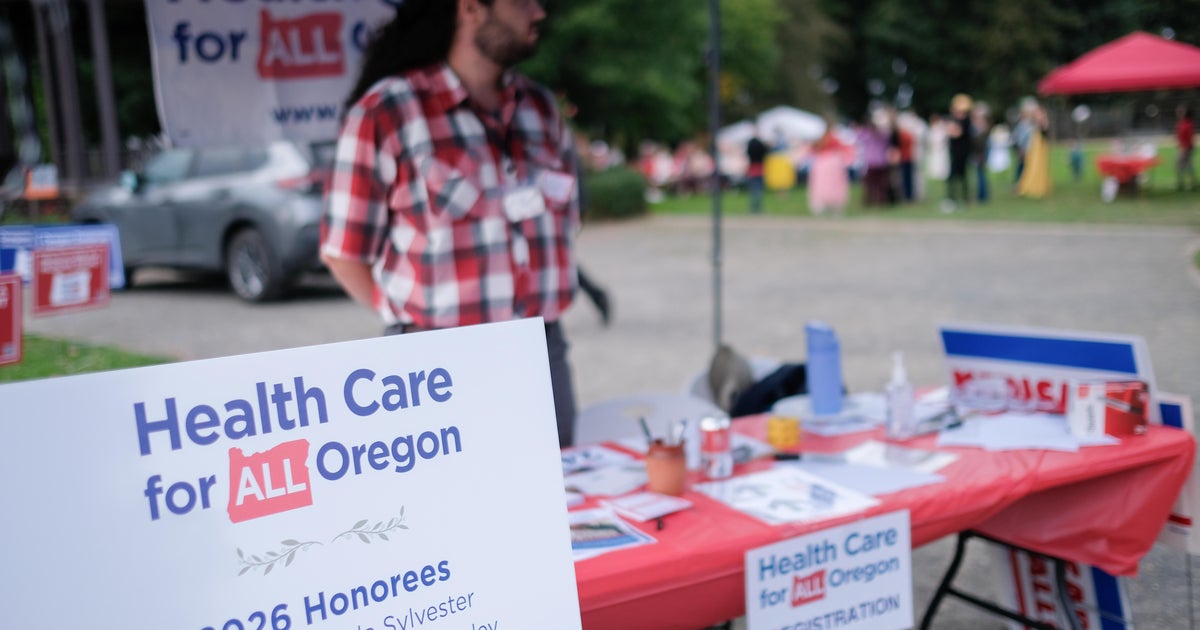
But Democratic strongholds across the country — including Oregon, California, New York, and Washington — have more ambitious goals: single-payer, universal healthcare systems.
asserted
strongholds → include → goals
A panel created by the state legislature in 2023 is slated to send lawmakers its proposal for a universal health plan on Dec. 1.
asserted
panel → create → Dec.
The nine-person Universal Health Plan Governance Board seeks to establish, starting in 2032, medical, vision, dental, and mental health benefits for every state resident from cradle to grave — with no premiums, deductibles, or copayments.
asserted
Board → seek → premiums
Lawmakers could vote on the plan during the 2027 legislative session or refer it to voters as a ballot measure in 2028.
uncertain
Lawmakers → vote → 2028
If approved, the state would be the first in the U.S. to implement what's called a single-payer health coverage system.
asserted
what → approve → U.S.
It could serve as a model for other states — and potentially the nation.
uncertain
It → serve → states
Proponents of the proposal argue that the public supports universal healthcare more than ever as healthcare spending and complexity grow.
asserted
spending → argue → healthcare
Surveys show patients often delay care due to out-of-pocket costs.
asserted
patients → show → costs
And medical debt remains a leading cause of bankruptcy in the nation.
asserted
debt → remain → nation
States have often served as laboratories to test health policies later implemented nationally.
asserted
States → serve → policies
The Affordable Care Act was modeled after Massachusetts' attempt to achieve universal health insurance coverage, once single-payer efforts there stalled.
asserted
efforts → model → coverage
And Canada's universal healthcare system began with a provincial plan in Saskatchewan.
asserted
system → begin → Saskatchewan
"In the short to medium term, there is no chance that 'Medicare for All' can be passed at the national level," said Jonathan Oberlander, a University of North Carolina health policy professor.
asserted
Oberlander → be → Carolina
"That's where the states come in.
asserted
states → come → ?
A state like Oregon provides a more hospitable political environment and a more realistic path to single-payer reform.
asserted
state → provide → reform
But advocates of the plan expect a significant fight from healthcare behemoths, including large hospital systems, seeking to sour public opinion on making such widespread changes.
asserted
advocates → expect → changes
The industry's deep pockets have helped derail myriad universal healthcare efforts at the federal and state levels.
asserted
pockets → help → levels
In 2011, the Vermont Legislature voted to implement a universal healthcare plan but, three years later, Democratic Gov. Peter Shumlin, who had campaigned on the promise of single-payer, pulled the plug, citing "potential economic disruption."
asserted
who → vote → disruption
States that took the issue directly to voters have fared no better.
asserted
that → take → voters
Ballot measures in Colorado in 2016, Oregon in 2002, and California in 1994 all failed by large margins.
asserted
measures → fail → margins
"The aspirations of progressive reformers usually run smack into sobering political realities," Oberlander said.
asserted
Oberlander → run → realities
"Translating a slogan into a legislative and political reality is a daunting task."
asserted
Translating → translate → reality
Oregon's proposal seeks to maintain the current level of spending on healthcare by government, business, and consumers with new corporate and personal taxes to replace insurance premiums and other out-of-pocket costs.
asserted
proposal → seek → pocket
Those would be combined with federal and state spending to create a single fund from which all hospitals, doctors, and other practitioners would be paid.
asserted
hospitals → combine → which
Board members said savings from cutting red tape, reducing fraud, and negotiating drug costs should allow the state to provide better benefits to more people.
asserted
state → say → people
In examples prepared for consumer focus groups, the board estimated that a 30-year-old making $55,000 and purchasing a benchmark silver-level plan through the Affordable Care Act now pays $5,478 a year for insurance premiums in Oregon, but instead could pay $2,331 in taxes under the proposed plan.
uncertain
old → prepare → plan
Someone making $55,000 a year with coverage through their employer now pays $3,063 in premiums and out-of-pocket costs.
asserted
Someone → make → pocket
Under the draft plan, that person could pay nothing for health services and could see any doctor in the state.
uncertain
person → pay → state
Currently, many employers pay much of the health insurance costs for their workers.
asserted
employers → pay → workers
The plan seeks to maintain those contributions by establishing a corporate payroll tax for companies whose payrolls exceed $500,000.
asserted
payrolls → seek → 500,000
Their employees could receive a partial tax credit for the taxes their employers pay.
uncertain
employers → receive → taxes
As a result, 31% to 60% of Oregonians wouldn't pay anything for health benefits.
asserted
60 → pay → benefits
More affluent people, however, could end up paying more than they do now.
uncertain
they → end → more
The exact numbers would depend on how lawmakers set tax rates and payment thresholds.
asserted
lawmakers → depend → rates
"What we are proposing is something very different," said Miriam McDonell, executive director of the Oregon board.
asserted
McDonell → propose → board
"Everyone contributes based on the amount that they are able to contribute and not based on utilization.
asserted
they → contribute → utilization
Messaging challenge lies ahead
The plan's backers will try to convince hospitals and health systems that they would benefit from reducing red tape and eliminating unpaid bills.
asserted
they → lie → bills
Currently, hospitals hire scores of workers to bill dozens of public and private health plans, each with its own coverage and billing rules.
asserted
hospitals → hire → coverage
A single plan covering everyone in the state could streamline the process, saving billions.
uncertain
plan → cover → billions
…and 29 more, not listed.
 The Aporia