Photo via The Sydney Morning Herald

TV’s most fascinating experiment ends with an emotional gut-punch

Read the original at The Sydney Morning Herald ↗
Cite

Kalina, P. (2026, September 30). TV’s most fascinating experiment ends with an emotional gut-punch. The Sydney Morning Herald. https://www.smh.com.au/culture/tv-and-radio/70-up-review-documentary-series-ending-controversy-20261001-p6109x.html?ref=rss&utm_medium=rss&utm_source=rss_feed

Dated when The Aporia collected the article, usually within hours of publication. Check the original for its exact date and byline.

The Sydney Morning Herald · collected 2026-09-30 · by Paul Kalina

Quick Summary

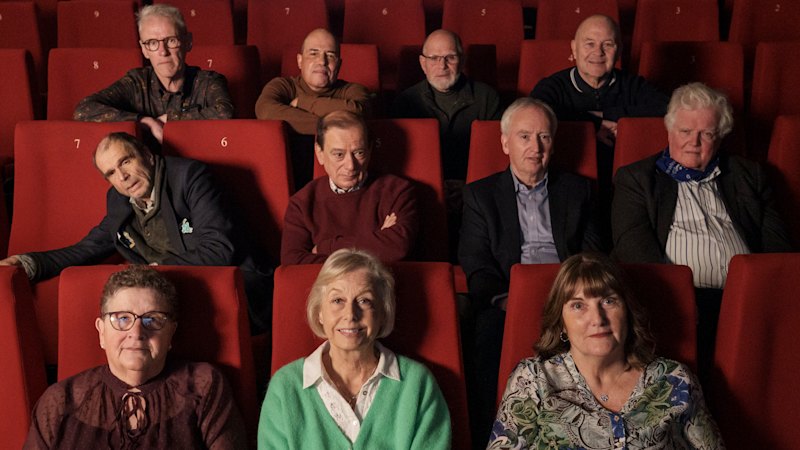
The documentary "70 Up" concludes a long-running British television series that began in 1964 with interviews of seven-year-old children from diverse backgrounds, returning to check on their lives every seven years. Directed by Asif Kapadia following the death of original director Michael Apted in 2021, this final installment features reflections from the now 70-year-old participants, exploring themes of personal fulfillment and societal impact while addressing past criticisms about class bias and intrusive questioning.
Written by AI on 2026-09-30, from this article's own text only (the story summary below draws on all the coverage).

AI analysis

Story summary

70 Up, one of TV's longest-running documentaries, concluded its latest installment in 2023 after beginning with a group of 14 children from diverse backgrounds in England back in 1964. The project, initiated by director Michael Apted, aimed to explore how early life experiences shape adult outcomes, reflecting the Jesuit saying "Give me a child until he is seven and I will give you the man." Over five decades, viewers witnessed these children grow into adults facing various challenges: Tony, a Cockney boy who dreamed of becoming a jockey; Jackie, determined to marry wealthy; and Symon, the sole non-white participant raised in an orphanage, unsure about higher education. The series has provided profound insights into how socioeconomic factors influence life trajectories and personal achievements.

Written for “TV Experiment Ends Emotional” on 2026-11-04, grounded in this article and the 0 other(s) covering the same event.

Story

📰 TV Experiment Ends Emotional
Entertainment · 1 article(s) covering the same event.

Compared with similar articles

Nothing to compare against. No article is close enough to this one for the pipeline to have linked or judged the pair.
How this article was measured signals, leaning charts, publisher record, byline, topics and claims

Signals How these are calculated →

Claims extracted
30
sentences that state something as happening or true
Uncertain
3%
1 of 30 hedged ("reportedly", "may", "according to")
Leaning
not political
takes no side on a contested political question
Publisher signals
61/100
The Sydney Morning Herald's corrections and hedging, across everything collected from it. Not a measure of accuracy.
Outlets on this story
1
Entertainment
Same framing elsewhere
1
articles that frame the event the way this one does
Analyzed 2026-09-30 · how these are computed

How this is being covered How these are calculated →

Article leaning vs. publisher reliability
Source leaning vs. consistency

Publisher

The Sydney Morning Herald · 6022 article(s) · 15 correction(s) detected
Running correction rate · 15 correction(s)

Who wrote this

Paul Kalina
3 article(s) here · 1 carrying a prediction
🔮 It was there we met Cockney lad Tony, who at age seven planned to be a jockey; headstrong Jackie, who said she would marry a boy with money; and Symon, the only non-white participant, who was raised in a boy’s home and in reply to a question about his future education replied, “What’s a university?”
🔮 What if you could up sticks, leave the nine-to-five grind behind and start a new life on the other side of the world?
🔮 It’s the appetiser of a degustation menu that will run over many servings and involve many ingredients and helping hands.
Also by Paul Kalina
Nothing else under this byline is closely related to this article, so these are simply their most recent.

Topics

Apted Cockney English Jesuit non-white participant

Subjects

Apted PERSON · 3× Symon PERSON · 2× Cockney NORP · 1× English NORP · 1× Jackie PERSON · 1× Jesuit NORP · 1× Lynn PERSON · 1× Michael Apted PERSON · 1× Tony PERSON · 1× non-white participant NORP · 1×

Narrative

It was there we met Cockney lad Tony, who at age seven planned to be a jockey; headstrong Jackie, who said she would marry a boy with money; and Symon, the only non-white participant, who was raised in a boy’s home and in reply to a question about his future education replied, “What’s a university?”
framing: assertive · carried by 1 article(s) · first seen 2026-09-30
🔮 It was there we met Cockney lad Tony, who at age seven planned to be a jockey; headstrong Jackie, who said she would marry a boy with money; and Symon, the only non-white participant, who was raised in a boy’s home and in reply to a question about his future education replied, “What’s a university?”
2026-09-30 · The Sydney Morning Herald
TV’s most fascinating experiment ends with an emotional gut-punch · assertive framing

Claims (30 extracted, 1 hedged)

70 Up brings to a close one of the most fascinating – and arguably the longest-running – shows in the annals of TV history. asserted
Up → bring → history
It started in 1964 with a group of 14 children from a cross-section of English society in the documentary Seven Up! asserted
It → start → documentary
It was there we met Cockney lad Tony, who at age seven planned to be a jockey; headstrong Jackie, who said she would marry a boy with money; and Symon, the only non-white participant, who was raised in a boy’s home and in reply to a question about his future education replied, “What’s a university?” asserted
What → meet → education
Every seven years since, director and behind-the-camera interviewer Michael Apted returned to see how these playful children became feisty teenagers, then parents and eventually grandparents; how marriages were made and unmade; how hopes soared and were sometimes extinguished. asserted
hopes → return → camera
The original concept was to test the Jesuit adage, “Give me a child until he is seven and I will give you the man” – a window into how class and socioeconomic circumstances determine the chances and opportunities that shape their (and our own) lives. asserted
that → test → lives
what it’s mostly remembered for today is the front-row seat it offered to the daily dramas of life and how each of the participants was forged into the person that they became. asserted
they → remember → person
Now, here they are as 70-year-olds looking back, but also forwards, in what is touted to be the last instalment of the show. asserted
what → look → show
In the two-part 70 Up, we see where the 13 surviving people have ended up (Lynn, the librarian, died in 2013). asserted
Lynn → see → 2013
For the most part, they’re fulfilled, contented and self-aware – which may be surprising given the challenges some have faced. uncertain
some → ’re → challenges
They are also deeply contemplative and ruminative, not only about how their lives have unfolded but how they’ve been depicted in the films. asserted
they → unfold → films
Directed by Asif Kapadia (Amy, Senna, Diego Maradona), 70 Up is very much about legacy (Apted died in 2021). asserted
Apted → direct → 2021
Several talk about how the show has turned them into celebrities, and we are poignantly reminded that as seven-year-olds they never really consented to be part of a program that has come to define them. asserted
that → talk → them
They all return, however, for this last hurrah – even some who opted not to participate in earlier instalments. asserted
who → return → instalments
Indeed, 70 Up raises many valid questions about Apted’s agendas and preconceived ideas, such as the sexist questions he put to the female participants, as well as setting up the posh schoolboys to look like undeserving twits. asserted
he → raise → twits
“Sneering and supercilious” is how one of the participants remembers him. asserted
one → remember → him
Hearing some of Apted’s loaded and insulting questions from earlier chapters is cringe-making. asserted
Hearing → hear → chapters
That’s one part of the legacy that 70 Up wants to correct. asserted
Up → ’ → that
The other is that the series’ focus on outdated notions of class and society meant it wasn’t always asking the right questions. asserted
it → mean → questions
It’s here that 70 Up, its second episode in particular, delivers an emotional punch to the gut. asserted
Up → ’ → gut
There’s Neil, the sunny daydreamer in Seven Up! who now talks with admirable candour about his lifelong mental health battles. asserted
who → ’ → battles
And Symon, who still rues having never met his father, and has gone on to foster more than 100 children. asserted
who → rue → children
What we take away isn’t the fairness of the cards they were dealt but how they faced the unpredictable twists and turns that life put in their paths. asserted
life → take → paths
It’s impossible not to be moved by this remarkable endeavour. asserted
It → ’ → endeavour
70 Up premieres 8.30pm Wednesday, October 7 on SBS and SBS On Demand. asserted
Up → premier → Demand
We’ve got you. asserted
We → get → you
Get The Watchlist delivered every Thursday. asserted
Watchlist → get → ?
- What’s Julia Morris doing after I’m a Celebrity? asserted
I → do → ’m
Whatever she wants. asserted
she → want → Whatever
- Last Meals: Why TV is full of celebrities eating chicken and doing Tim Tam slams. asserted
celebrities → eat → slams
Meet the man who inspired the show. asserted
who → meet → show

💬Give feedback
🕘History 🎫Support