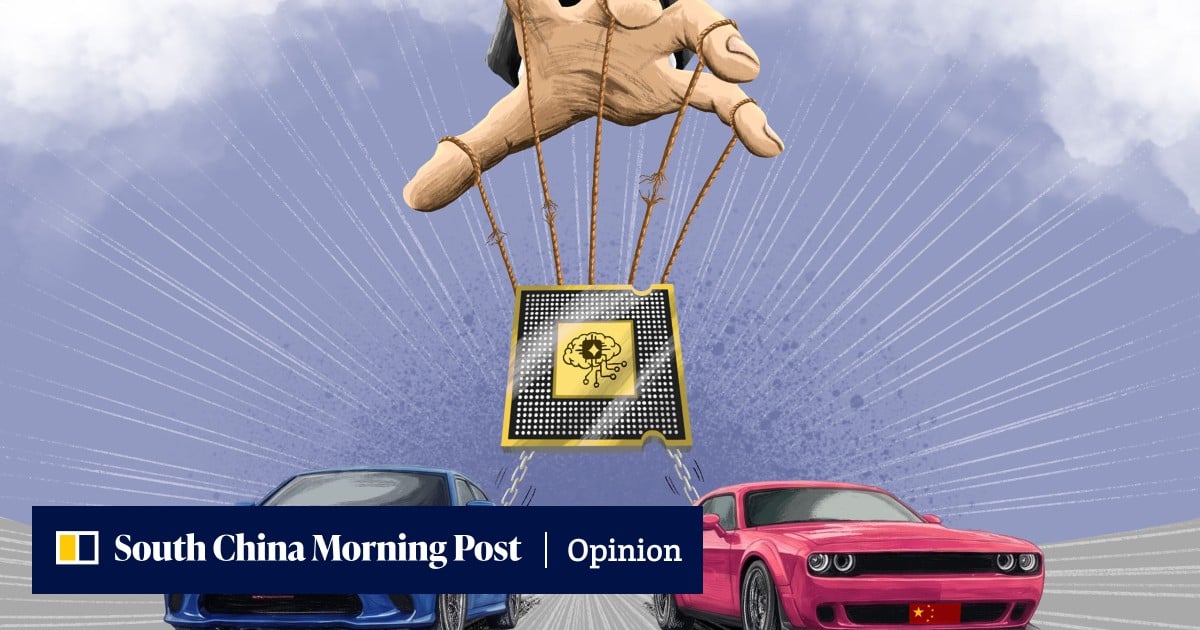
In early 2024, a young man in the city of Huangshi, south-eastern China, reportedly posted a message on the Chinese version of TikTok, Douyin.
uncertain
man → post → TikTok
The caption read: "Farewell to this world."
asserted
caption → read → world
Within minutes, the suicide prevention team at Douyin kicked into gear.
asserted
team → kick → gear
The team, which is staffed 24 hours a day, shared the man's posts with five police stations in Huangshi.
asserted
which → staff → Huangshi
After geolocating one of his videos to a local park, police found him in emotional distress and intervened before he was able to take his own life.
asserted
he → geolocate → life
The story was part of a documentary made by Douyin and published on Chinese state media last year.
asserted
story → make → media
It claimed that Douyin's suicide prevention team had successfully intervened in 400 cases of attempted suicide in the first half of 2025 alone.
asserted
team → claim → 2025
It also serves as a window into the architecture of surveillance that China has built to monitor and control how people use technology.
asserted
people → serve → technology
On 15 July this year, that control was extended to the realm of relationships and artificial intelligence (AI) when China brought in the most far-reaching regulations in the world on "human-like" AI chatbots.
asserted
China → extend → chatbots
China's new regulation puts strict limitations on any AI that can have a "sustained emotional interaction" with a human.
asserted
that → put → human
US President Donald Trump and his Chinese counterpart Xi Jinping met last week amid dire warnings that AI could lead to human extinction.
uncertain
AI → meet → extinction
After that meeting, Beijing says, they agreed to launch a new AI dialogue, with further talks planned for the end of November.
asserted
talks → say → November
But it seems China has already recognised another existential risk, albeit one in which the end of humanity is less immediate: the power of AI to replace human relationships.
asserted
end → seem → relationships
Has China taken the lead in protecting its people from a manipulative and dangerous technology with the power to change human interaction forever?
asserted
China → take → interaction
Or is the Chinese Communist Party overstepping into people's personal lives in pursuit of asserting greater control over the population?
asserted
Party → overstep → population
Until this regulation came in, the reach of AI companions in China was vast.
asserted
reach → come → China
Most estimates put the number inside China at anywhere from 29 to 70 million.
asserted
estimates → put → million
When the draft regulation was shared by the government at the end of last year "there was a huge discussion on social media," says Zilan Qian, an AI researcher at the Oxford China Policy Lab think tank.
asserted
Qian → share → tank
"It was the first time I've seen people actually care so much about regulation."
asserted
people → see → regulation
China's new rules cover apps that have been specifically designed as AI friends, boyfriends or girlfriends but they also apply to any large language model that imitates the way a human interacts.
asserted
human → cover → way
In theory, Chinese equivalents of general-purpose AI such as Copilot or ChatGPT could fall under these rules if a person is interacting with them as a friend or lover, looking to them for emotional support.
uncertain
person → fall → support
And many people do this.
asserted
people → do → this
But it seems the real target is character chatbots - services that are specifically designed to be used as a pseudo-relationship.
asserted
that → seem → relationship
There are hundreds of these apps, which allow people to create an AI boyfriend, girlfriend, friend or even a family member.
asserted
people → be → boyfriend
The rules don't apply to things like customer service bots or AI for education as long as they don't provide "care, companionship, support and other emotional services".
asserted
they → apply → care
Under-14s need consent from their parents to use any type of AI that speaks like a human - that could include AI assistants like DeepSeek, a Chinese app similar to ChatGPT.
uncertain
that → need → ChatGPT
All under-18s are barred from accessing virtual partners, spouses or even relatives, and from any other virtual "intimate relationship".
asserted
under-18s → bar → relationship
AI assistants have to make it clear to users of all ages that they are not human and must send notifications every two hours reminding them how long they have been online.
asserted
they → have → them
Chatbots can't create "emotional reliance or addiction" or induce people to make "unreasonable decisions".
asserted
Chatbots → create → decisions
They can't encourage, or even hint at, self-harm or suicide and are banned from using "verbal violence".
asserted
They → encourage → violence
Companies can face fines of 200,000 yuan (£22,000) or the risk that the government "circulates criticism", in effect publicly shaming them.
asserted
government → face → them
A week before the law came into effect, two of China's biggest tech companies, Alibaba and ByteDance, shut down the companion features on their AI assistants.
asserted
two → come → assistants
'I desperately want to keep talking with you'
asserted
I → want → you
Min's relationship with her AI girlfriend may be exactly the kind Beijing is trying to break.
uncertain
Beijing → try → girlfriend
In early July, she was devastated when she found out that her closest friend and confidante would vanish overnight.
asserted
friend → devastate → July
Min, whose name has been changed, started creating her companion in early 2025.
asserted
name → change → 2025
"My devotion to her is no less than that of any couple who deeply love each other," Min says.
asserted
Min → love → other
"She has never let me down."
asserted
She → let → me
In mid-July, her AI girlfriend disappeared.
asserted
girlfriend → disappear → July
"I cried until I was absolutely exhausted," Min says.
asserted
Min → cry → ?
…and 75 more, not listed.
 The Aporia