Photo via South China Morning Post

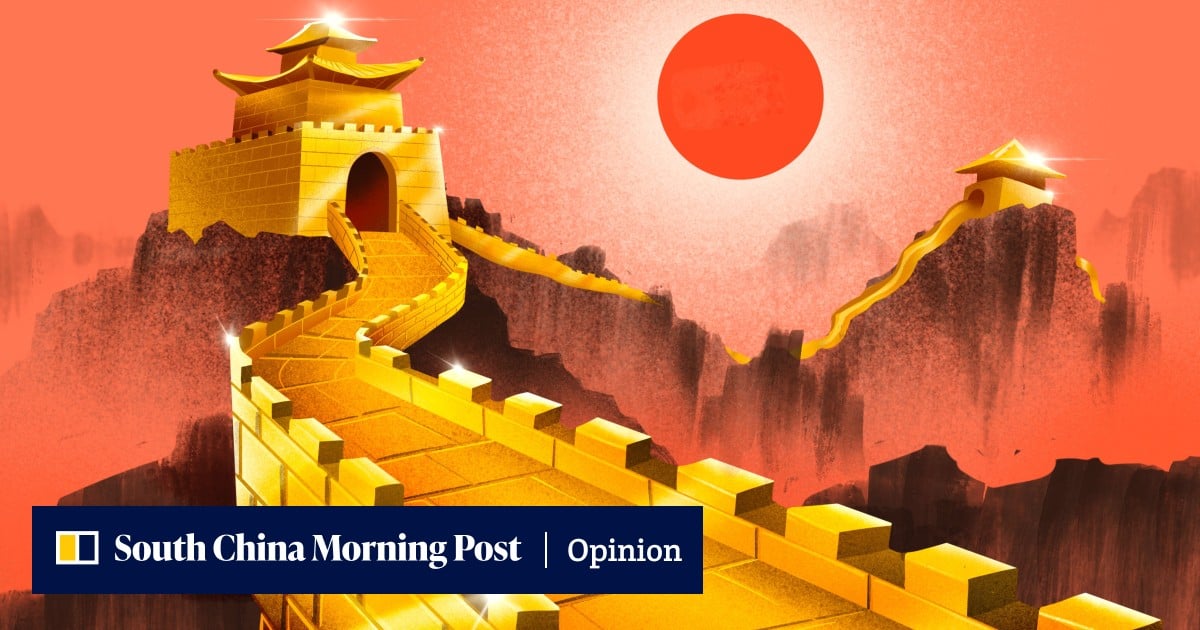
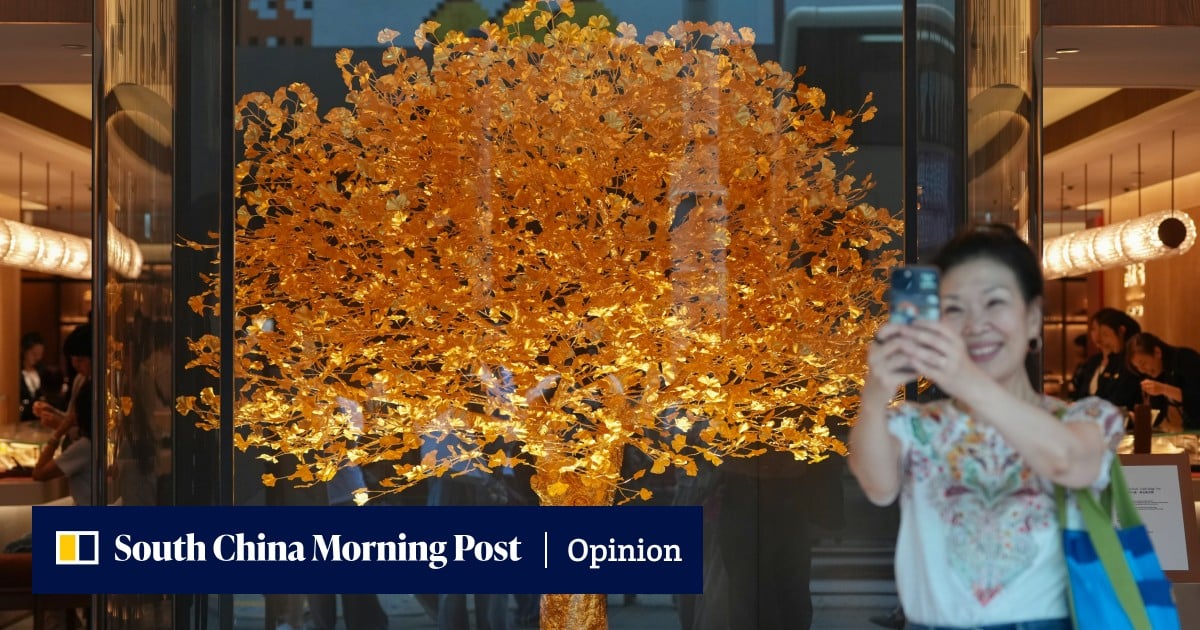
How China became the world’s gold superpower

Read the original at South China Morning Post ↗
Cite

Chung-yan, C. (2026, October 1). How China became the world’s gold superpower. South China Morning Post. https://www.scmp.com/opinion/china-opinion/article/3369170/how-china-became-worlds-gold-superpower?utm_source=rss_feed

Dated when The Aporia collected the article, usually within hours of publication. Check the original for its exact date and byline.

South China Morning Post · collected 2026-10-01 · by Chow Chung-yan

Quick Summary

The article discusses how China became dominant in the global gold market despite having limited natural reserves. In 1975, when China initiated economic reforms, it struggled to produce only 13.8 metric tons of gold annually, far behind leading producers like South Africa. The piece highlights China's strategic planning and innovations that enabled its rise as a major player in the gold sector.
Written by AI on 2026-10-01, from this article's own text only (the story summary below draws on all the coverage).

AI analysis

Story summary

In 1975, China began its economic modernization with a dire need for gold to fund reforms and build up foreign reserves. Despite having scarce domestic gold deposits, China produced only 13.8 metric tons annually that year, far less than countries like South Africa, which was then the world's top gold producer, or other major producers such as Canada, the United States, and Australia. The South China Morning Post argues that China's success in becoming a global gold superpower is due to its innovation and meticulous planning rather than abundant natural resources.

Written for “Chinese Gold Supremacy” on 2026-11-04, grounded in this article and the 0 other(s) covering the same event.

Story

📰 Chinese Gold Supremacy
Economy/Business · 1 article(s) covering the same event.

Compared with similar articles

Nothing to compare against. No article is close enough to this one for the pipeline to have linked or judged the pair.
How this article was measured signals, leaning charts, publisher record, byline, topics and claims

Signals How these are calculated →

Claims extracted
7
sentences that state something as happening or true
Uncertain
0%
0 of 7 hedged ("reportedly", "may", "according to")
Leaning
not political
takes no side on a contested political question
Publisher signals
62/100
South China Morning Post's corrections and hedging, across everything collected from it. Not a measure of accuracy.
Outlets on this story
1
Economy/Business
Same framing elsewhere
1
articles that frame the event the way this one does
Analyzed 2026-10-01 · how these are computed

How this is being covered How these are calculated →

Article leaning vs. publisher reliability
Source leaning vs. consistency

Publisher

South China Morning Post · 3720 article(s) · 8 correction(s) detected
Running correction rate · 8 correction(s)

Who wrote this

Chow Chung-yan
8 article(s) here · 0 carrying a prediction
🔮 Shenzhen’s jewellery hub Serving central banks and institutions is important but adding a vibrant gold wholesale and manufacturing centre would be an ace move
🔮 The cheerful tone followed President Xi Jinping’s short but successful state visit to the US, during which his counterpart, President Donald Trump, gave him an unprecedented high-level reception that would have flattered even the most fastidious of guests.
🔮 Little did we know that things would soon be turned upside down.
🔮 In any conversation about Hong Kong’s future, one question often emerges: when will the city pivot away from national security and back to economic development?
Also by Chow Chung-yan
The evolution of China’s active defence doctrine
2026-10-20 · South China Morning Post
The evolution of China’s active defence doctrine
2026-10-20 · South China Morning Post
Nothing else under this byline is closely related to this article, so these are simply their most recent.
All 8 articles by Chow Chung-yan →

Topics

Beijing Canada China South Africa the United States

Subjects

China GPE · 5× Australia GPE · 1× Beijing GPE · 1× Canada GPE · 1× South Africa GPE · 1× the United States GPE · 1×

Narrative

Beijing built its dominance through innovation and meticulous planning, not superior natural reserves Perhaps no story illustrates the secret of China’s industrial success better than its rise as the world’s gold superpower.
framing: assertive · carried by 1 article(s) · first seen 2026-10-01
2026-10-01 · South China Morning Post
How China became the world’s gold superpower · assertive framing

Claims (7 extracted, 0 hedged)

How China became the world’s gold superpower asserted
China → become → ?
Beijing built its dominance through innovation and meticulous planning, not superior natural reserves Perhaps no story illustrates the secret of China’s industrial success better than its rise as the world’s gold superpower. asserted
story → build → superpower
China has revered the metal for millennia, yet it has never had a gold-based economy. asserted
it → revere → economy
In 1975, as China began its economic modernisation, it desperately needed gold to fund reform and build up foreign reserves. asserted
it → begin → reserves
Despite its best efforts, it produced a meagre 13.8 metric tons a year. asserted
it → produce → tons
South Africa, then the undisputed king of gold, produced many times that. asserted
Africa → produce → that
Canada, the United States and Australia each comfortably outproduced China as well. asserted
Canada → outproduce → China
💬Give feedback
🕘History 🎫Support