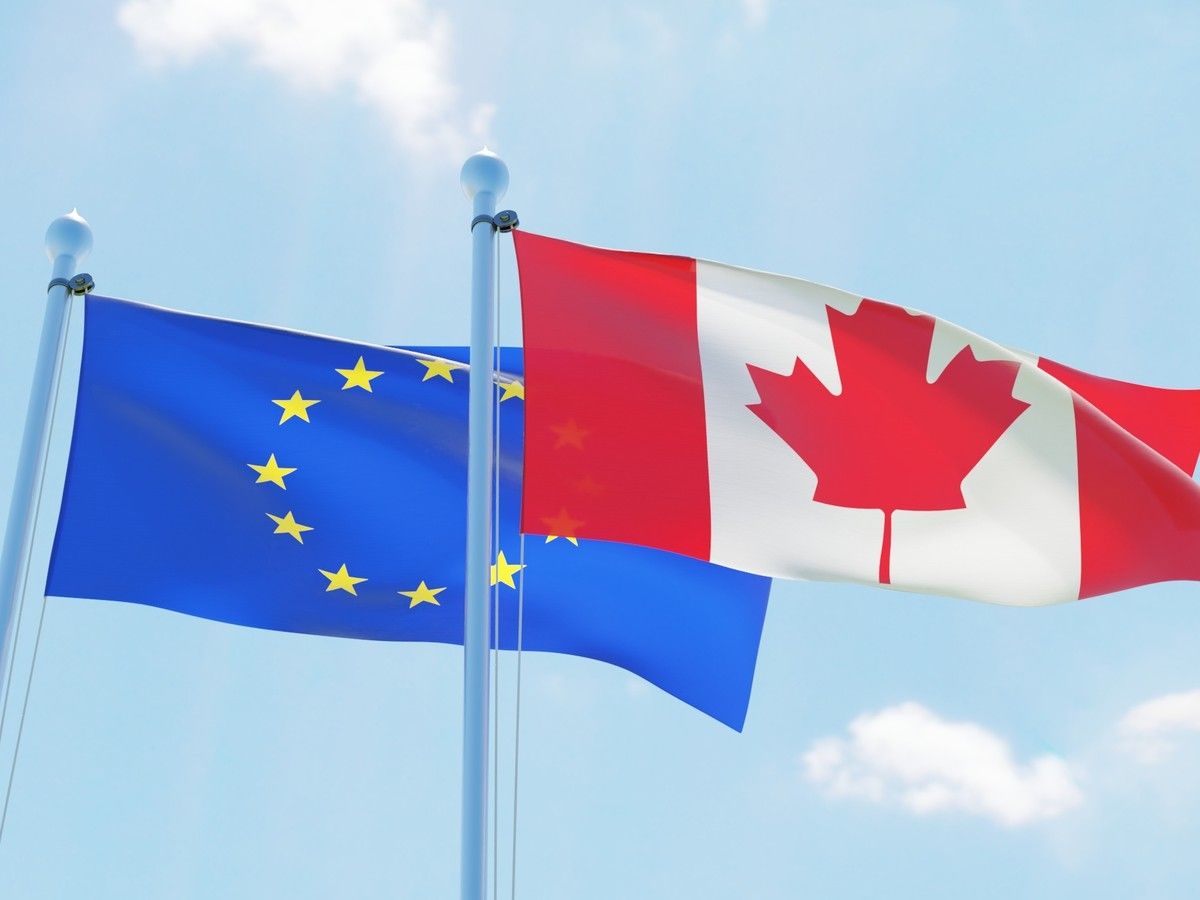
For as long as anyone can remember, Canada and the U.S. have arguably been the world’s closest of allies and friends.
asserted
Canada → remember → allies
The sibling settler-colonial nations sharing the world’s longest undefended border are deeply linked, culturally and economically, with any differences historically resolved respectfully.
asserted
differences → share → border
But as the trade war initiated by U.S. President Donald Trump drags on, getting uglier every day, a growing number of Canadians have a very different view of America: our “enemy.”
“Donald Trump, man, he can move public opinion like nobody’s business,” Leger vice-president Andrew Enns told National Post in an interview.
asserted
Enns → initiate → interview
More than half (51 per cent) of those 55 or older perceived the U.S. as an enemy, only 13 per cent of whom see it as neutral.
asserted
cent → perceive → it
Meanwhile, Quebecers were the Canadians most likely (49 per cent) see the U.S. in that light and the least likely to consider it an ally (17 per cent) or neutral (20 per cent), one of several times an “exclamation point” appeared on some Quebec results.
asserted
point → see → results
Enns said they related to the province’s election this fall, which the Trump factor has unavoidably entered into.
asserted
factor → say → which
“It’s helping, I would suggest, some of those federalist parties,” he said.
asserted
he → help → parties
“It’s probably creating some grief for the PQ, the front-runner in that election, as they’re trying to sort of navigate this.”
asserted
they → create → this
Even with the recent sharp movement in how Canadians characterize the U.S, Leger’s results indicate most still distinguish between America the country and the Trump administration ruling it.
asserted
most → characterize → it
When asked if his leaving office would change their impression, 64 per cent said yes, 21 per cent said it wouldn’t and 14 per cent were unsure.
asserted
cent → ask → impression
Results indicate Quebecers and women would be most open to a change of heart, with 72 and 71 per cent saying Trump’s departure would alter their impression of the U.S. and only 16 per cent, respectively, saying it wouldn’t change a thing.
asserted
it → indicate → thing
Brian Rathbun, a professor of international relations and political science at the University of Toronto’s Munk School of Global Affairs and Public Policy, said that while Canadians may recognize that most Americans don’t support the way Canada’s being treated, it’s important to remember that Americans, simply as a function of their larger economy and population, are somewhat indifferent to Canadians.
uncertain
Americans → say → Canadians
“But at some point, I think Canadians will start to get frustrated if this persists, even if it’s not what the American public wants,” Rathbun told National Post in an interview.
asserted
Rathbun → think → interview
“They can say, ‘Why is it that no one’s standing up to this particular bully?’
asserted
one → say → bully
Then I think that you could get into something like a deeper problem that couldn’t be fixed by kicking this guy out.”
uncertain
that → think → guy
Rathbun, himself an American who moved to Canada in April 2024 from southern California, said Canadians may be starting to realize that a change in leadership — “even with a Democratic president” — won’t fix the “basket case” the U.S. has become.
uncertain
U.S. → move → case
“It’s become something of an ungovernable country,” he said.
asserted
he → become → country
Leger landed on enemy as a “black and white” catch-all against ally or neutral for people who felt negatively towards the U.S., Enns explained, acknowledging it could mean something different to some, including those who legitimately fear the U.S. will try to invade Canada.
uncertain
U.S. → land → Canada
It’s not the first time they’ve felt this way.
asserted
they → ’ → way
Last March, after months of enduring Trump’s jabs at Canada and two weeks into Prime Minister Mark Carney’s “Elbows Up” bid to see the Liberals retain government, 43 per cent saw the U.S. as an enemy.
asserted
cent → endure → enemy
But that number dropped precipitously to 27 per cent in a poll last June after it seemed as though cooler heads might prevail.
uncertain
heads → drop → poll
Fast forward to this summer, noted Enns, and Trump’s “really, really deliberate comments around Canada” have permeated into “a pretty broad sentiment across the country.
asserted
comments → fast → country
Rathbun isn’t surprised by the 41 per cent who see the U.S. as an enemy, and reasoned that, unlike Russia, for example, many “Canadians feel like American policy is more malicious vis-à-vis Canada” because it’s more direct.
asserted
it → surprise → Canada
Both he and Enns agree the freshly stoked rhetoric from Trump and his administration — some of it entirely separate from the trade discussion — is only making things worse.
asserted
things → agree → discussion
This week alone, aside from Trump blasting Canada on Truth Social, U.S. Treasury Secretary Scott Bessent took a shot at the Canadian Navy’s aging submarine fleet and Secretary of Defence Pete Hegseth was accused of body-shaming Canadian cadets.
asserted
Hegseth → blast → cadets
Enns said the proportion seeing the U.S. as an enemy could climb if Trump and his ilk continue to “double down” on disparaging Canada.
uncertain
Trump → say → Canada
Rathbun highlighted the Lake Ontario-Lake America discussion as a “classic example.”
asserted
Rathbun → highlight → example
“It’s entirely unimportant what the Americans call Lake Ontario, and yet, at the same time, it probably galls us more than softwood lumber tariffs, unless we’re in the softwood lumber industry,” he said.
asserted
he → ’ → industry
Because it’s indicative of a lack of respect, and respect is so basic to our self-understanding of ourselves as people.”
asserted
respect → ’ → people
Leger also sought to gauge Canadians’ feelings on tariffs — both those initiated by Trump and those Canada has launched or promised to in retaliation.
asserted
Canada → seek → retaliation
A large majority (87 per cent) of Canadians expect Trump’s tariffs will have some level of impact on their personal financial situation, whether small (24 per cent), moderate (40 per cent) or major (24 per cent), and 38 per cent are somewhat (22 per cent) or very (16 per cent) concerned about losing their job in the next 12 months — especially in Ontario (49 per cent) and among 18-34-year-olds (46 per cent).
asserted
cent → expect → cent
As for Canada’s latest economic riposte, Ottawa announced “new countermeasures on $27.6 billion in products imported from the U.S.” effective Sept. 8.
asserted
Ottawa → announce → U.S.
The 15 to 50 per cent levies will apply to U.S. steel, aluminum, dishwashers, refrigerators, video game consoles, cheese, beauty products, plywood, paper products and clothing, among others.
asserted
levies → apply → others
Almost three-quarters of Canadians (74 per cent) agree with the counterattack, with only 13 per cent dissenting and the remaining 13 per cent unsure or preferring not to answer.
asserted
cent → agree → counterattack
Solidarity with Canada’s reprisal peaked among the 55-plus crowd (83 per cent) and in B.C. (80 per cent), but wasn’t far off in Quebec (78 per cent).
asserted
Solidarity → peak → Quebec
Respondents in Manitoba and Saskatchewan were most likely to disagree (22 per cent)
asserted
Respondents → disagree → Manitoba
Canadians by and large (78 per cent) expect Ottawa’s retaliation will result in higher prices paid by Canadian consumers, but 66 per cent agree with Canada’s clapback, with the strongest support from those 55-plus (76 per cent), men (71 per cent), and people in B.C. (72 per cent).
asserted
cent → expect → B.C.
Enns said the results tell him there “are some conflicting opinions within the Canadian public and at some point, the ‘Ra-Ra, Canada-proud, sticking to the American with some tariffs,’ could start to soften if it becomes really painful for households’ pocketbook.
“If this thing just sort of settles and all of a sudden we’re into the fall going into the winter, we’re not talking necessarily about Donald Trump and maybe his insults aren’t making the front pages,” he said.
uncertain
he → say → pages
“But what might be making the front pages is suddenly the impact on food prices.”
uncertain
making → make → prices
That’s a topic already on respondents’ minds, evidenced by the 35 per cent who cited inflation and rising cost of items as the top issue facing Canadians.
asserted
who → ’ → Canadians
…and 18 more, not listed.
 The Aporia