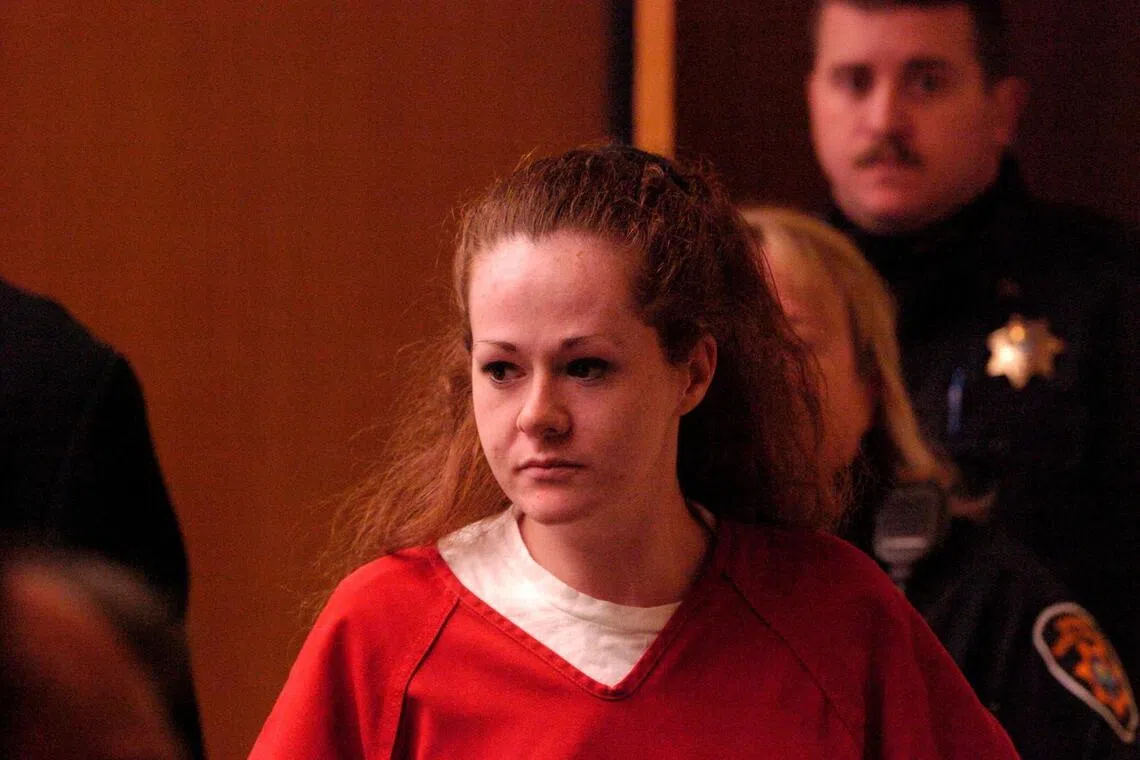
The United States Supreme Court has cleared the way for the state of Tennessee to execute Christa Pike, overturning a last-minute stay that had stalled the state’s first execution of a woman in at least 200 years.
asserted
that → clear → years
Pike, 50, was initially scheduled to die by lethal injection on Wednesday morning for a killing she committed at age 18, and witnesses had already gathered at the Riverbend Maximum Security Institution in Nashville when the 6th Circuit US Court of Appeals voted 2-1 to issue a stay.
asserted
Court → schedule → stay
Recommended Stories
list of 4 items- list 1 of 4US Senate blocks resolution seeking report on Americans killed in West Bank
- list 2 of 4Pennsylvania confirms fifth measles-associated death as US outbreak grows
- list 3 of 4US appeals court halts Tennessee execution of Christa Pike
- list 4 of 4Christa Pike seeks firing squad, not lethal injection:
asserted
Pike → block → squad
The court said a delay was needed to consider whether Pike’s allegations of childhood sexual abuse were fully considered at her sentencing.
asserted
allegations → say → sentencing
The Supreme Court’s conservative majority did not explain their new order, while the three liberal members signed a dissent saying Pike’s claims deserved a closer look.
uncertain
claims → explain → look
A spokesperson for the Tennessee Department of Correction said it would proceed with Pike’s execution on Wednesday night ahead of a midnight cut-off on the state’s execution order.
asserted
it → say → order
Pike and her boyfriend, Tadaryl Shipp, were convicted of the fatal stabbing and beating in 1995 of 19-year-old Colleen Slemmer, their classmate at a job training facility in Knoxville.
asserted
Pike → convict → Knoxville
Shipp was 17 when the crime happened and received a sentence of life in prison with the possibility of parole.
asserted
crime → happen → parole
Pike was the only one sentenced to death.
asserted
Pike → sentence → death
After the stay was issued, Tennessee’s attorney general immediately appealed to the US Supreme Court.
asserted
general → issue → Court
Witnesses and media remained at the prison while the high court considered the case.
asserted
court → remain → case
The attorney general’s office said in its appeal that halting the execution at the last moment traumatised Slemmer’s family and rewarded “abusive delay tactics” by Pike’s lawyers.
asserted
halting → say → lawyers
Supreme Court Justice Sonia Sotomayor wrote in the dissent that the decision to vacate the stay interfered with the 6th Circuit Court’s handling of the case and “unnecessarily prevents that court from giving due consideration to Pike’s claim”.
uncertain
decision → write → claim
Pike does not deny committing the killing, but her supporters argue the state should consider her age at the time, her mental illness and her allegations of severe sexual abuse that included being raped from the time she was a toddler.
asserted
she → deny → time
“It is inconceivable that in the 21st century, the criminal justice system is poised to execute a survivor of rape and child sexual abuse whose jury never had the opportunity to consider those facts in weighing the defendant’s moral culpability,” her lawyers wrote in a filing.
asserted
lawyers → poise → filing
After the killing, Pike was diagnosed with bipolar disorder and post-traumatic stress disorder.
asserted
Pike → diagnose → disorder
In her clemency petition, she said she only wanted to fight Slemmer but killed her in a frenzied attack when she could not “put the brakes on”.
uncertain
she → say → brakes
It took me numerous years to even realize the gravity of what I’d done.
asserted
I → take → what
Even more to accept how many lives I affected.
asserted
I → accept → lives
I took the life of someone’s child, sister, friend.
asserted
I → take → friend
It sickens me now to think I had the ability to commit such a crime,” Pike said in a statement.
asserted
Pike → sicken → statement
Slemmer’s mother wants the lethal injection to go forward, saying she has waited decades to see Pike’s sentence carried out.
asserted
sentence → want → decades
“Every time I think about it, I think about Colleen feeling that pain and trying to get up and run,” May Martinez told The Associated Press news agency in a telephone interview on Saturday.
uncertain
Martinez → think → Saturday
Tennessee has not executed a woman for at least 200 years, according to Robin M Maher, executive director of the Death Penalty Information Center.
uncertain
Tennessee → execute → Center
Older records can be spotty, though, so it is difficult to know precise details about the last woman who was put to death in the state.
asserted
who → know → state
Since the Supreme Court reinstated the death penalty in 1976, 18 women have been put to death, representing about 1 percent of all executions, according to the centre.
uncertain
women → reinstate → centre
 The Aporia