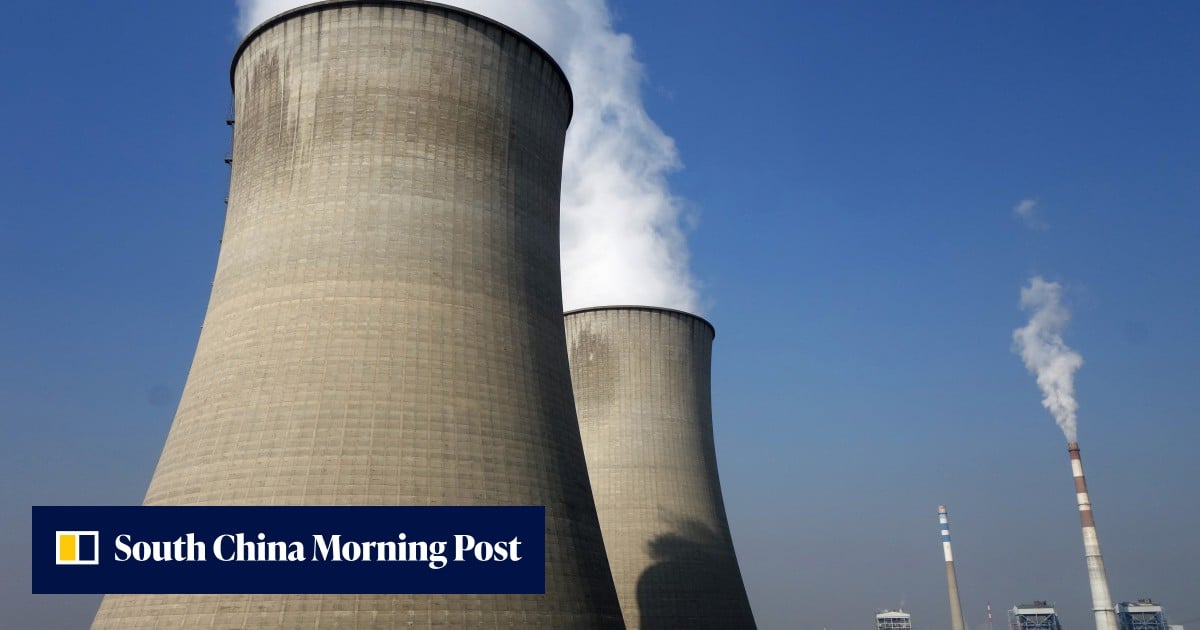
Photo via South China Morning Post

Nearly a third of Singaporeans open to nuclear energy’s potential, highest in Asean: study

Read the original at South China Morning Post ↗
Cite

Iau, J. (2026, October 1). Nearly a third of Singaporeans open to nuclear energy’s potential, highest in Asean: study. South China Morning Post. https://www.scmp.com/week-asia/health-environment/article/3369437/nearly-third-singaporeans-open-nuclear-energys-potential-highest-asean-study?utm_source=rss_feed

Dated when The Aporia collected the article, usually within hours of publication. Check the original for its exact date and byline.

South China Morning Post · collected 2026-10-01 · by Jean Iau

Quick Summary

A new study reveals that 31.4% of Singaporeans are open to nuclear energy as a potential clean power source, marking an 11.1 percentage point increase from the previous year. This level of support is the highest in Southeast Asia and reflects the city-state's limited options for green energy beyond solar power, according to analysts. The survey was conducted by the Climate Change in Southeast Asia Programme at ISEAS – Yusof Ishak Institute and the Lee Kuan Yew Centre for Innovative Cities at Singapore University of Technology and Design.
Written by AI on 2026-10-01, from this article's own text only (the story summary below draws on all the coverage).

AI analysis

Story summary

A new study from the Climate Change in Southeast Asia Programme and the Lee Kuan Yew Centre for Innovative Cities reveals that just under 31.4% of Singaporeans are open to the potential of nuclear energy, marking the highest acceptance rate among countries in ASEAN. This figure represents an 11.1 percentage point increase from the previous year. Despite solar being the most favored green energy source, analysts attribute the growing support for nuclear power to a limited variety of alternative clean energy options available in Singapore. The study highlights that Singaporeans see nuclear energy as offering significant potential for addressing climate change and providing reliable clean power, making it an increasingly attractive option compared to other Southeast Asian nations.


Written for “Singapore Nuclear Energy Support” on 2026-11-02, grounded in this article and the 0 other(s) covering the same event.

Story

📰 Singapore Nuclear Energy Support
Environment · 1 article(s) covering the same event.

Compared with similar articles

Nothing to compare against. No article is close enough to this one for the pipeline to have linked or judged the pair.
How this article was measured signals, leaning charts, publisher record, byline, topics and claims

Signals How these are calculated →

Claims extracted
3
sentences that state something as happening or true
Uncertain
0%
0 of 3 hedged ("reportedly", "may", "according to")
Leaning
not political
takes no side on a contested political question
Publisher signals
63/100
South China Morning Post's corrections and hedging, across everything collected from it. Not a measure of accuracy.
Outlets on this story
1
Environment
Same framing elsewhere
1
articles that frame the event the way this one does
Analyzed 2026-10-01 · how these are computed

How this is being covered How these are calculated →

Article leaning vs. publisher reliability
Source leaning vs. consistency

Publisher

South China Morning Post · 3568 article(s) · 7 correction(s) detected
Running correction rate · 7 correction(s)

Who wrote this

Jean Iau
14 article(s) here · 0 carrying a prediction
🔮 On Monday, Singapore’s Coordinating Minister for National Security K Shanmugam told local media the country would use “every legal and regulatory lever” at its disposal to “exert pressure where it matters – including on [companies’] bottom lines, including on their access to financing, and including on their standing with investors”.
🔮 Haze-hit Singapore parents call for Hong Kong-style school air con An opposition MP who has pushed for air-conditioned classrooms due to hot weather says his proposal is more urgent now because of the haze Pang told This Week in Asia that her daughter, whose classroom did not have air conditioning, was already suffering from bad sinus, and the haze had made her eyes water. While Pang would prefer her Primary 4 daughter to stay home as the pollutant standards index (PSI) climbs beyond 200 in some parts of the city state, the child is in the middle of exams.
🔮 Rail links and cycle routes make it easier for motorists to give up their cars as running costs and road charges rise Instead, the 49-year-old business consultant decided in May to go without a car for the first time in two decades.
🔮 US firm Waymo to launch robotaxi service in Singapore in 2028 Trained specialists will drive Jaguar I-Pace vehicles and help Waymo adapt its technology to Singapore’s road layouts and other conditions Fully electric Jaguar I-Pace vehicles were due to arrive in the city state in the coming months, ahead of preparations for a commercial launch, the company said on Friday.
🔮 Singapore’s defence ministry said in a statement on Monday that Chan would meet Dong and other senior Chinese and People’s Liberation Army (PLA) leaders and speak at the forum.
Also by Jean Iau
Nothing else under this byline is closely related to this article, so these are simply their most recent.
All 14 articles by Jean Iau →

Topics

ISEAS Singaporeans the Climate Change in Southeast Asia Programme the Lee Kuan Yew Centre for Innovative Cities the Southeast Asia Climate Outlook 2026 Survey

Subjects

Singaporeans NORP · 3× ISEAS ORG · 1× the Climate Change in Southeast Asia Programme ORG · 1× the Lee Kuan Yew Centre for Innovative Cities ORG · 1× the Singapore University of Technology and Design ORG · 1× the Southeast Asia Climate Outlook 2026 Survey ORG · 1×

Narrative

Singaporeans’ wider support for nuclear power was due to a lack of green energy sources aside from solar in the city state, an analyst says Just under a third of Singaporeans, or 31.4 per cent, believe that nuclear energy promises a clean power source with the greatest potential in the city state, representing the highest acceptance rate in Southeast Asia, a new study has found.
framing: assertive · carried by 1 article(s) · first seen 2026-10-01
2026-10-01 · South China Morning Post
Nearly a third of Singaporeans open to nuclear energy’s potential, highest in Asean: study · assertive framing

Claims (3 extracted, 0 hedged)

Singaporeans’ wider support for nuclear power was due to a lack of green energy sources aside from solar in the city state, an analyst says Just under a third of Singaporeans, or 31.4 per cent, believe that nuclear energy promises a clean power source with the greatest potential in the city state, representing the highest acceptance rate in Southeast Asia, a new study has found. asserted
study → say → Asia
The approval rate represented an 11.1 per cent increase from 2024, the Southeast Asia Climate Outlook 2026 Survey found, even as solar energy continued to be the most popular choice. asserted
energy → represent → 2024
The latest study, released on Thursday by the Climate Change in Southeast Asia Programme at ISEAS – Yusof Ishak Institute and the Lee Kuan Yew Centre for Innovative Cities at the Singapore University of Technology and Design, showed that public acceptance of civilian nuclear energy is growing. asserted
acceptance → release → energy
💬Give feedback
🕘History 🎫Support