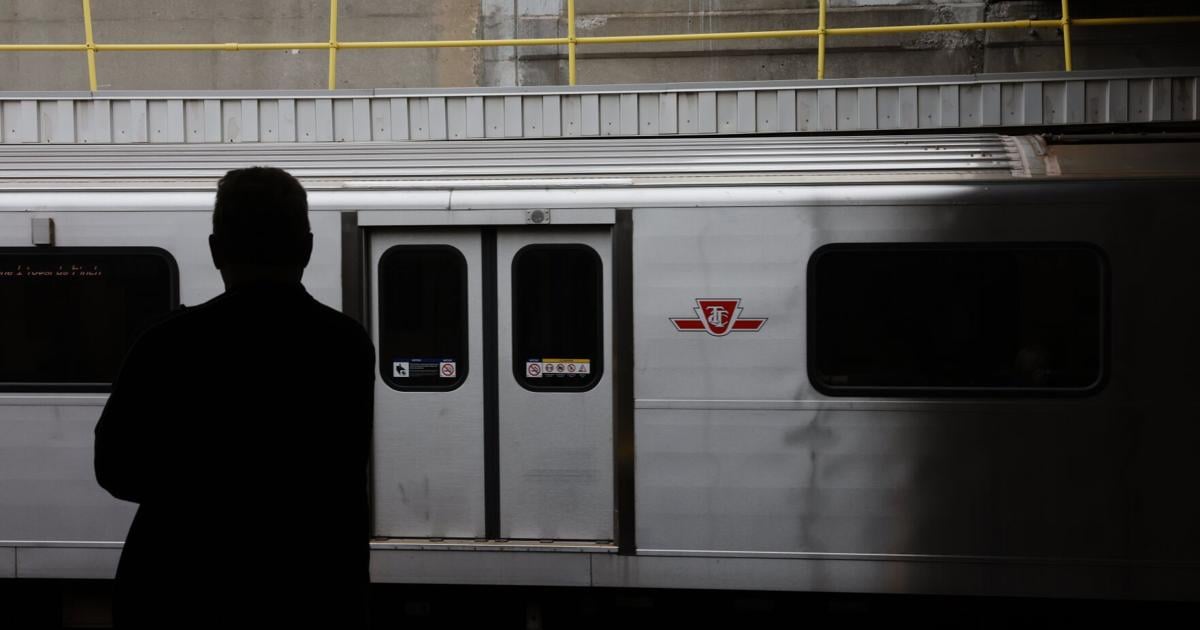
A TTC worker was on shift one night in May when a stranger began yelling at him, calling him a pedophile and making racist remarks.
uncertain
stranger → begin → remarks
“You look like a member of the Black Panthers,” the employee, who is Black, recalls the man saying.
asserted
man → look → Panthers
“You guys are going to be done for.”
asserted
guys → go → ?
The encounter at Davisville Station lasted nearly 10 minutes and left the employee anxious and fearful the man would return.
asserted
man → last → employee
This was hardly an isolated incident, he said.
asserted
he → say → ?
He has been elbowed in the ribs before and heard of colleagues being assaulted many times.
asserted
colleagues → elbow → ribs
“These incidents build up — our heads are always on a swivel,” he said.
asserted
he → build → swivel
“It got to the point I needed time away to clear my head.
asserted
I → get → head
There’s only so much people can take
asserted
people → take → much
The TTC employee — whom the Star has agreed not to identify because of concerns about losing his job — took six days off to recover.
asserted
Star → agree → days
When he sought compensation from the Workplace Safety and Insurance Board for chronic mental stress, his claim was denied.
uncertain
claim → seek → stress
In the WSIB decision, seen by the Star, the board said the incident did not amount to a “substantial work-related stressor,” noting that dealing with unruly passengers was “a typical feature of employment.”
asserted
dealing → see → employment
The board also said it did not consider the incident “excessive in intensity and/or duration” compared with “the normal pressures and tensions experienced by workers in similar circumstances.”
asserted
incident → say → circumstances
The employee appealed, with lawyers hired by his union.
asserted
lawyers → appeal → union
Several weeks later, the WSIB’s decision was overturned.
asserted
decision → overturn → ?
“It feels like you have to end up on a stretcher before they say, ‘You know what? We need to give this guy time off.’”
asserted
We → feel → time
“The safety and well-being of our employees and customers are paramount to all we do,” TTC spokesperson Stuart Green said in an email, adding that “violence against transit workers will not be tolerated.”
Claims like the TTC worker’s are possible as a result of a significant piece of provincial reform in 2018, which expanded eligibility for workers who experienced excessive, long-term mental stress on the job.
uncertain
who → do → job
As Canada moves to fast-track mineral extraction projects across the country, observers warn the push is outpacing worker protections.
asserted
push → move → protections
As Canada moves to fast-track mineral extraction projects across the country, observers warn the push is outpacing worker protections.
asserted
push → move → protections
Workers had long been eligible for compensation for sudden, traumatic events, such as witnessing a horrible accident.
asserted
Workers → witness → accident
But the new reforms allowed them to file claims for a different type of stressor: chronic workplace harassment, abuse and extreme pressure.
uncertain
them → allow → stressor
For advocates, the shift was a landmark victory they hoped would reflect a growing body of empirical evidence: just as work can sometimes result in physical injuries, so, too, can it damage mental health.
asserted
it → hop → health
The TTC employee’s experience is one example of the kinds of workplace harms that can accumulate over time, said McMaster University labour studies professor Stephanie Premji, including “daily harassment, prolonged interpersonal conflicts, unfair treatment and excessive workloads.”
asserted
Premji → accumulate → harassment
Since 2018, however, WSIB data shows the board has denied the vast majority of these claims.
uncertain
board → show → claims
According to the latest data obtained by the Star, 77 per cent of 9,079 claims registered and adjudicated under the chronic mental stress policy as of December 2025 were denied.
uncertain
cent → accord → December
Only 12 per cent were allowed, while the remaining 11 per cent were withdrawn or involved requested information that was not provided, the WSIB said in an email.
asserted
WSIB → allow → email
The latest figures represent a drop from a 2023 Star investigation, which found that WSIB had routinely denied more than 90 per cent of chronic mental stress claims.
uncertain
WSIB → represent → claims
But the acceptance rate for chronic mental stress claims remains lower than for other types of mental-stress claims and for injury claims overall.
uncertain
rate → remain → claims
Critics say it’s a significantly lower acceptance rate than for other mental stress injuries including traumatic mental stress claims, the closest equivalent injuries.
uncertain
it → say → claims
The yearly figures show a large increase in the proportion of chronic mental stress claims approved in 2025, to 81 per cent from six per cent in 2018.
uncertain
figures → show → 2018
But that increase came as the number of claims registered plummeted from 2,109 to 258 — an 88 per cent decrease.
uncertain
number → come → 258
Legal experts and injured-worker advocates say the increase in approval rates obscures a deeper problem: the policy’s restrictive requirements are discouraging workers from filing claims in the first place, creating a “chilling effect.”
uncertain
requirements → injure → effect
The policy is “discriminatory, exclusionary and narrow,” said Chris Grawey of Injured Workers’ Consultants (IWC), a non-profit community legal clinic.
asserted
Grawey → say → Consultants
“The chronic mental stress policy is essentially a get-out-of-compensation-free card for WSIB and employers.”
asserted
policy → get → WSIB
When asked about the drop in the number of claims, WSIB spokesperson Christine Arnott in an email maintained that the number of claims allowed has steadily increased since the policy was introduced in 2018, as awareness of the policy and understanding of its eligibility criteria have grown.
uncertain
awareness → ask → criteria
“Allowance rates have increased significantly as people have been filing claims for more relevant situations,” said Arnott.
uncertain
Arnott → increase → situations
But Premji said the sharp decline in claims is concerning.
uncertain
decline → say → claims
As awareness of the policy grows, she said, the number of claims would be expected to rise, not fall.
uncertain
number → grow → claims
“Wouldn’t you expect more claims over time as awareness of the chronic stress policy increases?” she said.
uncertain
she → expect → policy
Instead, the decline suggests “the policy is so restrictive that people have learned they are unlikely to have their claims approved — it creates a chilling effect.
uncertain
it → suggest → effect
…and 31 more, not listed.
 The Aporia