For months, the United States has been waging what it describes as a “maximum pressure campaign” against Cuba, blocking oil imports to the island, levying criminal charges against a former leader and squeezing the already fragile economy with new sanctions.
asserted
it → wag → sanctions
The Trump administration has made no secret of its end goal: the collapse of Cuba’s Communist government and the dawn of a new era of political and economic liberalization.
asserted
administration → make → liberalization
About This Story
This story was supported by the Pulitzer Center.
asserted
story → support → Center
“It’s failing like never before,” President Trump said of Cuba in a speech to the United Nations General Assembly last week.
asserted
Trump → fail → Assembly
“It will fall.”
asserted
It → fall → ?
The hope felt when President Obama visited Cuba in 2016 has given way to despair as the island struggles under the oil embargo ordered by President Trump.
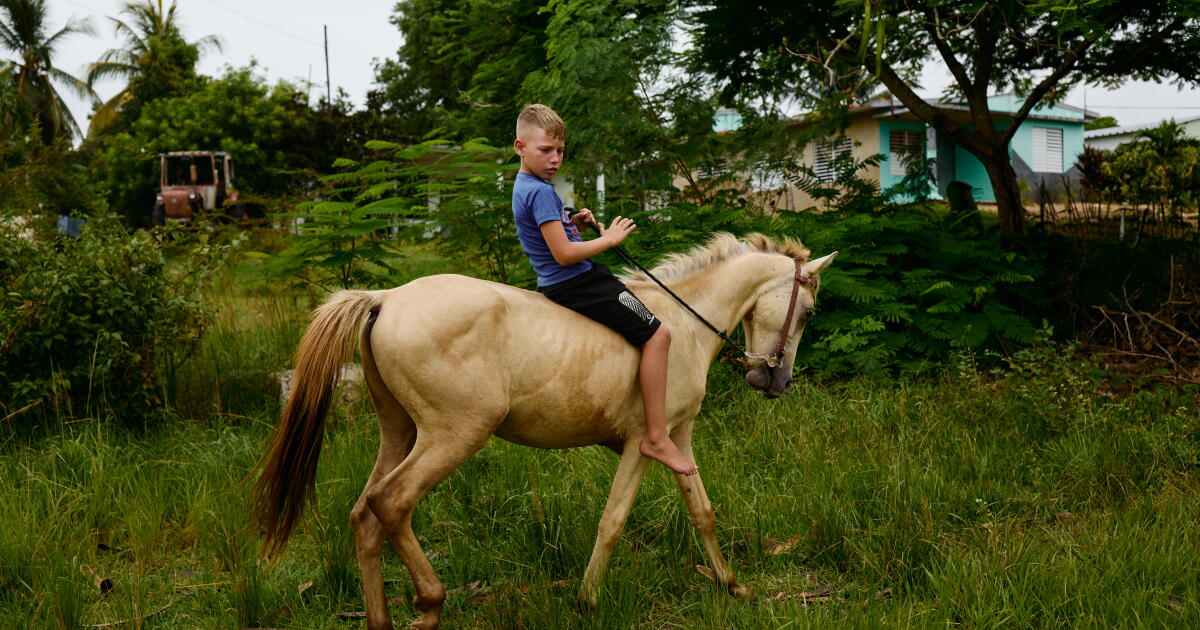
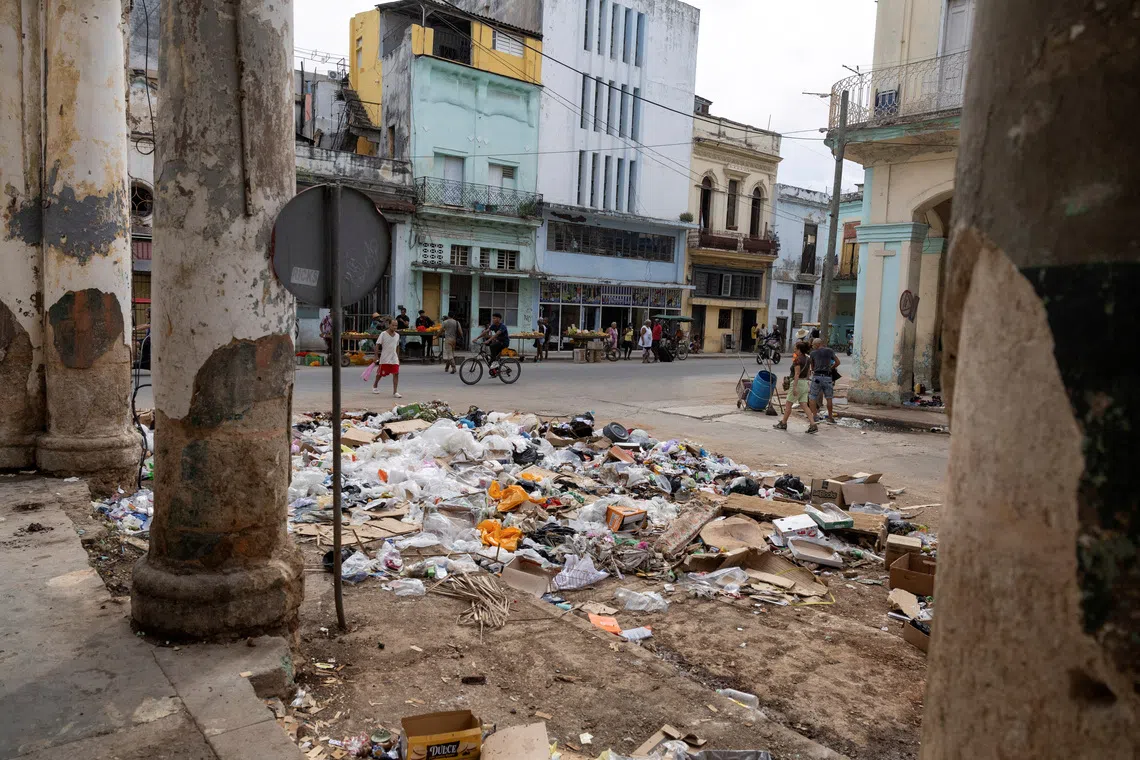
And yet, despite a crisis of power outages, severe fuel shortages and dramatic price spikes, life in Cuba goes on.
Photographer Lisette Poole González recently set out on a road trip across the island to document this consequential moment.
Over two weeks, she traveled between Havana in the west and Baracoa, a city on the eastern edge of the island.
asserted
she → feel → island
She toured remote provinces rarely visited by international journalists in recent years thanks to government restrictions and the difficulty of procuring fuel.
asserted
She → tour → fuel
Fuel shortages mean fewer cars on the road.
asserted
shortages → mean → road
2. A horse pulling a carriage passes a church in Baracoa, on Cuba’s eastern tip.
asserted
horse → pull → tip
She encountered beaches typically teeming with tourists that were spookily empty, and fishermen unable to work because they lacked gasoline to go to sea.
asserted
they → encounter → sea
Public transportation has largely ground to a halt, and the repeated collapse of the national power grid plunges the entire island into darkness for days at a time.
asserted
collapse → grind → time
Even on a good day, most Cubans receive just a few hours of electricity.
asserted
Cubans → receive → electricity
Poole González captured resilience in the face of hardship: A man showering outside in a rainstorm.
asserted
González → capture → rainstorm
Teenagers pushing children on a carousel that stopped turning long ago.
asserted
that → push → carousel
In Baracoa, people gather outside to take advantage of natural light amid near-constant power outages.
asserted
people → gather → outages
Yugala Labanino Morales, 52, makes an offering to the ocean goddess Yemaya in Baracoa.
asserted
Morales → make → Baracoa
Fisherman Ibrahin Borges, 60, says he hasn’t worked in two months due to fuel shortages.
asserted
he → say → shortages
4. Kids play at a park in Sagua la Grande, a city in central Cuba, although many rides are in disrepair.
But she also showed people engaged in more typical activities: Working out. Attending church. Releasing Yoruba offerings into the gentle waves of the Caribbean sea.
asserted
she → play → sea
She often trained her lens on youth — members of a generation born decades after Fidel Castro toppled Cuba’s right-wing dictatorship in 1959, turning the island into a global symbol of leftist resistance and beginning one of the world’s longest enduring experiments in state-run socialism.
asserted
Castro → train → socialism
At Fidel Castro’s childhood home, a local historian shows a family photo with the bearded Castro in attendance at his sister’s wedding.
asserted
historian → show → wedding
As the U.S. maintains a crippling oil embargo against Cuba, the island’s citizens are deeply divided over whether they desire U.S. intervention or self-determination.
asserted
they → maintain → intervention
These young people have come of age at a time of heightened government repression and the prolonged economic stagnation caused by U.S. sanctions and mismanagement by Cuba’s leaders.
asserted
people → come → leaders
Access to the internet has widened their perspective, and many told Poole González that they dream of joining the exodus of more than 1 million Cubans who have left the island in recent years.
asserted
who → widen → years
The trip prompted personal reflections for Poole González, who was born in the U.S. to a mother who departed Cuba with her family a decade after the revolution.
asserted
who → prompt → revolution
Homes that her grandfather constructed in the city of Matanzas still stand.
asserted
grandfather → construct → Matanzas
“I think often about my family and what life would have been for us if they had never left,” she said.
asserted
she → think → us
In rural Holguín province, about 420 miles east of Havana, she visited Castro’s childhood home, a rambling wooden farmhouse that is now a national monument and museum.
asserted
that → visit → home
Nearly seven decades after Castro’s revolution, the legacy of his ambitious project hangs in the balance.
asserted
legacy → hang → balance
Among Cubans, there is a sense — and a hope — that some kind of change is on the horizon.
asserted
kind → be → horizon
But what it will mean for them remains to be seen.
asserted
mean → mean → them
1. People sing at a youth event at the Ríos de Agua Viva Christian church in Baracoa.
asserted
People → sing → Baracoa
2. Choreographer Yovanys Galano Domínguez mends a dress for a dancer for a performance to honor the anniversary of a revolutionary battle.
asserted
Domínguez → mend → battle
3. Elyann Gonzalez Rodríguez, 20, center, waits for a bus in Isabela de Sagua, for a visit to the doctor’s office.
asserted
Rodríguez → wait → office
1. Elianet Cabrera Ramirez, 21, waits for a collective taxi in Holguín, with her son, Alan Manuel, 2, and Marlon Antonio Jara, 23.
asserted
Ramirez → wait → son
Laundry dries outside of a home along the northern highway in Cuba.
asserted
Laundry → dry → Cuba
A truck passes this Soviet-style building in Moa, an industrial city on Cuba’s northeast coast.
asserted
truck → pass → coast
 The Aporia