Photo via Reason

The Case for Good Faith

Read the original at Reason ↗
Cite

Mangu-Ward, K. (2026, October 1). The Case for Good Faith. Reason. https://reason.com/2026/10/01/the-effort-of-good-faith/

Dated when The Aporia collected the article, usually within hours of publication. Check the original for its exact date and byline.

Reason · collected 2026-10-01 · by Katherine Mangu-Ward

Quick Summary

The article discusses the importance of the concept "bona fides" in maintaining intellectual debate and honesty in politics and commerce. It argues that assuming good faith—believing others genuinely hold their views rather than being influenced by incentives like money—is crucial for productive discussions. The author critiques the tendency to assume corruption or deceit when people benefit from certain positions, instead advocating for recognizing pre-existing beliefs as driving financial support rather than vice versa.
Written by AI on 2026-10-01, from this article's own text only (the story summary below draws on all the coverage).

AI analysis

Story summary

In 2021, during his Senate campaign, J.D. Vance sought to win Donald Trump's endorsement by proposing federal seizure and redistribution of Ford Foundation assets, claiming their "radical open-borders agenda" had harmed many Americans. Katherine Mangu-Ward from Reason Magazine argues that engaging in debate with the assumption that opponents are genuinely expressing their beliefs—good faith—is becoming rare. She notes that political discourse often frames disagreement as evidence of corruption or self-interest rather than honest differences, making intellectual dialogue difficult. For example, supporting free trade is often dismissed as merely serving multinational corporations' interests, while opposing a war is seen as aiding the adversary. While financial motivations do influence some positions, Mangu-Ward suggests they are frequently misinterpreted and overemphasized in political discussions.

Written for “Good Faith Debate” on 2026-11-05, grounded in this article and the 0 other(s) covering the same event.

Story

📰 Good Faith Debate
Politics · 1 article(s) covering the same event.

Compared with similar articles

Nothing to compare against. No article is close enough to this one for the pipeline to have linked or judged the pair.
How this article was measured signals, leaning charts, publisher record, byline, topics and claims

Signals How these are calculated →

Claims extracted
65
sentences that state something as happening or true
Uncertain
6%
4 of 65 hedged ("reportedly", "may", "according to")
Leaning
not political
takes no side on a contested political question
Publisher signals
67/100
Reason's corrections and hedging, across everything collected from it. Not a measure of accuracy.
Outlets on this story
1
Politics
Same framing elsewhere
1
articles that frame the event the way this one does
Analyzed 2026-10-01 · how these are computed

How this is being covered How these are calculated →

Article leaning vs. publisher reliability
Source leaning vs. consistency

Publisher

Reason · 1143 article(s) · 4 correction(s) detected
Running correction rate · 4 correction(s)

Who wrote this

Katherine Mangu-Ward
3 article(s) here · 1 carrying a prediction
🔮 President Ronald Reagan had been in office for more than three years, Margaret Thatcher had been prime minister for five, and the Friedmans were trying to explain a frustrating phenomenon: Politicians could win elections promising dramatic change, even arrive in office with a genuine mandate, and then discover that the existing machinery of government was unusually good at defending itself.
2026-11-02 · assertive framing · Can Milei's Success in Argentina Be Repeated Elsewhere?
🔮 You might even say I make…a good faith effort.
2026-10-01 · assertive framing · The Case for Good Faith
🔮 The podcast nicely combines the kind of technical detail and depth that a history dad might appreciate with the suspenseful emotional intensity that a true-crime girly longs for.
Also by Katherine Mangu-Ward
Nothing else under this byline is closely related to this article, so these are simply their most recent.

Topics

American The Uniform Commercial Code

Subjects

America GPE · 1× American NORP · 1× J.D. Vance PERSON · 1× Middletown GPE · 1× Ohio GPE · 1× Vance PERSON · 1×

Narrative

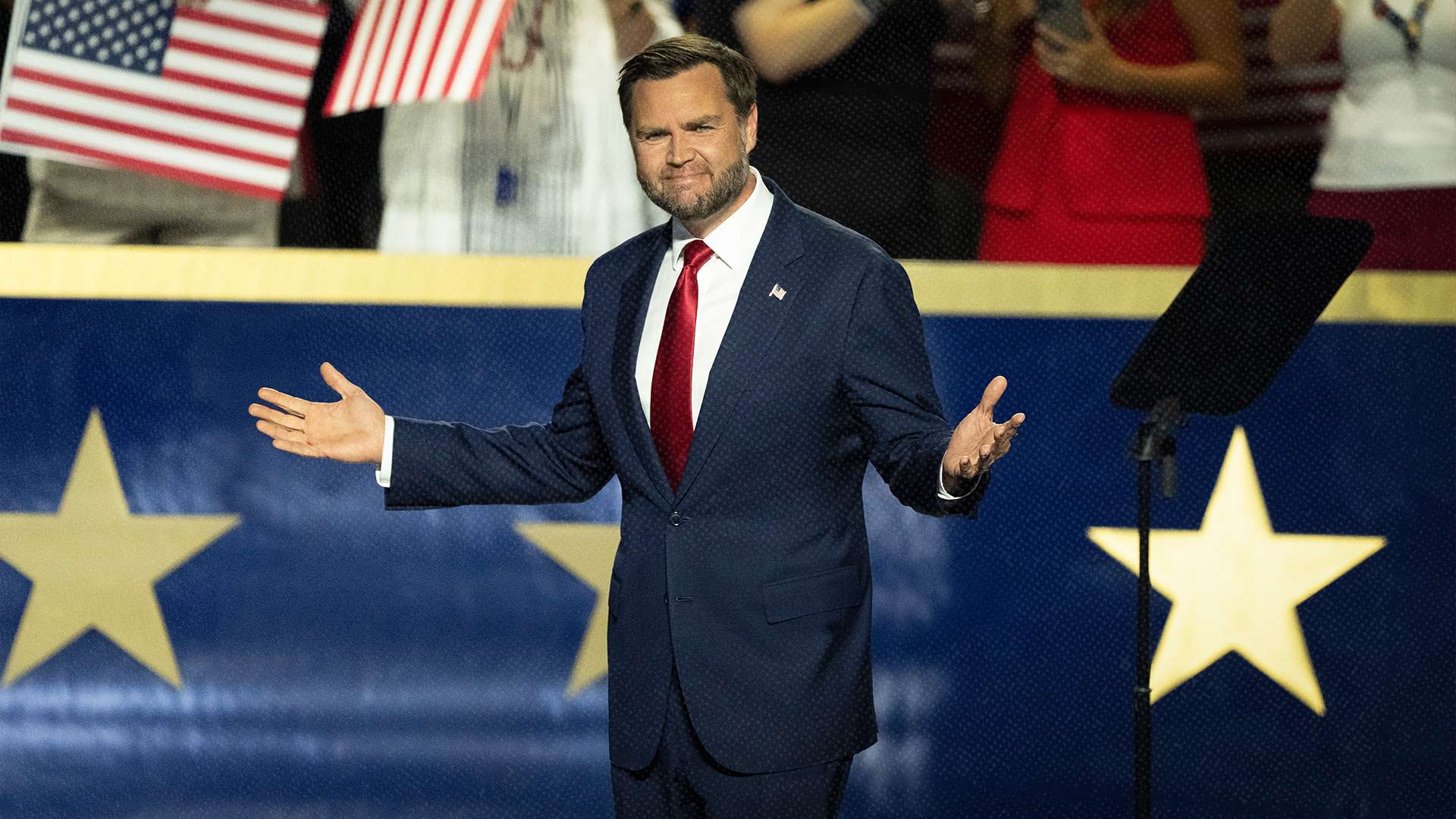
During his 2021 Senate campaign, while trying to overcome his previous denunciations of Donald Trump and win Trump's endorsement, Vance proposed using federal power to seize the assets of the Ford Foundation and redistribute them to people whose lives, he said, had been destroyed by its "radical open-borders agenda."
framing: assertive · carried by 1 article(s) · first seen 2026-10-01
🔮 You might even say I make…a good faith effort.
2026-10-01 · Reason
The Case for Good Faith · assertive framing

Claims (65 extracted, 4 hedged)

I've never been sure how to pronounce it. asserted
I → pronounce → it
The term bona fides trips me up every time. asserted
term → trip → me
But it's an important concept, so I try my best. asserted
I → try → best
You might even say I make…a good faith effort. uncertain
I → say → effort
To argue in good faith—the literal translation of the Latin—means assuming that the person on the other side is saying what he actually believes and that disagreement is not itself evidence of corruption, cowardice, or deceit. asserted
disagreement → argue → corruption
The assumption and practice of good faith makes intellectual debate possible. asserted
debate → make → faith
And yet it feels increasingly rare. asserted
it → feel → ?
Tell someone you favor free trade and you will quickly learn you are really serving the interests of multinational corporations. asserted
you → tell → corporations
Defend immigration and you are importing voters. asserted
you → defend → voters
Oppose a war and you are carrying water for the enemy. asserted
you → oppose → enemy
Politics, in particular, seems to bring out this line of reasoning. asserted
Politics → seem → reasoning
A politician takes a position because donors paid him to. asserted
donors → take → him
A writer believes something because subscribers reward her for believing it. asserted
subscribers → believe → it
A think tanker arrives at precisely the conclusion her funders desired. asserted
funders → arrive → conclusion
Certainly this happens. asserted
this → happen → ?
But more often this gets the direction of causation wrong. asserted
direction → get → causation
Money tends to follow views rather than producing them. asserted
Money → tend → them
People give money to politicians because they agree with them. asserted
they → give → them
Readers subscribe to writers whose ideas they find compelling. asserted
they → subscribe → writers
Foundations fund organizations whose pre-existing missions they support. asserted
they → fund → missions
An existing conviction can become financially rewarding without having been purchased in the first place. asserted
conviction → exist → place
(Ask me how I know, as the editor of a libertarian magazine!) asserted
I → ask → magazine
This should not be a difficult distinction to make. asserted
This → make → ?
Yet we increasingly treat incentives as dispositive evidence of insincerity. asserted
we → treat → insincerity
If someone benefits from saying something, he cannot possibly believe it. uncertain
he → benefit → it
* The original English uses of bona fides belonged primarily to law and commerce, where good faith meant honest dealing: acting without fraud or deception, keeping faith with the terms and purposes of an agreement. asserted
faith → belong → agreement
That idea remains embedded in American commercial law. asserted
idea → embed → law
The Uniform Commercial Code imposes an obligation of good faith in the performance and enforcement of contracts and defines it in terms of honesty and reasonable standards of fair dealing. asserted
Code → impose → dealing
Contracts matter precisely because strangers do not need to love one another, share a religion, vote the same way, or agree about much of anything in order to cooperate. asserted
strangers → matter → anything
But even a world thick with lawyers requires some residual assumption of honesty. asserted
world → require → honesty
You cannot specify in advance every conceivable form of trickery. asserted
You → specify → trickery
At some point, one party has to believe the other is at least trying to uphold his end of the bargain. asserted
other → have → bargain
Over time, bona fides acquired another familiar English meaning. asserted
fides → acquire → meaning
Someone's bona fides became evidence that he was genuine—the proof of who he was, what he had done, and why he deserved to be taken seriously. asserted
he → become → what
Eventually the phrase came to refer to the credentials or qualifications themselves. asserted
phrase → come → credentials
We talk about a politician's conservative bona fides, a scholar's academic bona fides, a candidate's foreign policy bona fides. asserted
We → talk → fides
J.D. Vance has unusually formidable bona fides for the argument he once made about America's working class. asserted
he → have → class
Vance grew up in Rust Belt Middletown, Ohio. asserted
Vance → grow → Middletown
He knew the people he was describing in Hillbilly Elegy. asserted
he → know → Elegy
He watched his own family make good decisions and disastrous ones. asserted
family → watch → decisions
…and 25 more, not listed.

💬Give feedback · no sign-in needed

No sign-in needed for now. Your note is sent without a name, so it cannot be answered.

🕘History 🎫Support