Photo via National Post

Anthony Furey: Now’s the time to scrap Toronto’s land transfer tax

Read the original at National Post ↗
Cite

Kline, J. (2026, October 1). Anthony Furey: Now’s the time to scrap Toronto’s land transfer tax. National Post. https://nationalpost.com/opinion/nows-the-time-to-scrap-torontos-land-transfer-tax

Dated when The Aporia collected the article, usually within hours of publication. Check the original for its exact date and byline.

National Post · collected 2026-10-01 · by Jesse Kline analysis

Quick Summary

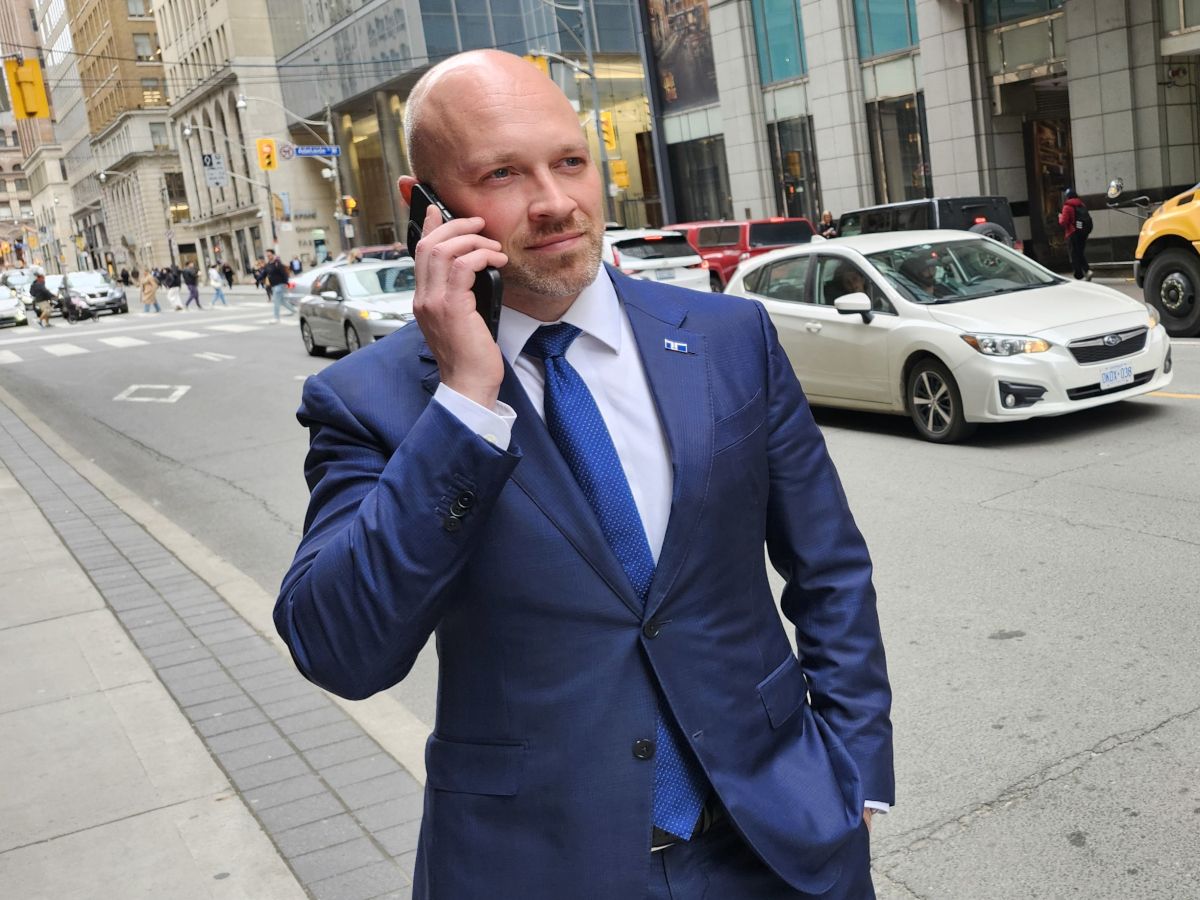
Anthony Furey discusses Toronto mayoral candidate Brad Bradford’s proposal to eliminate or significantly reduce the municipal land transfer tax (LTT) for certain home buyers, aiming to address housing affordability. Bradford plans to exempt first-time buyers and those trading homes within the city from paying LTT on up to $1.1 million of their purchase price. This move echoes Rob Ford’s earlier unsuccessful attempt to cut the tax in 2010 when he was mayor, which faced significant opposition due to concerns about revenue loss. Furey highlights the moral and generational equity issues at play while noting that Bradford is likely to face similar resistance from city hall and media critics who question how the lost $35 million in annual revenue will be compensated for.
Written by AI on 2026-10-01, from this article's own text only (the story summary below draws on all the coverage).

AI analysis

Story summary

Shortly after becoming mayor of Toronto in 2010, Rob Ford tried to reduce the municipal land transfer tax (LTT), which had been introduced by his predecessor, David Miller, just a couple of years earlier. The LTT was an additional tax on new home purchases within city limits, beyond the existing Ontario provincial land transfer tax that buyers were already paying. As a councillor, Ford had long opposed this tax and promised to eliminate it during his mayoral campaign. However, once in office, he was advised by advisors to only reduce the tax by 10%, which would have resulted in a revenue reduction of about $35 million. Despite initial support from some quarters, opposition from city hall bureaucracy and media intensified, arguing that reducing the tax would harm city finances. As a result, Ford's plan for the full elimination of the LTT never materialized, and the tax became entrenched in Toronto’s financial landscape.

Written for “Toronto Land Transfer Tax Debate” on 2026-10-31, grounded in this article and the 0 other(s) covering the same event.

Story

📰 Toronto Land Transfer Tax Debate
Politics · 1 article(s) covering the same event.

Compared with similar articles

This article reads unscored and hedges 0% of its claims. Each row says how that neighbour differs.
The Globe and Mail
Hedges 3 of 55 claims Outlet record 52/100
“The articles discuss different topics related to Toronto's fiscal issues but do not describe the same specific incident.”
How this article was measured signals, leaning charts, publisher record, byline, topics and claims

Signals How these are calculated →

Claims extracted
30
sentences that state something as happening or true
Uncertain
0%
0 of 30 hedged ("reportedly", "may", "according to")
Leaning
withheld
no quote in the article backed the model's score
Publisher signals
60/100
National Post's corrections and hedging, across everything collected from it. Not a measure of accuracy.
Outlets on this story
1
Politics
Same framing elsewhere
1
articles that frame the event the way this one does
Analyzed 2026-10-01 · how these are computed

How this is being covered How these are calculated →

Article leaning vs. publisher reliability
Source leaning vs. consistency

Publisher

National Post · 1242 article(s) · 2 correction(s) detected
Running correction rate · 2 correction(s)

Who wrote this

Jesse Kline
23 article(s) here · 1 carrying a prediction
🔮 An extended stay in the role of “caretaker prime minister” will only serve to exacerbate the issues facing the Jewish state at a time when decisive leadership and fresh ideas are sorely needed.
🔮 From the content of the sergeant’s presentation, it is clear that the B.C. RCMP believed in 2025 that safer supply drugs were being diverted to the black market; that organized gangs were redistributing these drugs across Canada; and that decriminalization and the availability of safer supply may have worsened the opioid crisis.
🔮 The Alberta Human Rights Act will be amended to remove Section 10.1, which currently allows for hiring practices aimed at “the amelioration of the conditions of disadvantaged persons or classes of disadvantaged persons.”
🔮 Whatever the mayor was planning for her second term, Chow will certainly face pressure from council to be more left-wing than she was the first time around.
🔮 The removal of bike lanes in Toronto will surely serve as a motivator for many voters in the municipal election that’s a little over a week away.
🔮 Many parents will tell you how hard it is to find a daycare spot of any type close to Vancouver.
🔮 Former Conservative cabinet minister Chris Alexander unexpectedly joined the Toronto mayoral race on July 29.
🔮 Before Moise could answer, the constituent did so for him: “Because they don’t allow that.
🔮 If Tehran can disrupt traffic through the Strait of Hormuz — which carried roughly 20 per cent of the world’s oil before the war — could the Houthis also threaten the Bab al-Mandab Strait, a vital artery for about 12 per cent of global maritime trade?
🔮 But recent events hint at something much darker: an institutional willingness to downplay or minimize harms caused to Jews, including those living right here in Canada.
Also by Jesse Kline
Nothing else under this byline is closely related to this article, so these are simply their most recent.
All 23 articles by Jesse Kline →

Topics

Ford Ontario Toronto

Subjects

Toronto GPE · 7× Bradford PERSON · 6× Ford ORG · 5× Brad Bradford PERSON · 1× David Miller PERSON · 1× LTT ORG · 1× Ontario GPE · 1× Rob Ford PERSON · 1× Shelley Carroll PERSON · 1×

Narrative

The bureaucracy and media did what they always did with Ford and went into attack mode, saying that such a cut to revenue — it would have meant a reduction of about $35 million — would harm the city coffers and Ford would need to account for how he’d make it up.
framing: assertive · carried by 1 article(s) · first seen 2026-10-01
🔮 Shortly after becoming mayor of Toronto in 2010, Rob Ford tried to reduce the amount of the city’s municipal land transfer tax (LTT).
2026-10-01 · National Post
Anthony Furey: Now’s the time to scrap Toronto’s land transfer tax · assertive framing

Claims (30 extracted, 0 hedged)

Shortly after becoming mayor of Toronto in 2010, Rob Ford tried to reduce the amount of the city’s municipal land transfer tax (LTT). asserted
Ford → become → tax
The much-loathed tax placed on the purchase of new homes within city limits had only come into effect a couple years earlier, introduced by then-mayor David Miller. asserted
tax → loathe → Miller
It was a duplicate tax — replicating the Ontario provincial land transfer tax that buyers were already paying. asserted
buyers → replicate → that
He’d opposed the tax from Day 1 and, during his successful mayoral campaign, pledged to eliminate the whole darn thing. asserted
He → oppose → thing
But, once in office, Ford was encouraged by those around him to temper his plans and only reduce the tax by 10 per cent. asserted
Ford → encourage → cent
Even that proved too steep a hill to climb at city hall. asserted
that → prove → hall
The bureaucracy and media did what they always did with Ford and went into attack mode, saying that such a cut to revenue — it would have meant a reduction of about $35 million — would harm the city coffers and Ford would need to account for how he’d make it up. asserted
he → do → it
Alas, the cut never came to be and the tax was normalized in the minds of home-buyers and voters. asserted
tax → come → buyers
Many years have passed since that policy battle, and we now hear regularly from politicians and bureaucrats concerned about the housing crisis and housing affordability. asserted
we → pass → crisis
While reducing development charges can lower costs, this is an indirect lever because the builder pays them. asserted
builder → reduce → them
The LTT, on the other hand, is paid directly by the buyer on closing. asserted
LTT → pay → closing
The conversation is now back in the spotlight thanks to Toronto mayoral candidate Brad Bradford, who has promised to eliminate the municipal LTT for many buyers if he’s elected. asserted
he → promise → buyers
Bradford announced on Tuesday that he will change the LTT so first-time buyers, or any Toronto homeowner selling one home within the city and then buying another, will pay no tax on the first $1.1 million of the purchase. asserted
buyers → announce → purchase
The tax will still apply to investors and corporations. asserted
tax → apply → investors
“Three of four Toronto renters don’t believe they’ll ever be able to afford to buy a home here,” Bradford said. asserted
Bradford → believe → home
“I refuse to accept that’s the best we can do.” asserted
we → refuse → ?
Young buyers need to be informed that older generations weren’t subject to the same cash grab when they were starting out. asserted
they → need → grab
Bradford is promoting generational fairness. asserted
Bradford → promote → fairness
Right on cue, Bradford is facing the exact same push-back levelled against Ford. asserted
Bradford → face → Ford
The talking point is that Bradford must account for where he is going to make up the revenue shortfall and that unless he can answer that first, such a policy shouldn’t go ahead. But Bradford is seeking a mandate to make this policy a priority. asserted
policy → account → mandate
If voters agree, that gives him the mandate to make it happen, including exploring any trade-offs. asserted
it → agree → offs
That’s how policymaking works. asserted
policymaking → ’ → ?
It’s also the wrong question. What we need to be asking is: how did the city so quickly become reliant on this revenue in the first place? asserted
city → ’ → place
LTTs are notoriously unreliable sources of revenue for budgeting because they fluctuate wildly based on the health of the housing market, both in terms of the volume of transactions and the value of sales. asserted
they → fluctuate → sales
The market is currently experiencing a downturn and bureaucrats were already scrambling to figure out how to deal with the reduction in revenue. asserted
bureaucrats → experience → revenue
Toronto budget chief Shelley Carroll said in the run-up to the 2026 budget process that home sales were “very quiet right now,” which created planning challenges. asserted
which → say → challenges
This means that now is the ideal time to eliminate the LTT. asserted
time → mean → LTT
The fact is that Toronto is already doing without a lot of land transfer tax revenue. asserted
Toronto → do → revenue
Staff are making the tough choices to mitigate the funding implications. asserted
Staff → make → implications
By removing the LTT, Toronto would simply be putting the matter to rest once and for all and getting rid of a tax that should have never been introduced in the first place. asserted
that → remove → place

💬Give feedback
🕘History 🎫Support