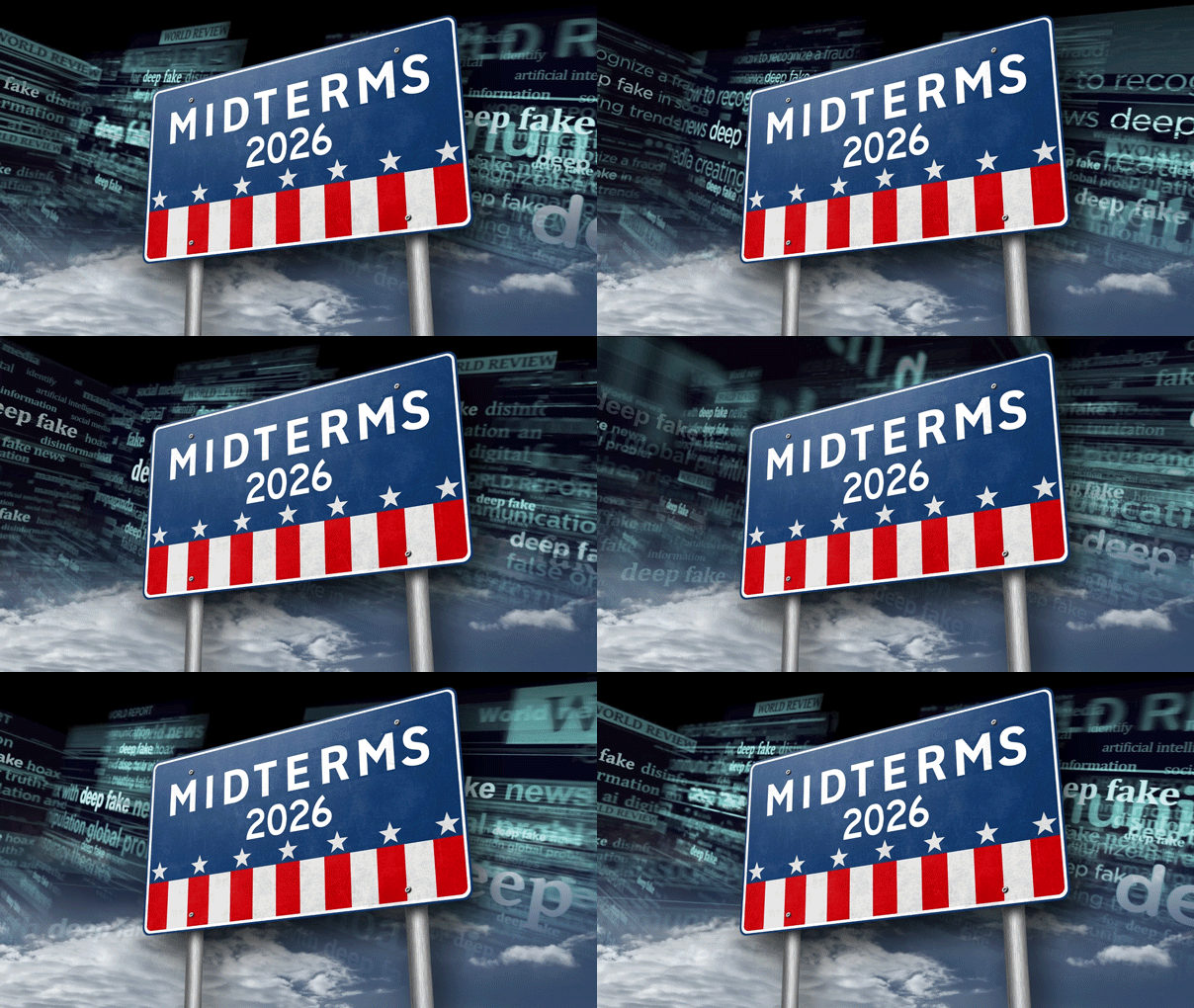
The legal landscape around AI-generated speech is still evolving, but a recent decision in Montana offers a positive development for proponents of free speech.
asserted
decision → generate → speech
Earlier this year, the Montana-based interest group Accountability in State Government sent AI-doctored political mailers to voters.
asserted
group → base → voters
One depicted a legislator spraying cash from a gas pump to display his support for a gas tax hike, and two others depicted Republican legislators sporting pride flags and pronoun pins to suggest their alignment with Democrats in the state legislature.
asserted
legislators → depict → legislature
The legislators depicted filed suit, claiming the mailers violated a Montana state law against AI-generated “deepfakes” in political campaigns.
asserted
mailers → depict → campaigns
But on Sept. 16, a U.S District Court sided with the interest group, arguing the law likely violates the First Amendment.
asserted
law → side → Amendment
The Montana law does not ban AI images outright.
asserted
law → ban → images
Instead, anyone paying for political messages they “knew or should have known” contain a “deepfake” must stamp it with a state-written disclaimer saying it “depicts speech or conduct that falsely appears to be authentic or truthful.”
asserted
that → pay → speech
Violators of the law can be sued, and repeat offenders may face jail time.
uncertain
offenders → sue → time
Yet District Judge Susan Watters found the law likely discriminates against political speech based on both its content and its viewpoint.
asserted
law → find → content
It treats AI images meant to damage a candidate more harshly than equally fake ones meant to flatter.
asserted
It → treat → ones
Montana is far from the only state attempting to ban deepfakes in political campaigns.
asserted
Montana → attempt → campaigns
Thirty states now have laws regulating deepfakes, according to Public Citizen.
uncertain
states → have → Citizen
“This is the third court within the footprint of the Ninth Circuit that has said these types of laws exceed the constitutional authority of states,” said Adam Schulman, senior attorney for the Hamilton Lincoln Law Institute, which represented the interest group.
asserted
which → say → group
State laws against deepfakes in California and Hawaii were struck down by federal judges earlier this year.
asserted
laws → strike → judges
A federal court, however, allowed a similar deepfake law in Minnesota to stand.
asserted
law → allow → Minnesota
The Montana decision once again brings momentum back to the free speech argument, as further challenges inevitably head to circuit courts on appeal.
asserted
challenges → bring → appeal
When asked if the case establishes a precedent nationally, Schulman said, “I think it certainly does.
asserted
it → ask → precedent
There are many officials who feel they have the authority and duty to regulate misinformation more broadly.
asserted
they → be → misinformation
Yet for future campaigns, in Montana at least, AI-generated imagery and messaging will be protected under the First Amendment as much as any other doctored image has been protected in the past.
asserted
image → generate → past
The real question here is not whether AI-generated speech is dangerous, but who gets to decide what speech is and isn’t appropriate.
asserted
speech → generate → ?
Schulman said many legislators view artificial intelligence as “low-hanging fruit” to go after misinformation, and that those same legislators want to “anoint themselves the arbiters of truth.”
asserted
themselves → say → truth
This doesn’t mean the state’s case is completely frivolous.
asserted
case → mean → ?
“Montanans deserve to know when they’re being deceived by AI-manipulated images, audio and videos of candidates,” the state’s Attorney General’s office said.
asserted
office → deserve → candidates
Sure, but the burden falls more on individuals than government regulators.
asserted
burden → fall → regulators
The law on tools such as Photoshop is clear: their output cannot be separated from the user’s actual speech and expression.
asserted
output → separate → speech
“No state has ever made that argument,” Schulman said.
asserted
Schulman → make → argument
Similarly, evolving case law suggests that absent using deepfakes for fraud or abuse, AI is considered the paintbrush, not the painter.
uncertain
AI → evolve → fraud
Whatever it generates is still the protected speech of the user.
asserted
generates → generate → user
“It’s just a technology for expressing an opinion,” Schulman said.
asserted
Schulman → ’ → opinion
The ruling is a reassuring sign for AI companies as they continue to develop tools and innovate: their products are increasingly receiving constitutional protection.
asserted
products → continue → protection
Yet the ruling is still fairly narrow, applicable only to paid political messages.
asserted
ruling → pay → messages
New test cases across a variety of industries and applications will be necessary to establish expansive case law, and district court rulings are just the beginning.
asserted
rulings → establish → law
At the same time, many of those concerns echo the same arguments that were proven overblown throughout the 20th century as other novel technologies developed.
asserted
technologies → echo → century
One concern is timeless, however: regardless of the technology used, America cannot have a free society without a robust culture of free speech.
asserted
America → use → speech
 The Aporia