In what promises to be the most consequential showdown over reproductive rights since the end of Roe v. Wade, three states with near-total abortion bans asked the US Supreme Court on Wednesday to strike down blue-state laws that have enabled tens of thousands of abortions every year across state lines since 2022.
asserted
that → promise → 2022
The action by Louisiana, Alabama, and Arkansas was a dramatic escalation in the long-running battle over so-called shield laws, which provide legal immunity to doctors, organizations, and advocates in liberal states who deliver abortion care, mostly in the form of pills, to people in states with draconian abortion laws.
asserted
who → run → laws
The suit—filed directly with the high court just in time for the start of its new session next week—accuses California, Massachusetts, and New York of violating the US Constitution’s Full Faith and Credit Clause, which requires states to respect “the public acts, records, and judicial proceedings” of other states.
asserted
which → file → states
The suit describes efforts by the defendants to circumvent Republican-passed abortion bans as a violation of states’ sovereignty and “one of the most serious interstate aggressions in our Nation’s history.”
asserted
suit → describe → history
A second lawsuit, filed in federal court in Louisiana on Wednesday, targets more than two dozen individual providers and pharmacists, accusing them of “a sweeping, coordinated scheme” to send abortion pills through the mail in violation of strict bans.
asserted
lawsuit → file → bans
The defendants include Dr. Angel Foster and her colleagues at The Massachusetts Medication Abortion Access Project, or The MAP, whose operations I wrote about for Mother Jones and Reveal this past summer.
asserted
I → include → Jones
(My reporting is cited frequently throughout the two lawsuits, along with that of other news organizations including the New York Times, Ms. and NPR.)
asserted
reporting → cite → Times
At the time, Foster told me that The MAP was filling more than 6,000 pill orders a month, 95 percent to states where abortion is subject to harsh restrictions and near-total bans—among the details from my stories the lawsuits cite.
asserted
lawsuits → tell → stories
“Our constitutional system does not tolerate such blatant disregard for a state’s sovereign authority,” says the provider lawsuit, which also targets abortion-pill operations in California, Maryland, Delaware, and New Jersey.
asserted
which → tolerate → California
“That is true regardless of the nature of the products being unlawfully shipped…
asserted
That → ship → products
It does not matter whether the package contains anthrax, mail bombs, or chemical weapons intended to harm individuals within that state, or (as is the case here) abortion drugs.
asserted
case → matter → state
”
As I have written, shield laws are designed to thwart the near-total abortion bans and other restrictions that have proliferated in red states since the 2022 Dobbs decision.
asserted
that → write → decision
Broadly speaking, these measures prohibit law enforcement and state agencies from engaging in actions that could help abortion opponents bring criminal or civil cases against abortion doctors, helpers, or patients.
uncertain
opponents → speak → doctors
In most shield-law states, police can’t serve arrest warrants; court clerks can’t issue subpoenas; IT staff can’t comply with records requests, and governors can’t sign extradition orders.
asserted
governors → serve → orders
.
Perhaps the closest analogy [are] the “personal liberty laws” that Northern states enacted to resist the Fugitive Slave Act before the Civil War.
asserted
states → enact → War
Nearly two dozen states and Washington, DC, have created some version of shield protections; eight of those states, including California, Massachusetts, and New York, have adopted laws that explicitly protect people who provide or facilitate abortion care via telemedicine.
asserted
who → create → telemedicine
The laws have proven to be “one of the strongest tools that reproductive freedom advocates have to protect abortion access in a post-Roe reality,” Ashley Kurzweil, a senior policy analyst at the National Partnership for Women & Families, told me last fall.
asserted
Kurzweil → prove → me
“It’s painfully obvious that anti-abortion extremists are targeting shield laws because they are working.
asserted
they → ’ → laws
But the legal theories underpinning shield laws have remained largely untested—and abortion supporters and opponents alike have long predicted that the Supreme Court would be forced to settle the vast constitutional issues they raise.
asserted
they → underpin → issues
Shield laws—combined with telemedicine and abortion pills—have led to one of the biggest surprises of the Dobbs era.
asserted
laws → combine → era
Instead of rates plummeting as expected, clinician-supported abortions increased 16 percent last year compared with 2022.
asserted
abortions → plummet → 2022
Telehealth now accounts for 30 percent of abortions in the US; almost two-thirds of abortions in the country occur using pills.
asserted
thirds → account → pills
Despite having some of the toughest abortion laws in the country, Louisiana has not been immune to that trend.
asserted
Louisiana → have → trend
By the end of last year, out-of-state providers were sending almost 1,000 abortion packages of pills a month to patients there.
asserted
providers → send → patients
Meanwhile, that state’s Attorney General Liz Murrill’s efforts to extradite abortion providers from New York and California have been stymied.
asserted
efforts → extradite → York
One of the people Murrill has sought to prosecute, California-based doctor Rémy Coeytaux, is among those named in the new case.
asserted
Murrill → seek → case
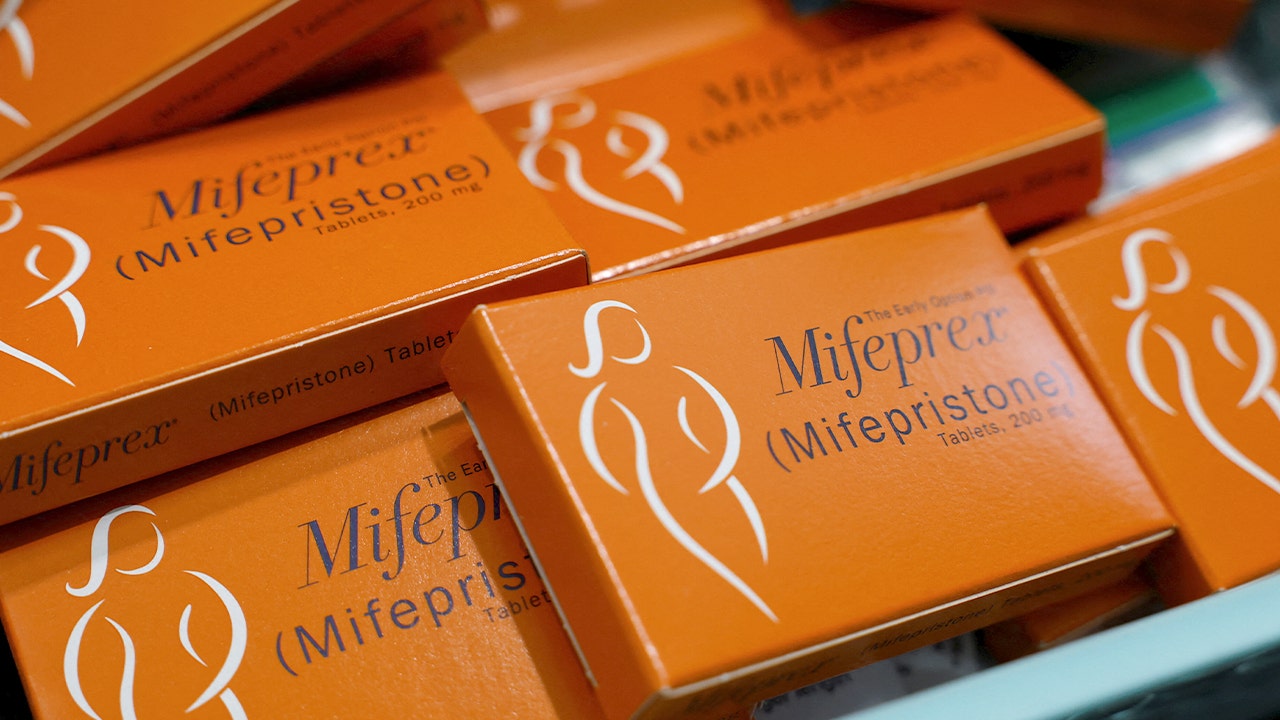
Last fall, she tried another strategy to stop the flow of pills, suing the FDA over its 2023 rules allowing the abortion medication mifepristone to be prescribed via telemedicine and sent through the mail.
asserted
medication → try → mail
When the case went to the Supreme Court briefly this past spring, Justice Samuel Alito singled out shield laws for a blistering attack, calling them a “scheme to undermine” Dobbs.
asserted
Alito → go → Dobbs
The complaint by Louisiana, Alabama and Arkansas is the first time anti-abortion states have tried to take action directly against shield-law states.
asserted
states → try → states
Murrill and her colleagues argue that such laws flout the high court’s decision in Dobbs, which struck down the federal right to abortion and returned regulation to the states.
asserted
which → argue → states
The blue states “have claimed the right to make abortion policy—their abortion policy—for the entire Nation by overriding democratically enacted laws in pro-life states,” the lawsuit argues.
asserted
lawsuit → claim → states
Murrill reiterated those arguments at a news conference Wednesday, the Louisiana Illuminator reported.
asserted
Illuminator → reiterate → conference
“We will not allow activist states, activist providers or distributors profiting from killing babies to threaten Louisiana’s sovereignty, violate Louisiana’s laws and endanger Louisiana women and Louisiana babies,” she said, adding, “It is no different than if they were sending fentanyl in these boxes.”
asserted
they → allow → boxes
Joining her were Republican attorneys general Steve Marshall of Alabama—who has threatened advocates who provide information about abortion and help women travel for care—and Tim Griffin of Arkansas.
asserted
women → join → Arkansas
As the New York Times noted, filing a case directly to the Supreme Court isn’t unusual when states are in conflict.
asserted
states → note → conflict
States can bring disputes between themselves directly to the Supreme Court, which is given “original jurisdiction” by the Constitution and can function in such cases like a trial court.
asserted
which → bring → court
Past disputes that have gone before the court involved challenges over geographic boundaries or water rights.
asserted
that → go → boundaries
Justices have the discretion to turn down these cases, and often do.
asserted
Justices → have → cases
New York’s attorney general, Letitia James, denounced the lawsuit and said her office would defend the state’s shield law, the Times reported.
asserted
Times → denounce → law
“Louisiana, Alabama and Arkansas are asking the Supreme Court to let them impose their abortion bans on New York and punish our doctors for providing legal health care,” she said.
asserted
she → ask → care
…and 1 more, not listed.
 The Aporia