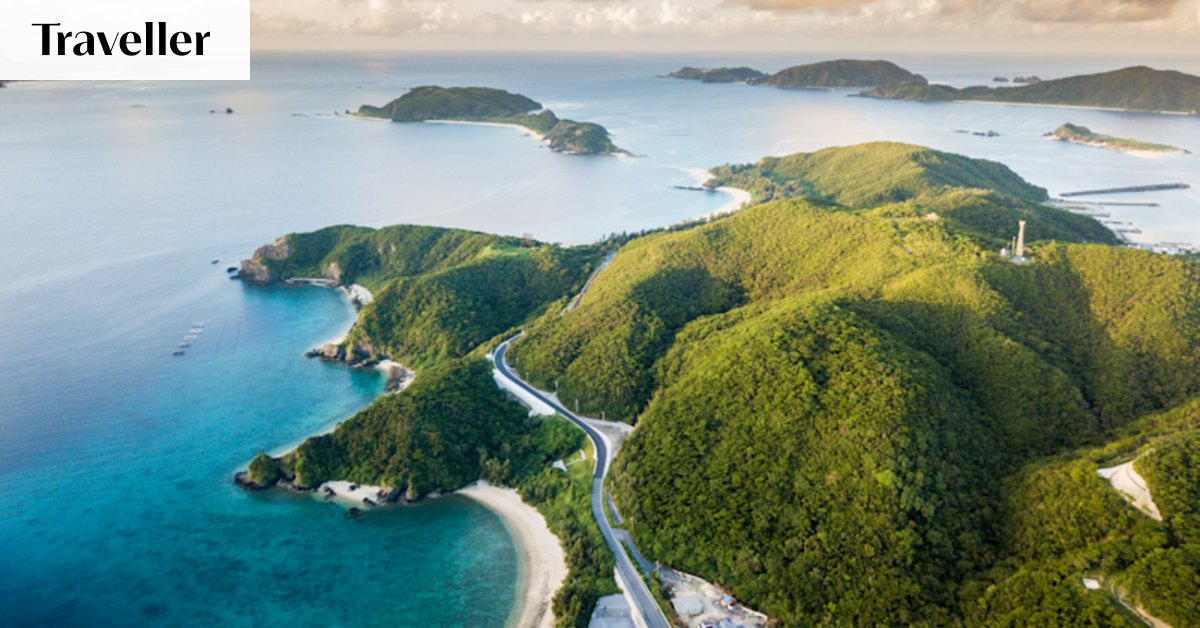
The first typhoon of the season is scheduled to arrive at midday.
asserted
typhoon → schedule → midday
If all goes according to plan, we will sail into its eye somewhere along Shikoku’s southern seaboard.
uncertain
we → go → seaboard
“My question: how are your sea legs?” asks Captain Pierre-Marie Ducournau.
asserted
Ducournau → ask → ?
A nervous titter washes through Le Soleal’s auditorium, where we’ve gathered for a pre-departure briefing.
asserted
we → wash → briefing
But Ducournau is just teasing.
asserted
Ducournau → tease → ?
Instead of sailing headfirst from Osaka into the capricious Pacific Ocean, he will instead detour through the truly pacific Seto Inland Sea.
asserted
he → sail → Sea
It won’t be the last calamity we thwart on this trip.
asserted
we → thwart → trip
“We can see Typhoon Jangmi will go fast [up] the east of Japan,” he says.
asserted
he → see → Japan
“That will clear our path on the west coast of Kyushu, and thanks to this, we will be able to resume our itinerary in Kagoshima.
asserted
we → clear → Kagoshima
We glide westwards through the night, and dock next morning at Imabari on Shikoku’s northern shore.
asserted
We → glide → shore
The world outside the windows of my deluxe suite is ice blue: the millpond sea; the bridges threading together islets on their journey from Honshu; Shikoku’s mountains stacked like frozen waves against the sky.
asserted
world → thread → sky
It’s hard to believe a typhoon is about to shred the coast beyond those resolute ridges.
asserted
typhoon → ’ → ridges
“Shikoku is well known for its sunlight,” says guide Keisuke Yamamoto.
asserted
Yamamoto → know → sunlight
“In Japan, we have four distinct seasons, and maybe we can add a fifth, the rainy season.
asserted
we → have → fifth
It’s called tsuyu – plum rain – and it’s arriving soon.”
asserted
it → call → ?
But we can ward off bad weather by paying our respects to the god of the mountains.
asserted
we → ward → mountains
We cross the Kurushima Kaikyo Bridge to Omishima Island, wander through the torii gates at Oyamazumi Shrine, and make our petition.
asserted
We → cross → petition
The mountain god to whom this shrine is dedicated is “at the same time the god of the ocean and of navigation”, says Yamamoto.
asserted
Yamamoto → dedicate → navigation
Given Typhoon Jangmi’s proximity, “it’s important for us to start our visit at this shrine”.
asserted
us → give → shrine
The sea is polished as we drift forth overnight.
asserted
we → drift → ?
At dawn, the ship slips through the narrow strait separating Honshu and Kyushu and pops like a cork into the Korea Strait.
asserted
ship → slip → Strait
Rain smudges the windows of the observation lounge.
asserted
Rain → smudge → lounge
“Ah yes – the rain, the rain,” laments Yamamoto.
asserted
Yamamoto → lament → ?
But our entreaties to the mountain god will pay multiple dividends by the end of this trip.
asserted
entreaties → pay → trip
We bump along Kyushu’s western seaboard, take refuge in Hakata Bay and make our second hastily planned stop at Fukuoka.
asserted
We → bump → Fukuoka
Cherry blossom-pink buses ferry us to Kyushu National Museum in Dazaifu.
asserted
buses → ferry → Dazaifu
“Thank you for coming in the typhoon – the typhoon!” says guide Yuko Ehara.
asserted
Ehara → thank → typhoon
“Usually, the typhoon season is summer time, but this [springtime] rainy season is very important for growing rice.
asserted
season → grow → rice
Rice sprouts tremble in the flooded fields, and the glass-encased museum is spattered with raindrops.
asserted
museum → tremble → raindrops
History is sealed safely inside it: earthenware vessels, sutra containers, fragile scrolls and the fossilised jaw of a Naumann’s elephant, an extinct species from the Pleistocene era.
asserted
History → seal → era
The exhibit was dredged from the Seto Inland Sea in the 19th century.
asserted
exhibit → dredge → century
“We’re just in time to see the typhoon passing,” says Ducournau, as he eases Le Soleal out of Hakata Bay and towards the East China Sea.
asserted
he → ’re → Sea
Kagoshima Bay comes into sight right on schedule.
asserted
Bay → come → schedule
Sakurajima, an active volcano, squats at its centre, its vent capped not with steam but with white cloud.
asserted
vent → squat → cloud
Once an island, it’s now fastened with a collar of lava to the mainland opposite Kagoshima, from which an around-the-clock ferry service transports the residents still living in the shadow of this volatile formation named, curiously, for the graceful cherry blossom.
asserted
service → fasten → blossom
“You want to know how many times this year it erupted?” asks guide Mayumi Uchiyama.
asserted
Uchiyama → want → ?
Most eruptions are insubstantial, but some reshape the landscape: Sakurajima Visitor Centre stands on a lava field formed after an eruption in 1914.
asserted
Centre → reshape → 1914
A trail skirts the volcano’s flanks; up close, it looks innocuous with its cloudy scarf and skirt of spruce.
asserted
it → skirt → spruce
But in five days’ time it will erupt violently, blackening the sky and spewing effluvium.
asserted
it → erupt → effluvium
But we’re long gone by then, weaving our way through the Ryukyu Archipelago, which arches like a dislocated spine towards Taiwan.
asserted
which → go → Taiwan
…and 38 more, not listed.
 The Aporia