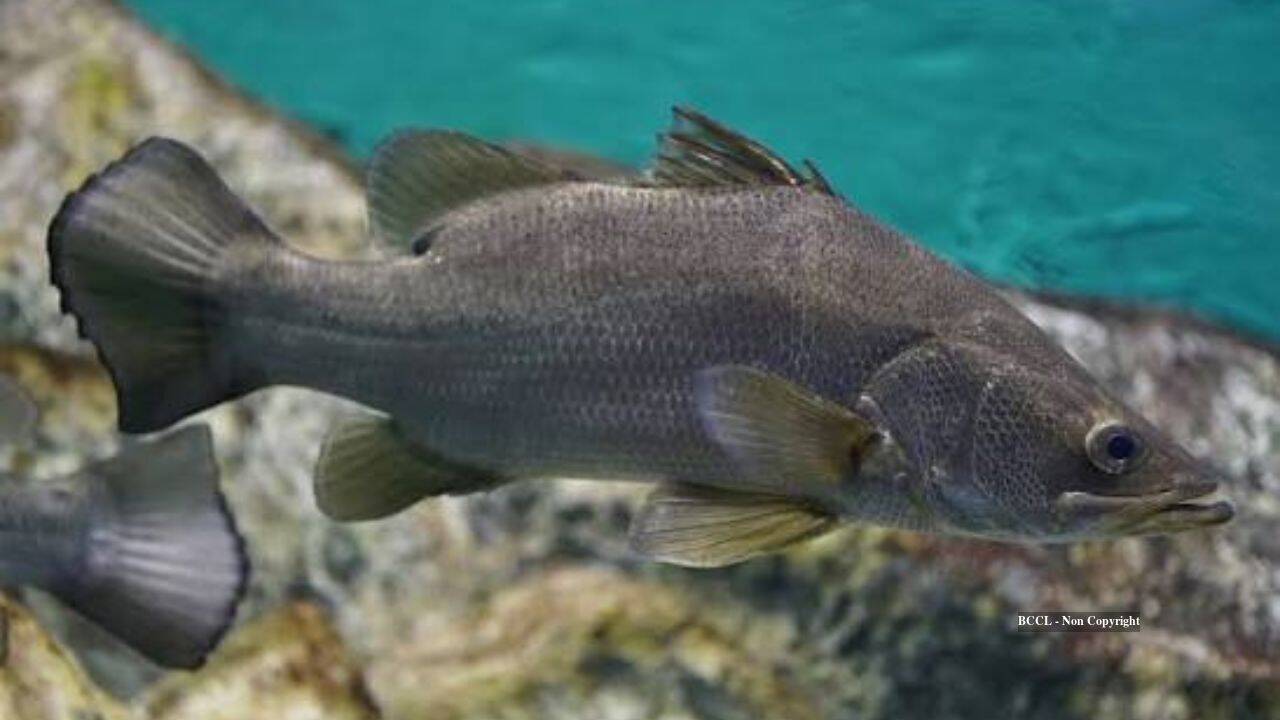
Photo via Times of India

Nile perch introduced to Lake Victoria years ago transformed its fishery and threatened cichlids

Read the original at Times of India ↗
Cite

TOI Science Desk. (2026, October 1). Nile perch introduced to Lake Victoria years ago transformed its fishery and threatened cichlids. Times of India. https://timesofindia.indiatimes.com/science/wildlife/in-the-late-1950s-and-early-1960s-nile-perch-were-introduced-into-lake-victoria-to-improve-fisheries-decades-later-the-predator-was-linked-to-the-loss-of-many-native-cichlids-and-transformation-of-the-lakes-fishery/articleshow/134585132.cms

Dated when The Aporia collected the article, usually within hours of publication. Check the original for its exact date and byline.

Times of India · collected 2026-10-01 · by TOI Science Desk

Quick Summary

In the late 1950s and early 1960s, Nile perch were introduced into Lake Victoria with the intent of bolstering local fisheries. However, instead of enhancing the ecosystem, these large predatory fish spread rapidly and led to a significant decline in native species, particularly cichlids. The National Invasive Species Information Center reports that approximately 200 native fish species have been destroyed due to predation and competition from Nile perch. This introduction highlights how introducing non-native species can lead to unforeseen ecological consequences.
Written by AI on 2026-10-01, from this article's own text only (the story summary below draws on all the coverage).

AI analysis

Story summary

In the late 1950s and early 1960s, Nile perch were introduced into Lake Victoria, spanning Kenya, Tanzania, and Uganda, with the aim of boosting local fisheries and creating new commercial opportunities. However, instead of strengthening the fishery, Nile perch spread rapidly through the lake's ecosystem and contributed to a dramatic decline in native fish species. According to The National Invasive Species Information Center, by 1954, Nile perch had been introduced to Lake Victoria and later led to the destruction of about 200 native fish species due to predation and competition for food resources. This situation illustrates how an initially well-intentioned decision can have far-reaching negative environmental consequences.

Written for “Nile Perch Impact On Lake Victoria” on 2026-11-04, grounded in this article and the 0 other(s) covering the same event.

Story

📰 Nile Perch Impact On Lake Victoria
Environment · 1 article(s) covering the same event.

Compared with similar articles

Nothing to compare against. No article is close enough to this one for the pipeline to have linked or judged the pair.
How this article was measured signals, leaning charts, publisher record, byline, topics and claims

Signals How these are calculated →

Claims extracted
63
sentences that state something as happening or true
Uncertain
3%
2 of 63 hedged ("reportedly", "may", "according to")
Leaning
not political
takes no side on a contested political question
Publisher signals
59/100
Times of India's corrections and hedging, across everything collected from it. Not a measure of accuracy.
Outlets on this story
1
Environment
Same framing elsewhere
1
articles that frame the event the way this one does
Analyzed 2026-10-01 · how these are computed

How this is being covered How these are calculated →

Article leaning vs. publisher reliability
Source leaning vs. consistency

Publisher

Times of India · 4073 article(s) · 4 correction(s) detected
Running correction rate · 4 correction(s)

Who wrote this

TOI Science Desk
308 article(s) here · 1 carrying a prediction
🔮 Researchers are continuing to examine daily measurements to determine whether temperatures will climb further.
🔮 According to Reuters reporting by Will Dunham, a new study published in the journal Spixiana documents more than 90 Bangka slow lorises identified between 2015 and 2025.
🔮 “Normally, my job is quite monotonous, so I wanted to create something that would entertain people, turning my ‘serious’ job into something fun,” he said in a Guinness World Records news release.
🔮 The subsequent collision between the two galaxy clusters may then have compressed the cloud or re-energised its particles, causing it to shine more brightly in radio wavelengths once again.
🔮 The mathematicians at the University of California, Davis, argue that the answer may already lie within Einstein’s own equations and that an invisible form of energy may not be needed at all.
🔮 The work will be carried out by the West Tennessee River Basin Authority, which is preparing a plan to restore the river and the land around it.
🔮 Cornell University scientists have developed genetically engineered tomato plants that turn red-purple when nitrogen becomes scarce, giving farmers a visible warning that crops may need fertiliser.
🔮 By studying these crystals and other mineral grains, scientists could establish the meteorite's age and identify later changes caused by water.
🔮 Centuries later, bronze objects found in Scandinavia would preserve chemical signatures consistent with the metals produced at this Spanish site, offering evidence of connections that may have crossed much of Europe.
🔮 Deposited impurities and staining may also have contributed, while low temperatures and humidity could cause the fabric to crack.
Wire or desk byline, not an individual reporter.
Also by TOI Science Desk
Nothing else under this byline is closely related to this article, so these are simply their most recent.
All 308 articles by TOI Science Desk →

Topics

Kenya Tanzania The National Invasive Species Information Center The National Invasive Species Information Center Uganda

Subjects

Kenya GPE · 1× Tanzania GPE · 1× The National Invasive Species Information Center ORG · 1× The National Invasive Species Information Center ORG · 1× Uganda GPE · 1×

Narrative

The number illustrates the scale of the change, although scientists have also examined other factors that contributed to the decline of native fish, including overfishing, pollution, habitat changes and shifts in water quality.
framing: assertive · carried by 1 article(s) · first seen 2026-10-01
🔮 In the late 1950s and early 1960s, Nile perch were introduced into Lake Victoria with the hope that the large predatory fish would strengthen local fisheries.

Claims (63 extracted, 2 hedged)

In the late 1950s and early 1960s, Nile perch were introduced into Lake Victoria with the hope that the large predatory fish would strengthen local fisheries. asserted
fish → introduce → fisheries
The decision was intended to create new commercial opportunities and increase the supply of valuable fish. asserted
decision → intend → fish
Instead, the species spread through one of the world’s largest freshwater ecosystems and became linked to a dramatic decline in native fish. asserted
species → spread → fish
The National Invasive Species Information Center says Nile perch were introduced to Lake Victoria in 1954 and later destroyed about 200 native fish species through predation and competition for food. asserted
perch → say → food
The story has become a powerful example of how a well-intentioned fisheries decision can produce consequences that extend far beyond its original goal. asserted
that → become → goal
Why Nile perch were introduced Lake Victoria, shared by Kenya, Tanzania and Uganda, has long supported communities that depend on fishing for food, income and trade. asserted
that → introduce → food
Before the arrival of Nile perch, the lake contained a remarkable variety of native fish, especially cichlids. asserted
lake → contain → fish
Cichlids are a diverse group of freshwater fish known for their unusual variety of body shapes, feeding habits and behaviours. asserted
Cichlids → know → shapes
Lake Victoria was home to hundreds of native cichlid species, many of which had evolved within the lake and occupied highly specialised ecological roles. asserted
many → evolve → roles
The Nile perch, scientifically known as Lates niloticus, is native to parts of Africa. asserted
perch → know → Africa
It is a large freshwater predator that can grow much bigger than many of the fish already living in Lake Victoria. asserted
that → grow → Victoria
Fisheries managers believed that introducing it could create a commercially valuable fishery and provide a new source of income for lakeside communities. uncertain
introducing → believe → communities
The introduction was not immediately understood as an ecological experiment of enormous scale. asserted
introduction → understand → scale
At the time, the focus was largely on increasing catches and improving the economic potential of the lake. asserted
focus → increase → lake
The long-term effects of adding a powerful predator to a complex ecosystem were much harder to predict. asserted
effects → add → ecosystem
A predator enters a complex food web Nile perch did not simply become another fish in the lake. asserted
perch → enter → lake
As predators, they competed with native species for food and consumed smaller fish. asserted
they → compete → fish
Their presence added new pressure to an ecosystem in which many species had developed alongside one another over thousands or millions of years. asserted
species → add → years
Native cichlids were particularly vulnerable because they occupied many of the lake’s feeding and habitat niches. asserted
they → occupy → niches
Some ate algae, while others fed on insects, molluscs or smaller fish. asserted
others → eat → insects
The arrival of Nile perch introduced a predator capable of feeding on numerous species across different parts of the food web. asserted
arrival → introduce → web
The National Invasive Species Information Center reports that the species ultimately destroyed about 200 native fish species through predation and competition for food. asserted
species → report → food
The number illustrates the scale of the change, although scientists have also examined other factors that contributed to the decline of native fish, including overfishing, pollution, habitat changes and shifts in water quality. asserted
that → illustrate → quality
As the Nile perch population expanded, the balance of the fishery changed. asserted
balance → expand → fishery
A lake once known for its extraordinary variety of native fish increasingly became associated with a smaller number of commercially important species. asserted
lake → know → species
The decline of Lake Victoria’s cichlids is one of the most widely discussed examples of biodiversity loss in a freshwater ecosystem. asserted
decline → discuss → ecosystem
Many species disappeared from parts of the lake, while others became extremely rare or survived only in limited habitats. asserted
others → disappear → habitats
Each species had its own role in the ecosystem. asserted
species → have → ecosystem
Some were used to control algae, some to process nutrients, and some were prey for larger animals. asserted
some → use → animals
When many species vanished, the lake lost not only individual fish but also the ecological functions they performed. asserted
they → vanish → fish
The loss of native fish also affected the scientific knowledge. asserted
loss → affect → knowledge
The cichlids of Lake Victoria, for example, diversified rapidly, evolving into related species with different traits and lifestyles. asserted
cichlids → diversify → traits
Their decline reduced the living diversity available for researchers studying evolution and adaptation. asserted
decline → reduce → evolution
The change presented challenges and opportunities for local communities. asserted
change → present → communities
Processing plants and exports were a large component of the Nile perch industry. asserted
plants → process → industry
At the same time, dependence on a smaller number of fish species made the fishery more vulnerable to changes in population, markets and environmental conditions. asserted
fishery → make → population
An economic success with environmental costs The Nile perch fishery generated substantial economic activity around Lake Victoria. asserted
fishery → generate → Victoria
Large fish could be processed, transported and sold in domestic and international markets. uncertain
fish → process → markets
In some areas, the new fishery provided jobs and income that the earlier, more diverse fishery had not produced at the same commercial scale. asserted
fishery → provide → scale
However, economic gains did not erase the environmental costs. asserted
gains → erase → costs
…and 23 more, not listed.

💬Give feedback
🕘History 🎫Support