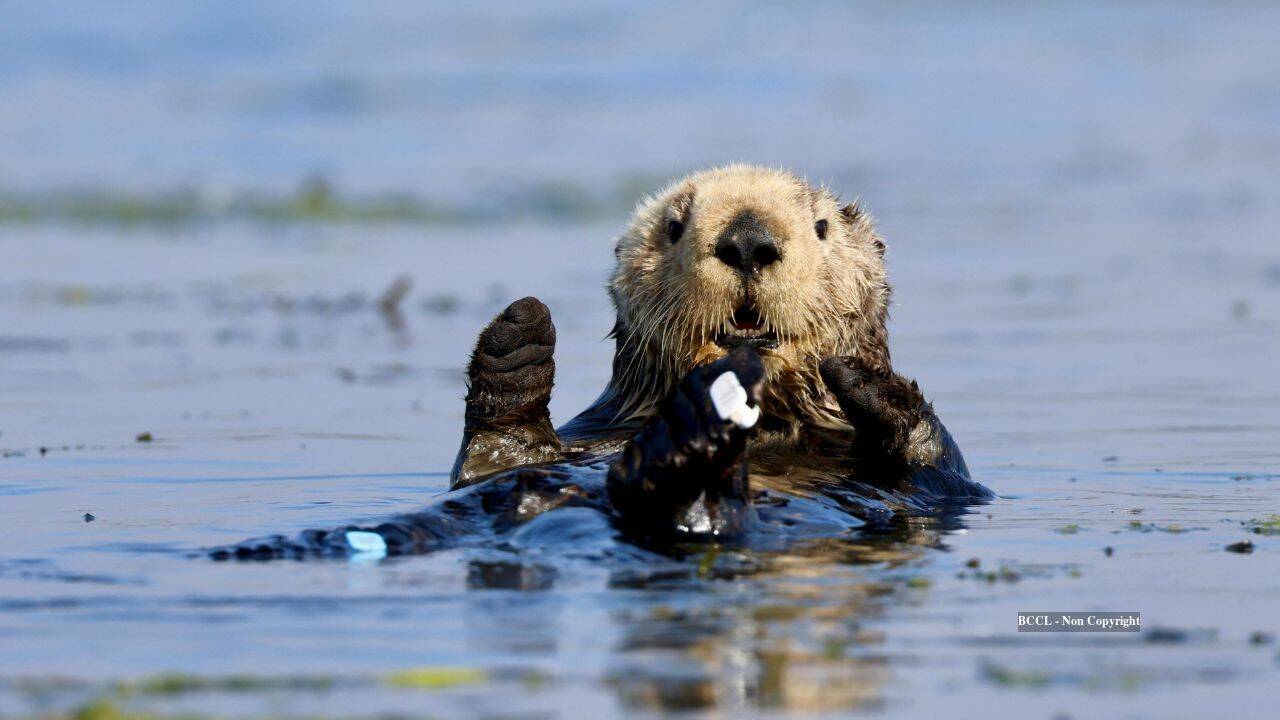
Photo via Times of India

$57M gift helped open Monterey Bay Aquarium, whose sea otter programme has saved 1,000+ animals

Read the original at Times of India ↗
Cite

TOI Science Desk. (2026, October 1). $57M gift helped open Monterey Bay Aquarium, whose sea otter programme has saved 1,000+ animals. Times of India. https://timesofindia.indiatimes.com/science/wildlife/in-1984-a-57-million-gift-from-david-and-lucile-packard-helped-open-monterey-bay-aquarium-its-sea-otter-programme-has-since-cared-for-over-1000-stranded-animals-and-surrogate-raised-84-pups/articleshow/134590071.cms

Dated when The Aporia collected the article, usually within hours of publication. Check the original for its exact date and byline.

Times of India · collected 2026-10-01 · by TOI Science Desk

Quick Summary

In 1984, a $57 million donation from David and Lucile Packard transformed a former cannery site in California into the Monterey Bay Aquarium. The aquarium has since welcomed over 70 million visitors and developed significant conservation programs, including one focused on sea otters that has cared for more than 1,000 stranded animals and successfully raised 84 pups for release back into the wild.
Written by AI on 2026-10-01, from this article's own text only (the story summary below draws on all the coverage).

AI analysis

Story summary

In 1984, a $57 million donation from the David and Lucile Packard Foundation transformed a former cannery site on California's Cannery Row into the Monterey Bay Aquarium. Over four decades later, this institution is renowned for its educational exhibits including kelp forests, jellyfish, and deep-sea creatures. The aquarium has also made significant contributions to marine conservation through programs like the Sea Otter Recovery Program, which has cared for over 1,000 stranded sea otters and successfully raised 84 pups for release into the wild. The project was initiated by Nancy Burnett and Julie Packard, daughters of David Packard, alongside local scientists who saw a need to bring greater public attention to Monterey Bay's unique marine ecosystems. This vision took six years of planning before the aquarium officially opened, with the Packards' substantial financial support being crucial in making it possible.

Written for “Monterey Bay Aquarium Donation Sea Ot…” on 2026-11-03, grounded in this article and the 0 other(s) covering the same event.

Story

📰 Monterey Bay Aquarium Donation Sea Ot…
Education · 1 article(s) covering the same event.

Compared with similar articles

Nothing to compare against. No article is close enough to this one for the pipeline to have linked or judged the pair.
How this article was measured signals, leaning charts, publisher record, byline, topics and claims

Signals How these are calculated →

Claims extracted
59
sentences that state something as happening or true
Uncertain
8%
5 of 59 hedged ("reportedly", "may", "according to")
Leaning
not political
takes no side on a contested political question
Publisher signals
59/100
Times of India's corrections and hedging, across everything collected from it. Not a measure of accuracy.
Outlets on this story
1
Education
Same framing elsewhere
1
articles that frame the event the way this one does
Analyzed 2026-10-01 · how these are computed

How this is being covered How these are calculated →

Article leaning vs. publisher reliability
Source leaning vs. consistency

Publisher

Times of India · 3982 article(s) · 3 correction(s) detected
Running correction rate · 3 correction(s)

Who wrote this

TOI Science Desk
307 article(s) here · 1 carrying a prediction
🔮 According to Reuters reporting by Will Dunham, a new study published in the journal Spixiana documents more than 90 Bangka slow lorises identified between 2015 and 2025.
🔮 “Normally, my job is quite monotonous, so I wanted to create something that would entertain people, turning my ‘serious’ job into something fun,” he said in a Guinness World Records news release.
🔮 The subsequent collision between the two galaxy clusters may then have compressed the cloud or re-energised its particles, causing it to shine more brightly in radio wavelengths once again.
🔮 The mathematicians at the University of California, Davis, argue that the answer may already lie within Einstein’s own equations and that an invisible form of energy may not be needed at all.
🔮 The work will be carried out by the West Tennessee River Basin Authority, which is preparing a plan to restore the river and the land around it.
🔮 Cornell University scientists have developed genetically engineered tomato plants that turn red-purple when nitrogen becomes scarce, giving farmers a visible warning that crops may need fertiliser.
🔮 By studying these crystals and other mineral grains, scientists could establish the meteorite's age and identify later changes caused by water.
🔮 Centuries later, bronze objects found in Scandinavia would preserve chemical signatures consistent with the metals produced at this Spanish site, offering evidence of connections that may have crossed much of Europe.
🔮 Deposited impurities and staining may also have contributed, while low temperatures and humidity could cause the fabric to crack.
🔮 Two male king cobras meeting during the breeding season may engage in a prolonged contest, using their bodies to wrestle for control rather than relying on the venomous strikes associated with these snakes.
Wire or desk byline, not an individual reporter.
Also by TOI Science Desk
Nothing else under this byline is closely related to this article, so these are simply their most recent.
All 307 articles by TOI Science Desk →

Topics

California the David and Lucile Packard Foundation the Monterey Bay Aquarium the Packard Foundation

Subjects

MBARI ORG · 4× California GPE · 2× David PERSON · 2× Lucile Packard PERSON · 2× the Monterey Bay Aquarium ORG · 2× David Packard’s PERSON · 1× Julie Packard PERSON · 1× Nancy Burnett PERSON · 1× the David and Lucile Packard Foundation ORG · 1× the Packard Foundation ORG · 1×

Narrative

The location was meaningful because Cannery Row had once been the centre of a major fishing industry before declining fish populations and economic pressures led to the closure of the last cannery in 1973.
framing: assertive · carried by 1 article(s) · first seen 2026-10-01
🔮 Exhibits designed to inspire action otter The aquarium’s exhibits were created to give visitors a close look at habitats that many people could not easily explore for themselves.

Claims (59 extracted, 5 hedged)

In 1984, a $57 million gift from David and Lucile Packard helped turn a former cannery site on California’s Cannery Row into the Monterey Bay Aquarium. asserted
gift → turn → Aquarium
Four decades later, the institution is known not only for its kelp forest, jellyfish and deep-sea exhibits, but also for conservation work that reaches far beyond its walls. asserted
that → know → walls
According to the David and Lucile Packard Foundation, the aquarium has welcomed more than 70 million visitors and developed major programmes in marine science and education. uncertain
aquarium → accord → science
Its Sea Otter Recovery Program has cared for more than 1,000 stranded sea otters and successfully surrogate-raised 84 pups for release into the wild. asserted
Program → care → wild
A vision shaped by Monterey Bay The idea for the aquarium emerged from a group of people who believed Monterey Bay deserved greater public attention. asserted
Bay → shape → attention
Nancy Burnett, David Packard’s daughter, and her sister Julie Packard were among those who helped develop the vision after discussions with scientists working in the region. asserted
who → help → region
The project took six years of planning and a major financial commitment from David and Lucile Packard. asserted
project → take → Packard
Their $57 million gift helped make it possible to build a major public aquarium directly beside one of the most biologically rich marine environments in the world. asserted
it → make → world
The Monterey Bay Aquarium opened on October 20, 1984, on the site of a former sardine and squid cannery. asserted
Aquarium → open → cannery
The location was meaningful because Cannery Row had once been the centre of a major fishing industry before declining fish populations and economic pressures led to the closure of the last cannery in 1973. asserted
populations → decline → 1973
Rather than creating a general-purpose collection of marine animals, the aquarium focused on the species and habitats found along California’s Central Coast. asserted
aquarium → create → Coast
It became the first major public aquarium with permanent exhibits devoted to the marine life of its local waters. asserted
It → become → waters
Exhibits designed to inspire action otter The aquarium’s exhibits were created to give visitors a close look at habitats that many people could not easily explore for themselves. uncertain
people → design → themselves
Its living kelp forest became one of the institution’s signature features, showing how an underwater ecosystem changes with light, currents, predators and plant growth. asserted
ecosystem → live → light
The aquarium also became known for its large-scale jellyfish exhibits and for its work with animals that are difficult to maintain in captivity asserted
that → know → captivity
It was the first institution to successfully exhibit young great white sharks and return them to the ocean. asserted
It → exhibit → ocean
These displays were not intended only to entertain. asserted
displays → intend → ?
They helped visitors understand that ocean animals are connected through food webs and shared habitats. asserted
animals → help → webs
It supports fish, invertebrates, sea otters and countless smaller organisms. asserted
It → support → fish
The aquarium’s public education work also helped build interest in protecting the bay. asserted
work → build → bay
In 1992, Monterey Bay became part of the Monterey Bay National Marine Sanctuary, which the Packard Foundation describes as the largest national marine sanctuary in the continental United States. asserted
Foundation → become → States
Soon after the aquarium opened, David Packard established the Monterey Bay Aquarium Research Institute, known as MBARI. asserted
Packard → open → MBARI
The institute became a centre for ocean science and technology, developing underwater robots and other tools to study remote parts of the ocean. asserted
institute → become → ocean
MBARI scientists, engineers and marine operations teams have explored areas that are difficult or impossible for divers to reach. asserted
divers → explore → areas
Their work has helped expand knowledge of the seafloor and contributed to the discovery of hundreds of new species. asserted
work → help → species
The aquarium and MBARI have different roles, but their work is closely connected. asserted
work → have → roles
MBARI produces scientific information and technology, while the aquarium helps translate complex discoveries into exhibitions, programmes and public conversations about the ocean. asserted
aquarium → produce → ocean
This combination gives the aquarium influence beyond its exhibits. asserted
combination → give → exhibits
Its work includes research, education, policy advocacy and conservation programmes focused on threatened species and damaged habitats. asserted
work → include → species
A second chance for stranded sea otters The Sea Otter Recovery Program has worked with southern sea otters for more than 40 years. asserted
Program → strand → years
The animals remain vulnerable to shark bites, disease, pollution, habitat loss and changes in the availability of prey. asserted
animals → remain → prey
When an orphaned or stranded pup is found, the aquarium’s team responds and, when possible, attempts to reunite it with its mother. asserted
team → strand → mother
If that is not possible, the pup receives intensive care from specialists who limit human contact to prevent the animal from becoming accustomed to people. asserted
who → receive → people
The aquarium then uses a distinctive surrogate-mother programme. asserted
aquarium → use → programme
Female sea otters living at the aquarium are introduced to orphaned pups when their behaviour suggests they can provide appropriate maternal care. uncertain
they → live → care
The surrogate mothers teach the pups skills that are difficult to learn from humans. asserted
that → teach → humans
These include diving, foraging, grooming and resting in the natural way. asserted
These → include → way
Staff members monitor the relationship while minimising direct contact and providing enrichment. asserted
members → monitor → enrichment
After reaching important behavioural milestones, the young otters are released into the wild. asserted
otters → reach → wild
Over the lifetime of the programme, the aquarium has cared for more than 1,000 stranded sea otters and surrogate-raised 84 pups. asserted
aquarium → care → pups
…and 19 more, not listed.

💬Give feedback
🕘History 🎫Support