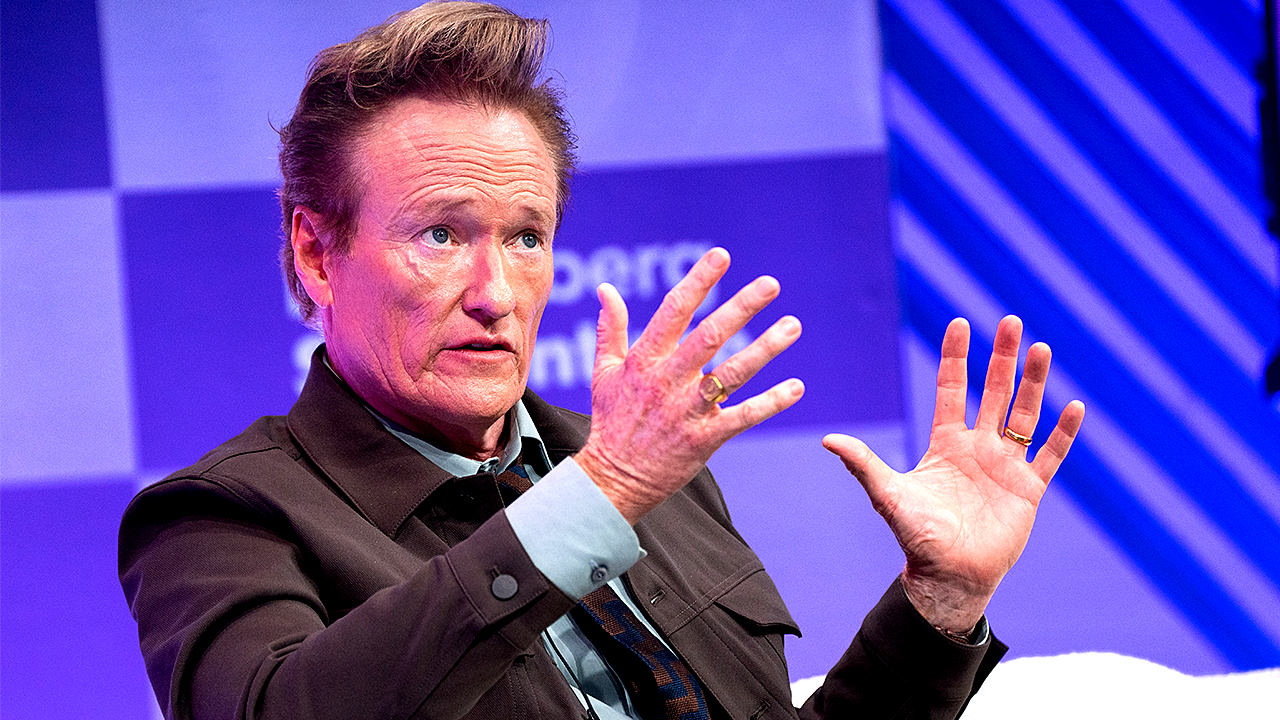
Veteran funnyman Conan O'Brien spoke in blunt terms about what he's observed in the late-night television landscape Wednesday, comparing its decline to Detroit.
asserted
he → speak → Detroit
Speaking at Bloomberg Screentime 2026, O'Brien was asked by Bloomberg's Ashley Carman whether he believed late-night TV "made sense economically," prompting him to look back at the evolution of late-night from its origins.
asserted
TV → speak → origins
The former NBC host first pointed to how networks in the late 1940s would go off the air at 10:30 and just have the American flag and music playing overnight, until his ex-employer was the first to fill the empty airtime with more television.
asserted
employer → point → television
"And my analogy has always been, you own a nice house, kind of like 'It's a Wonderful Life' house, you fix it up, the kids live there, it's the nice old drafty Victorian, and then you realize, hey, there's an attic," O'Brien said.
asserted
O'Brien → own → it
"What you do is you go up there, and you just put down some basic flooring and put some beds in there, and suddenly you have all this room you didn't know you had."
asserted
you → go → room
"That's what networks did," he continued.
asserted
he → do → what
"They found room that was not being used.
asserted
that → find → room
NBC, in particular, capitalized on it.
asserted
NBC → capitalize → it
You have an early show, then you have Steve Allen, then Jack [Paar], then Johnny Carson, and you're off and running."
asserted
you → have → Allen
He said late-night TV quickly became "a giant machine that fires out cash" and remained so when he began hosting "Late Night with Conan O'Brien" in 1993.
asserted
he → say → 1993
"And then I saw over my 17 years with NBC ...
asserted
I → see → NBC
I started to see, oh, this is really changing.
asserted
this → start → ?
This is really changing," O'Brien said.
asserted
O'Brien → change → ?
"They're asking us to be much more cost-conscious.
asserted
They → ask → us
And it was for a good reason, which is that HBO, Cinemax, these are the things [that] are coming up.
asserted
that → come → reason
Like, the things just started to change, and you can get really upset about it," he continued.
asserted
he → start → it
"But then streamers come along.
asserted
streamers → come → ?
And then I'm not even mentioning the internet.
asserted
I → mention → internet
For years, we were working really hard to do something innovative and creative at night.
asserted
we → work → night
Now you're competing with how many people in America are posting videos every day, or worldwide.
asserted
people → compete → videos
Hundreds and hundreds and hundreds of millions of people are making funny videos."
asserted
Hundreds → make → videos
"If you do the math, nine of them are going to be one of the funniest things you've ever seen.
asserted
you → do → things
Those come out every day.
asserted
Those → come → ?
That's what you're competing against."
asserted
you → compete → what
O'Brien spent decades on late-night television between his stints on NBC and TBS before transitioning into podcasts; he now hosts "Conan O'Brien Needs a Friend."
asserted
O'Brien → spend → Friend
TBS ultimately scrapped its late-night programming in 2022 following the cancellation of "Full Frontal with Samantha Bee."
asserted
TBS → scrap → Bee
Earlier this year, CBS pulled the plug on "The Late Show with Stephen Colbert," replacing it with Byron Allen's syndicated comic talk show "Comics Unleashed."
asserted
CBS → pull → show
"The Late Show" reportedly was losing CBS $40 million a year and had been running on a whopping $100 million budget per season.
uncertain
Show → lose → season
While the viewership of "Comics Unleashed" is a fraction of the audience that Stephen Colbert had, it was reported that CBS now expects to make a $15 million profit in the same time slot due to the massive cost-cutting.
asserted
CBS → have → cutting
 The Aporia