A fluorescent green dye released nearly 1,870 metres below the surface of the North Atlantic has helped scientists directly observe a long-suspected movement of deep ocean water, and the water was rising far faster at the study site than the global average previously estimated.
asserted
average → release → site
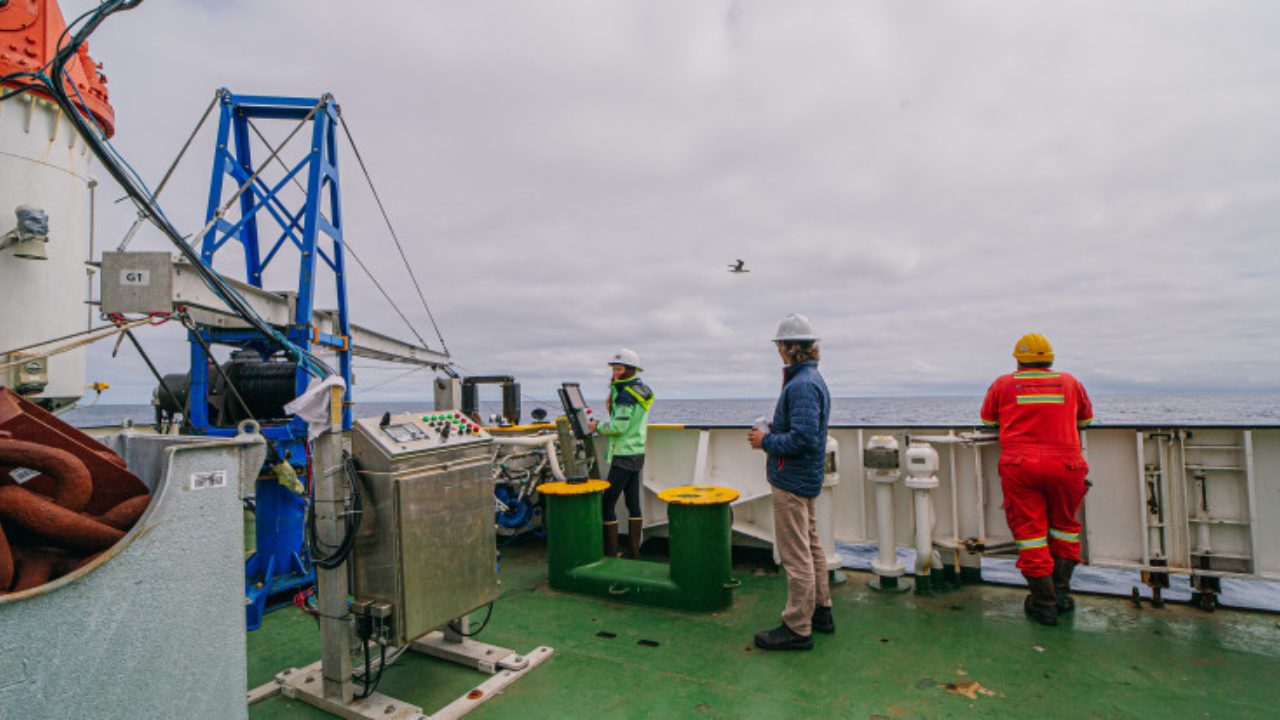
In an experiment conducted in 2021, researchers released about 55 gallons of non-toxic fluorescein dye close to the seafloor inside a submarine canyon in the Rockall Trough, roughly 370 kilometres northwest of Ireland.
asserted
researchers → conduct → Ireland
By tracking the dye as it moved through the deep water, the team found evidence of vigorous upward mixing along the canyon slope.
asserted
team → track → slope
The measured upwelling was of the order of 100 metres per day, around 10,000 times the global average rate required to sustain the ocean's large-scale overturning circulation, according to the study published in Nature in June 2024.
uncertain
upwelling → measure → June
The finding addresses a long-standing question in oceanography: how does cold, dense water that sinks into the deep ocean eventually return towards the surface?
asserted
that → address → surface
A mystery hidden deep beneath the ocean
The world's oceans are constantly moving heat, carbon and nutrients through a vast circulation system.
asserted
oceans → hide → system
Cold, dense seawater forms at high latitudes, particularly around Antarctica, sinks into the deep ocean and eventually has to rise again as part of the global overturning circulation.
asserted
seawater → form → circulation
This return journey, known as upwelling, is essential to the ocean's circulation and its role in regulating Earth's climate.
asserted
journey → know → climate
But directly observing deep-water upwelling has been difficult.
asserted
observing → observe → upwelling
In 1966, oceanographer Walter Munk estimated that the global average rate of deep-water upwelling was about 1 centimetre per day.
asserted
rate → estimate → day
Spread across the enormous volume of the world's oceans, such movement would involve huge amounts of water but would be extremely difficult to measure directly.
asserted
movement → Spread → water
Scientists had subsequently gathered evidence suggesting that turbulence near the seafloor could help drive the process.
uncertain
turbulence → gather → process
However, observations had not provided a direct measurement of vigorous upward movement of deep water along underwater slopes.
asserted
observations → provide → slopes
This is what changed with the dye experiment.
55 gallons of dye released almost 2 km deep
The researchers selected a submarine canyon within the Rockall Trough, an area of deep ocean with steep underwater terrain.
asserted
researchers → change → terrain
The canyon itself is about 32 kilometres long and has walls rising hundreds of metres above its deepest channel.
asserted
canyon → have → channel
The team lowered a 55-gallon drum containing fluorescein to about 10 metres above the canyon floor before remotely releasing the dye.
asserted
team → lower → dye
At the release point, the water was 1,870 metres deep and had a temperature of about 3.53°C, according to the Nature paper.
uncertain
water → have → paper
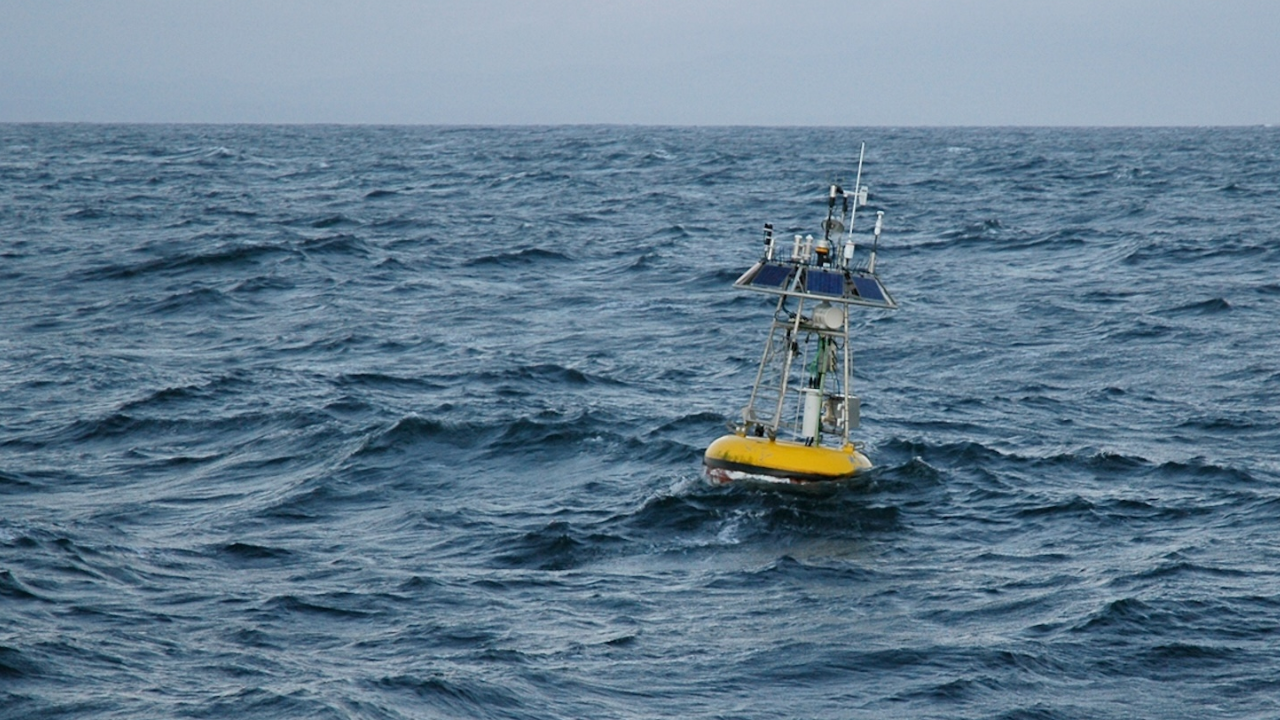
Scientists then followed the dye for roughly three days using instruments designed to detect extremely small concentrations of the fluorescent substance.
asserted
Scientists → follow → substance
Among them were fluorometers capable of detecting the dye at concentrations of less than one part per billion.
asserted
fluorometers → detect → billion
Other instruments measured temperature, water movement and turbulent mixing, allowing researchers to track not only where the dye travelled but also the physical conditions around it.
asserted
dye → measure → it
Water rose far faster than the global average
The measurements showed that the dye was being transported upward across density layers near the canyon floor.
asserted
dye → rise → floor
The researchers calculated several estimates of the upwelling rate.
asserted
researchers → calculate → rate
They ranged from about 51 to 325 metres per day, but all indicated significant upwelling on the order of 100 metres per day.
asserted
all → range → day
The study's analysis gave an average estimate of about 125 metres per day, with an uncertainty of 31 metres per day, while another method based on the dye's change in height produced a lower estimate of 64 metres per day.
asserted
method → give → day
The important point is that the experiment did not show that all deep ocean water rises at 100 metres per day.
asserted
water → show → day
Instead, it captured an unusually rapid process in a specific setting, a sloping submarine canyon where turbulence and internal tides interact with the seafloor.
asserted
turbulence → capture → seafloor
The roughly 10,000-fold comparison comes from contrasting the observed rate at the canyon with the global-average rate of about 1 centimetre per day used in earlier estimates of the circulation's requirements.
asserted
comparison → come → requirements
Why underwater canyons matter
The study suggests that the shape of the ocean floor may play a much larger role in deep-water circulation than previously understood.
uncertain
shape → matter → circulation
As tides move over underwater topography, they can generate internal waves within the ocean.
asserted
they → move → ocean
In the Rockall Trough canyon, these internal tides interact with the steep seafloor and can break, producing intense turbulence.
asserted
tides → interact → turbulence
The researchers observed strong along-canyon flows and vertical movements of water associated with these processes.
asserted
researchers → observe → processes
The canyon's slopes appear to provide conditions where turbulent mixing can drive deep water upward across density layers.
asserted
mixing → appear → layers
This helps address an apparent problem in earlier explanations of ocean circulation.
asserted
This → help → circulation
Turbulence is often stronger close to the seafloor, but simply assuming that mixing increases uniformly towards the bottom does not adequately explain how the deep ocean gets rid of the cold, dense water that continually forms at high latitudes.
asserted
that → assume → latitudes
The new observations support the idea that steep underwater features such as canyons can act as hotspots where mixing produces rapid upwelling.
asserted
mixing → support → upwelling
What the discovery means for climate research
The researchers say the findings could eventually improve climate models.
uncertain
findings → mean → models
The ocean absorbs and redistributes enormous quantities of heat and carbon, making its circulation an important part of Earth's climate system.
asserted
circulation → absorb → system
If important portions of that circulation occur through relatively concentrated hotspots around seafloor features, models need to accurately represent those processes.
asserted
models → occur → processes
However, one experiment cannot establish how common the phenomenon is throughout the world's oceans.
asserted
phenomenon → establish → oceans
The Rockall Trough canyon was deliberately chosen because it was considered relatively typical rather than an extreme geological feature.
asserted
it → choose → feature
…and 2 more, not listed.
 The Aporia