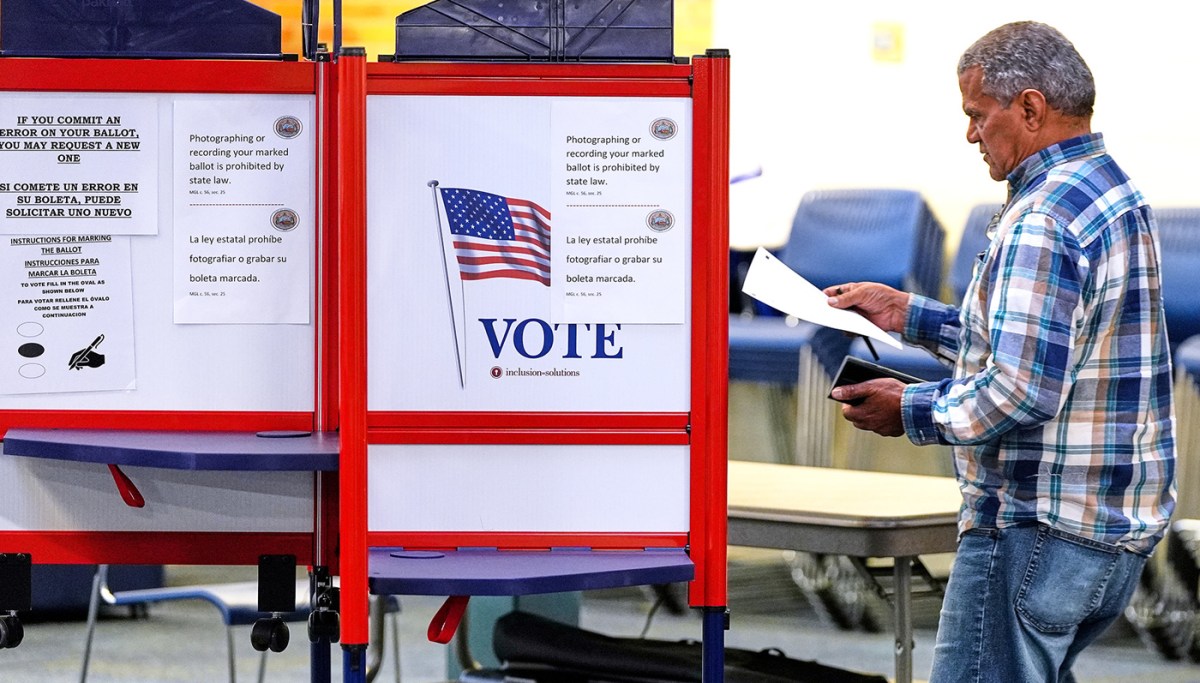
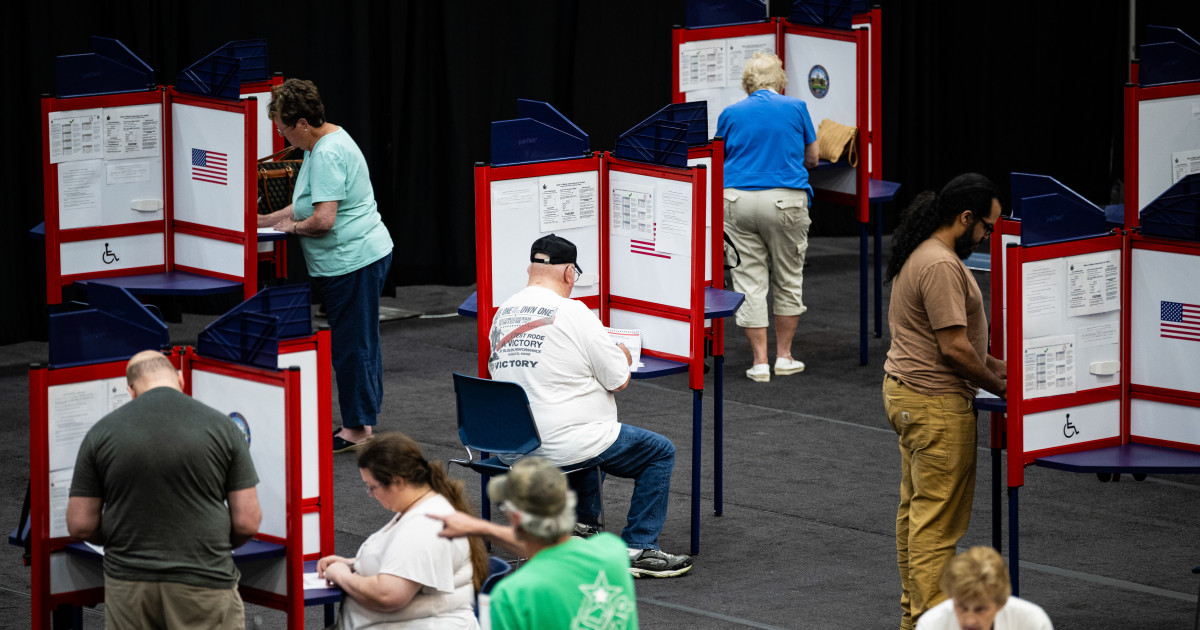
Massachusetts Republicans could have their best chance in decades at winning House seats under a “good government” proposal that California political operatives want to reverse in their state.
uncertain
operatives → have → state
Massachusetts GOP candidates haven’t gained popularity in the Democratic-dominant state, home to liberal icons such as the late Sen. Edward M. Kennedy, who held his seat for nearly 47 years — and Kennedy’s successor a few years after his 2009 death, Sen. Elizabeth Warren (D-MA).
asserted
who → gain → death
In 2024, President Donald Trump got trounced by Democratic rival Kamala Harris in Massachusetts, 61% to 36%.
asserted
Trump → trounce → Massachusetts
But ballot rules would change in a way potentially favorable to Bay State Republicans.
asserted
rules → change → Republicans
That is, if a Nov. 3 midterm elections ballot measure passes.
asserted
measure → pass → ?
Under Question 3, Massachusetts would scrap its traditional party primaries and replace them with an all-party, top-two system, the same basic model California has used for more than a decade.
asserted
California → scrap → decade
And in Massachusetts, it’s already used in many municipal elections.
asserted
it → use → elections
Question 3 would put every candidate on a single primary ballot, regardless of party affiliation, with the top two vote-getters advancing to the November general election.
asserted
getters → put → election
“Question 3 would extend this same familiar model to state legislative, statewide, and federal elections — and add more information for voters by listing party registration and endorsements,” says the Yes On 3 campaign website.
asserted
website → extend → registration
“It is the system Massachusetts already uses at the local level, applied to state and federal races.
asserted
Massachusetts → use → races
Supporters say the change would shake up a political system they argue has become too comfortable.
asserted
they → say → system
Too many elections effectively are decided in low-turnout primaries or without meaningful competition, their argument goes.
asserted
argument → decide → competition
“Many people in Massachusetts feel that the political system isn’t working,” Jesse Littlewood, campaign manager for the Coalition for Healthy Democracy, the group behind Question 3, told Boston.com.
asserted
Littlewood → feel → Boston.com
“It’s not representing us because politicians don’t have to listen to us, and that is because of the structure of how they get elected.”
asserted
they → represent → structure
But opponents, including the Massachusetts Democratic Party, Republican Party, AFL-CIO, and other unions, argue the proposal could make campaigns more expensive, weaken party organizations, and increase the influence of wealthy donors and outside groups.
uncertain
campaigns → include → donors
The Massachusetts GOP opposition is notable, since, in practical terms, its candidates stand to gain the most under a top-two system.
asserted
candidates → stand → system
The last two Republican House members, Peter Blute and Peter Torkildsen, lost reelection in 1996 after four years in office.
asserted
members → lose → office
In the 2024 election cycle, in 7 of 9 House districts, incumbent Democrats faced no Republican opponents.
asserted
Democrats → face → opponents
The closest 2024 Massachusetts House race was in the Cape Cod and South Shore 9th Congressional District, where Rep. Bill Keating (D-MA) beat his Republican opponent 56% to 43%.
asserted
Keating → beat → %
If the top-two system were enacted in Massachusetts, Republicans could potentially win seats through savvy political tactics and plain luck.
uncertain
Republicans → enact → tactics
Specifically, Republicans would field two — and only two — candidates in a House district loaded with politically ambitious Democrats.
asserted
Republicans → field → Democrats
If each GOP candidate could score about 20% in the primary, a multi-candidate Democratic field would divvy up the remaining 60%.
uncertain
field → score → %
Both Republicans would secure general-election ballot spots and notch a GOP pickup no matter which candidate won.
asserted
candidate → secure → pickup
It’s frequently played out, or has come reasonably close, in California, the most populous Democratic-dominated state.
asserted
It → play → California
Voters narrowly approved Proposition 14 in 2010, creating the state’s top-two system.
asserted
Voters → approve → system
Under the rules, all candidates for voter-nominated state and congressional offices appear on the same primary ballot, and the two highest vote-getters advance to November regardless of party.
asserted
getters → nominate → party
The system was intended, among other things, to broaden competition and encourage candidates to reach beyond their traditional partisan bases.
asserted
system → intend → bases
But more than a decade later, some Golden State Democrats argue the experiment has produced problems of its own.
asserted
experiment → argue → own
California Democratic Party Chairman Rusty Hicks has called the current system a failure that should be “revised or repealed.”
asserted
that → call → system
The issue was highlighted during this year’s crowded gubernatorial primary, when Democratic vote-splitting raised the possibility that two Republicans could finish first and second and advance to November despite California’s overwhelming Democratic voter registration.
uncertain
Republicans → highlight → registration
That outcome did not materialize.
asserted
outcome → materialize → ?
Democrat Xavier Becerra and Republican Steve Hilton advanced to the general election, but the scare helped revive a broader fight over the system.
asserted
scare → advance → system
And Democrats in California have lost elections due to the top-two system.
asserted
Democrats → lose → system
In the June 2012 California primary election, a heavily fragmented Democratic field led to a political disaster for the party in a newly drawn Inland Southern California seat that forced Rep. Pete Aguilar (D-CA) to wait two years to start his congressional career.
asserted
that → fragment → career
But GOP Rep. Gary Miller, who had represented some of the new district’s territory under the previously used House map, got 26.7% of the vote, while Republican state Sen. Bob Dutton earned 24.9%.
asserted
Dutton → represent → %
That iced out Aguilar in what was a Democratic-leaning district.
asserted
what → ice → Aguilar
Even as President Barack Obama that November, on his way to a second term, won California over Republican rival Mitt Romney 60%-37% — about the same as Kamala Harris’s 2024 win in Massachusetts.
asserted
Obama → win → Massachusetts
In that blue-leaning congressional district, Miller knew he was living on political borrowed time and retired from Congress after 16 years.
asserted
he → lean → years
Aguilar’s time in top-two purgatory wasn’t long, as he nabbed the open seat in 2014 and has easily won reelection since.
asserted
he → nab → reelection
He’s also risen to his party’s third-highest leadership position in the minority, House Democratic Caucus chairman.
asserted
He → rise → minority
…and 35 more, not listed.
 The Aporia