Photo via Times of India

Hawaii's rosy wolfsnail mistake ends with native snails' return to the wild

Read the original at Times of India ↗
Cite

TOI Science Desk. (2026, October 2). Hawaii's rosy wolfsnail mistake ends with native snails' return to the wild. Times of India. https://timesofindia.indiatimes.com/science/wildlife/in-1955-hawaii-introduced-the-rosy-wolfsnail-to-control-giant-african-snails-it-instead-devastated-native-tree-snails-and-69-years-later-a-species-extinct-in-the-wild-since-1991-was-reintroduced/articleshow/134601431.cms

Dated when The Aporia collected the article, usually within hours of publication. Check the original for its exact date and byline.

Times of India · collected 2026-10-02 · by TOI Science Desk

Quick Summary

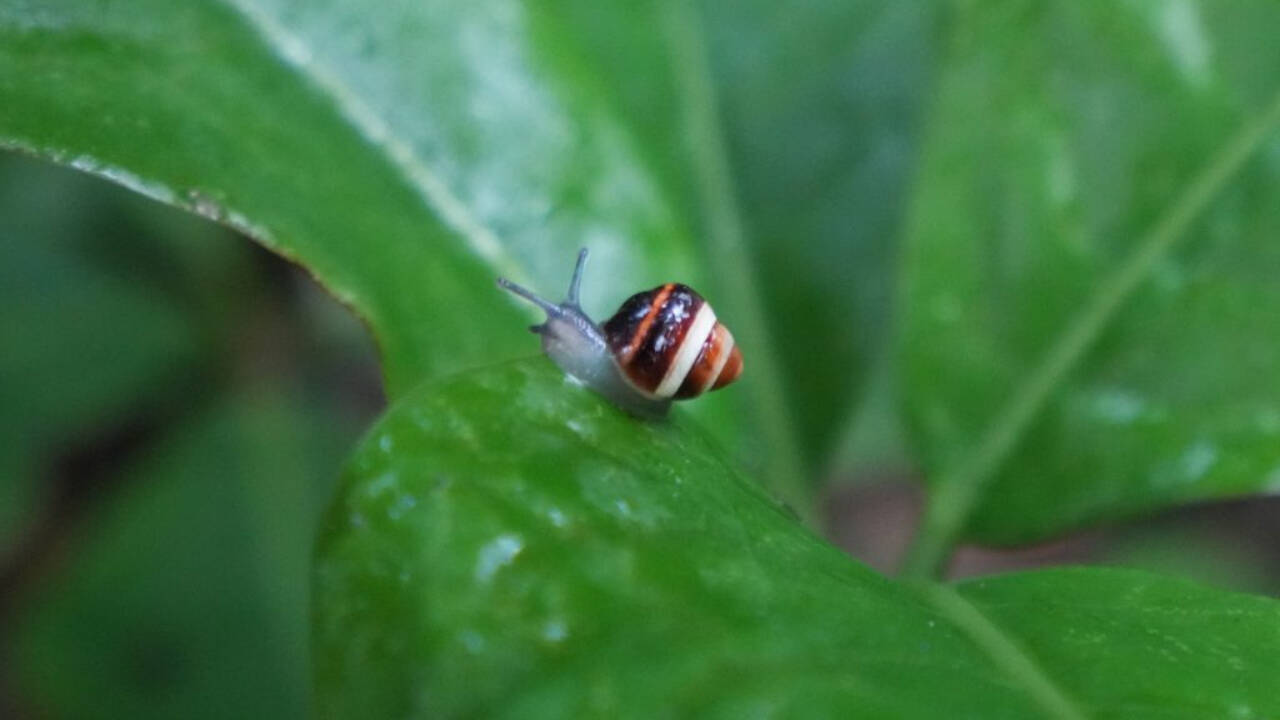
Hawaii recently reintroduced Achatinella fuscobasis, a rare Hawaiian tree snail believed extinct in the wild since 1991, into its natural habitat in O‘ahu's Ko‘olau Mountains. The project was initiated by conservationists who saved 11 remaining individuals from extinction and bred them to over 1,000 snails in captivity. After five years of preparation, including predator control and habitat restoration, the first group was released into a specially designed enclosure within the Honolulu Watershed Forest Reserve to safeguard against threats like invasive species.
Written by AI on 2026-10-02, from this article's own text only (the story summary below draws on all the coverage).

AI analysis

Story summary

In Hawaii, the tiny Achatinella fuscobasis snail, which had been extinct in the wild since 1991, was recently reintroduced to its natural habitat in the Honolulu Watershed Forest Reserve on O‘ahu's Ko‘olau Mountains after more than 33 years in captivity. The release was a collaborative effort involving the Hawaii Department of Land and Natural Resources Snail Extinction Prevention Program (SEPP), the U.S. Fish and Wildlife Service, University of Hawai‘i at Mānoa, and the DLNR Division of Forestry and Wildlife. This reintroduction marks a significant step in conserving native species after a conservation mistake: introducing rosy wolfsnails in 1955 to control invasive giant African snails led instead to the decline of Hawaii's native tree snails due to predation by the rosy wolfsnail.

Written for “Hawaiian Wolfsnail Controversy” on 2026-11-01, grounded in this article and the 0 other(s) covering the same event.

Story

📰 Hawaiian Wolfsnail Controversy
Environment · 1 article(s) covering the same event.

Compared with similar articles

Nothing to compare against. No article is close enough to this one for the pipeline to have linked or judged the pair.
How this article was measured signals, leaning charts, publisher record, byline, topics and claims

Signals How these are calculated →

Claims extracted
29
sentences that state something as happening or true
Uncertain
3%
1 of 29 hedged ("reportedly", "may", "according to")
Leaning
not political
takes no side on a contested political question
Publisher signals
59/100
Times of India's corrections and hedging, across everything collected from it. Not a measure of accuracy.
Outlets on this story
1
Environment
Same framing elsewhere
1
articles that frame the event the way this one does
Analyzed 2026-10-02 · how these are computed

How this is being covered How these are calculated →

Article leaning vs. publisher reliability
Source leaning vs. consistency

Publisher

Times of India · 3834 article(s) · 2 correction(s) detected
Running correction rate · 2 correction(s)

Who wrote this

TOI Science Desk
296 article(s) here · 1 carrying a prediction
🔮 By studying these crystals and other mineral grains, scientists could establish the meteorite's age and identify later changes caused by water.
🔮 She explored whether an inexpensive device could capture airborne genetic material and support the detection of bacterial pathogens.
🔮 This control may help it maintain its orientation and move along a narrow path without losing its bearings.
🔮 The university says the sculpture will subsequently go on permanent display at its Turner Museum of Glass.
🔮 By bringing together nature, wellness facilities and educational spaces, Winter Garden aimed to create a setting where visitors could exercise, learn about nutrition and gardening, and spend time outdoors.
🔮 Also discovered was a 4,500-year-old humanoid idol, which archaeologists hope will help shed light on the cultural traditions of the region.
🔮 When garlic mustard spreads across the forest floor, other plants may struggle to obtain the resources they need to survive.
🔮 The train delay that could not have happened in 1841 The mystery originated in an account published anonymously in the scientific journal Nature on October 5, 1871.
🔮 A late-night snack may do more than add extra calories to your day.
🔮 The work offers a glimpse of such a future, where living organisms could become an active part of the robotic systems.
Wire or desk byline, not an individual reporter.
Also by TOI Science Desk
Nothing else under this byline is closely related to this article, so these are simply their most recent.
All 296 articles by TOI Science Desk →

Topics

Department of Land and Natural Resources Hawaii Hawaiian O‘ahu SEPP

Subjects

Hawaii GPE · 3× O‘ahu GPE · 2× SEPP ORG · 2× African NORP · 1× Department of Land and Natural Resources ORG · 1× Hawaiian NORP · 1× University of Hawai‘i ORG · 1× University of Hawai‘i at Mānoa ORG · 1× the DLNR Division of Forestry and Wildlife ORG · 1× the U.S. Fish and Wildlife Service ORG · 1×

Narrative

The release was carried out by Hawaii's Department of Land and Natural Resources Snail Extinction Prevention Program (SEPP), alongside the U.S. Fish and Wildlife Service, University of Hawai‘i at Mānoa and the DLNR Division of Forestry and Wildlife.
framing: assertive · carried by 1 article(s) · first seen 2026-10-02
🔮 For the captive-bred snails, however, the surroundings will be dramatically different.
2026-10-02 · Times of India
Hawaii's rosy wolfsnail mistake ends with native snails' return to the wild · assertive framing

Claims (29 extracted, 1 hedged)

For more than three decades, the tiny Achatinella fuscobasis (snail) existed only under human care. asserted
fuscobasis → exist → care
Then, in a carefully prepared corner of O‘ahu's Ko‘olau Mountains, the rare Hawaiian tree snail finally encountered its natural home again. asserted
snail → prepare → home
The first group was recently released into the Honolulu Watershed Forest Reserve after more than 33 years in captivity. asserted
group → release → captivity
The reintroduction marks an important step in the effort to bring a species back from the brink after it was believed to have disappeared from the wild in 1991, adds the report. asserted
report → mark → 1991
The release was carried out by Hawaii's Department of Land and Natural Resources Snail Extinction Prevention Program (SEPP), alongside the U.S. Fish and Wildlife Service, University of Hawai‘i at Mānoa and the DLNR Division of Forestry and Wildlife. asserted
release → carry → Forestry
As per the release, the snail's recovery is inseparable from a decision made decades ago. asserted
recovery → make → decision
In 1955, Hawaii introduced the rosy wolfsnail in an attempt to control invasive giant African snails. asserted
Hawaii → introduce → snails
Instead, the predatory species developed a taste for Hawaii's native tree snails. asserted
species → develop → snails
By 1991, only 11 known individuals remained. asserted
individuals → know → 1991
University of Hawai‘i researcher Michael Hadfield collected the final survivors from their known O‘ahu populations and brought them into captivity. asserted
Hadfield → collect → captivity
That intervention prevented the species from disappearing entirely. asserted
intervention → prevent → species
What began as an emergency measure eventually became the foundation for a long-term recovery effort. asserted
began → begin → effort
From 11 snails to more than 1,000 Today, more than 1,000 Achatinella fuscobasis are housed at the SEPP laboratory in Pearl City. asserted
fuscobasis → house → City
The growth in numbers has made it possible to attempt something that seemed impossible in 1991: establishing a wild population again. asserted
that → make → population
The new forest habitat is a quarter-acre fenced enclosure designed specifically to keep predators out. asserted
habitat → fence → predators
Five-foot polyethylene walls, angled flanges, copper wire mesh and a hood barrier help prevent rats, Jackson's chameleons and rosy wolfsnails from entering. asserted
walls → angle → rats
For the captive-bred snails, however, the surroundings will be dramatically different. asserted
surroundings → breed → snails
Instead of controlled laboratory conditions, they will encounter mist, trade winds, cloud cover and sunshine as they gradually adapt to life in the forest. asserted
they → control → forest
The release itself may have been a single event, but preparing the habitat took years. uncertain
preparing → prepare → years
The conservation team spent roughly five years developing the enclosure and restoring its surroundings. asserted
team → spend → surroundings
Staff, partners and community volunteers contributed around 600 hours to searching for and removing predators. asserted
Staff → contribute → predators
They also cleared weeds and invasive plants and replanted native vegetation, creating a safer environment for the snails to establish themselves. asserted
snails → clear → themselves
The enclosure is essentially a protected bridge between captivity and the wider forest: a place where the animals can experience natural conditions without immediately facing the predators that helped drive their species toward extinction. asserted
that → experience → extinction
Building a future in the wild The reintroduction is only one part of the recovery strategy. asserted
reintroduction → build → strategy
Bishop Museum and Honolulu Zoo are also establishing captive snail laboratories, where Achatinella fuscobasis will be reared and made accessible to the public. asserted
fuscobasis → establish → public
The conservation programme ultimately aims to maintain both captive and wild colonies. asserted
programme → aim → colonies
The immediate priority is preventing extinction; the longer-term ambition is more ambitious—to see stable, thriving populations once again living in the forests of O‘ahu. asserted
populations → prevent → O‘ahu
For a species that once stood at just 11 known survivors, its return to the Ko‘olau Mountains is a reminder that conservation can sometimes work on a remarkably small scale. asserted
conservation → stand → scale
A fenced quarter-acre, a restored patch of native forest and a few thousand tiny lives can represent the beginning of an entire species' second chance. asserted
acre → fence → chance

💬Give feedback
🕘History 🎫Support