Photo via Washington Examiner

Pope Leo XIV says Vatican is renewing alliance with ‘artists and cultural institutions’ against AI

Read the original at Washington Examiner ↗
Cite

Nerozzi, T. (2026, October 2). Pope Leo XIV says Vatican is renewing alliance with ‘artists and cultural institutions’ against AI. Washington Examiner. https://www.washingtonexaminer.com/news/world/4751836/pope-leo-vatican-alliance-artists-culture-against-ai/

Dated when The Aporia collected the article, usually within hours of publication. Check the original for its exact date and byline.

Washington Examiner · collected 2026-10-02 · by Timothy Nerozzi

Quick Summary

Pope Leo XIV met with artists at an event organized by the Vatican’s Dicastery for Culture and Education to discuss protecting human creativity from artificial intelligence. The pope emphasized that art is integral to understanding humanity's aspirations and warned against AI’s lack of soul or moral conscience, advocating for a renewed alliance between the Church and cultural institutions to safeguard human creativity. This stance aligns with his previous criticisms of AI, where he has expressed concern over potential negative impacts on society and called for distinguishing human-generated works from those created by machines.
Written by AI on 2026-10-04, from this article's own text only (the story summary below draws on all the coverage).

AI analysis

Story summary

Pope Leo XIV met with artists at a Friday event organized by the Dicastery for Culture and Education in Rome, emphasizing the importance of human creativity against artificial intelligence. The pontiff highlighted that art is not just an accessory but a space where one learns about humanity's aspirations, wounds, and search for beauty, justice, peace, and meaning. He stressed the need to distinguish between human-made art and machine-generated content, stating that algorithms lack "the spark of humanity." Pope Leo XIV called for the Catholic Church to renew its alliance with artists and cultural institutions to safeguard human creativity. In May, he issued an encyclical titled "Magnifica Humanitas" (Magnificent Humanity), advocating for stringent AI regulation and ethical development prioritizing the common good over profit.

Written for “Pope On AI And Art” on 2026-11-03, grounded in this article and the 1 other(s) covering the same event.

Story

📰 Pope On AI And Art
Entertainment · 2 article(s) covering the same event. See how they differ ↓

Compared with similar articles

This article reads leans strongly left and hedges 6% of its claims. Each row says how that neighbour differs.
Global News
Hedges 1 of 9 claims Outlet record 63/100
Times of India
Hedges 9 of 33 claims Outlet record 59/100
“The articles describe different aspects of a broader issue around AI and the Catholic Church, but do not appear to be reporting on the exact same incident or time.”
How this article was measured signals, leaning charts, publisher record, byline, topics and claims

Signals How these are calculated →

Claims extracted
32
sentences that state something as happening or true
Uncertain
6%
2 of 32 hedged ("reportedly", "may", "according to")
Leaning
Leans strongly left
of the writing, not the subject · beta estimate
Publisher signals
70/100
Washington Examiner's corrections and hedging, across everything collected from it. Not a measure of accuracy.
Outlets on this story
2
Entertainment
Same framing elsewhere
1
articles that frame the event the way this one does
Analyzed 2026-10-04 · how these are computed

How this is being covered How these are calculated →

Article leaning vs. publisher reliability
Source leaning vs. consistency

Publisher

Washington Examiner · 4001 article(s) · 7 correction(s) detected
Running correction rate · 7 correction(s)

Who wrote this

Timothy Nerozzi
41 article(s) here · 1 carrying a prediction
🔮 The official results of this week’s Israeli election have been released, and as many observers forecasted, the ethnic Arab political parties have successfully positioned themselves as kingmakers.
🔮 Now, the Communist government will likely court Brazil as a major patron to replace fallen allies like Venezuela
🔮 Flavio Bolsonaro and his family have fled Brazil and will be granted visas by the State Department to enter the United States.
🔮 The murder of two Israeli soldiers in the West Bank is the jumping-off point for a large-scale invasion of the Palestinian territory, a move that would further test the nation’s fraying relationship with the United States.
🔮 French President Emmanuel Macron returned from his visit to the Gulf states this week triumphant, having secured a deal that would provide his country with an additional 200,000 metric tons of diesel per month.
🔮 Foreign Minister Antonio Tajani told the media on Tuesday that the government’s response will be “very tough” and the coming wave of soldiers will operate in coordination with prosecutors to hold demonstrators responsible.
🔮 Coopérative U is one of several major nationwide corporations that were affected by the attack, which will force vendors to trash the merchandise compromised by the temperature spike.
🔮 Rubio confirmed that he was aware of the Wall Street Journal report but said he was not aware of whether the allegations were true — insisting that he would not litigate the situation through the press.
🔮 “[Police] will be further reinforced in the days ahead,” he said.
🔮 Questions of security, accountability and whether the lessons of the attack have truly been learned will weigh heavily on many voters as they make their choice,” Yohanan Plesner — president of the Israel Democracy Institute, a nonpartisan research center — said in a Tuesday statement.
Also by Timothy Nerozzi
Nothing else under this byline is closely related to this article, so these are simply their most recent.
All 41 articles by Timothy Nerozzi →

Topics

Catholic Church Rome the Catholic Church the Dicastery for Culture and Education

Subjects

Leo XIV PERSON · 4× Olah PERSON · 2× Catholic NORP · 1× Christopher Olah PERSON · 1× Church ORG · 1× Rome GPE · 1× Vatican ORG · 1× the Catholic Church ORG · 1× the Dicastery for Culture and Education ORG · 1×

Narrative

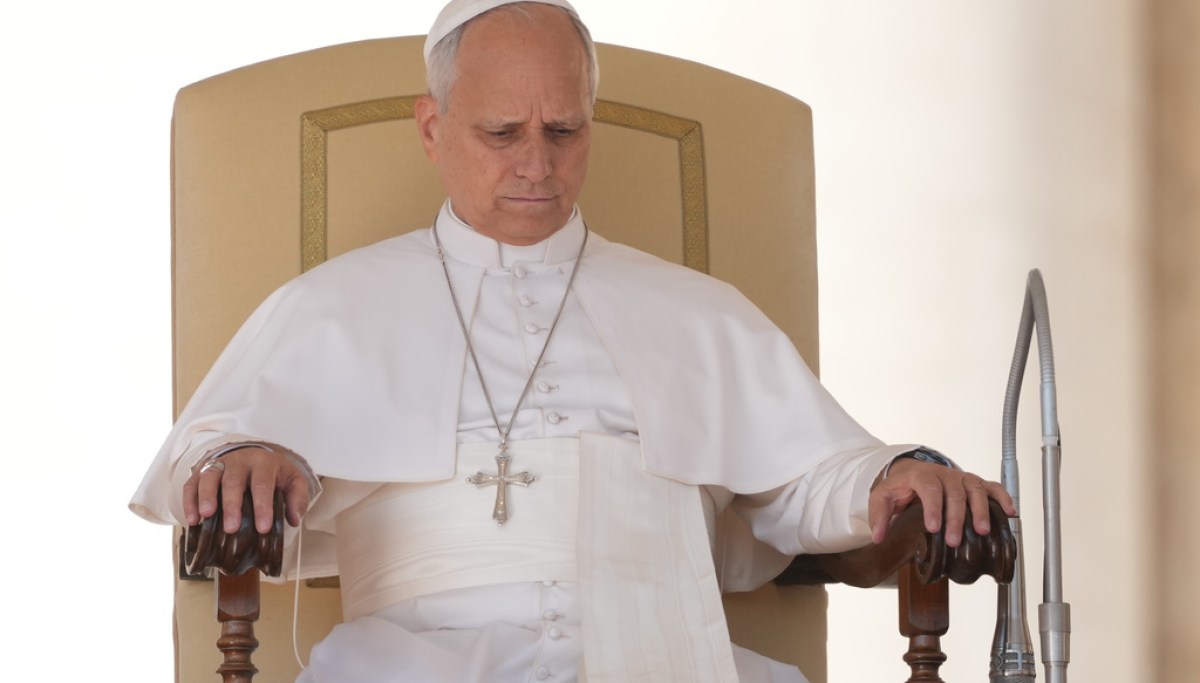
The pontiff met with artists at a Friday event organized by the Dicastery for Culture and Education, where he explained that art is not “a mere accessory,” but instead “a space where one allows oneself to be instructed about humanity’s aspirations and wounds, its thirst for beauty, justice, and peace, and its search for meaning.”
framing: assertive · carried by 1 article(s) · first seen 2026-10-04
🔮 Pope Leo XIV claims that the Catholic Church will be pursuing an “alliance” with artists and institutions to protect the human element in creative works against artificial intelligence.

Claims (32 extracted, 2 hedged)

Pope Leo XIV claims that the Catholic Church will be pursuing an “alliance” with artists and institutions to protect the human element in creative works against artificial intelligence. uncertain
Church → claim → intelligence
The pontiff met with artists at a Friday event organized by the Dicastery for Culture and Education, where he explained that art is not “a mere accessory,” but instead “a space where one allows oneself to be instructed about humanity’s aspirations and wounds, its thirst for beauty, justice, and peace, and its search for meaning.” asserted
oneself → meet → meaning
The pontiff reiterated one of his recurring complaints against AI — the lack of soul in works generated by machines — in a statement at the meeting that was later posted on his social media feed. asserted
that → reiterate → feed
“In this era of artificial intelligence, it is becoming urgent to distinguish human art from what machines produce,” the pope said. asserted
pope → become → what
“There is an ontological difference, even before an aesthetic one, between art and what a machine can generate through statistical calculation based on millions of images created by others. asserted
machine → be → others
Algorithms lack the spark of humanity.” asserted
Algorithms → lack → humanity
He continued, “For this reason, the Church wishes to renew an alliance with artists and cultural institutions to safeguard our humanity.” asserted
Church → continue → humanity
Pope Leo XIV is among the world’s most prominent skeptics of AI acceleration, warning that an unbridled approach to the technology could ultimately “exploit the most vulnerable, create new forms of slavery and derive profit from conflict.” He chose his papal name as a nod to Pope Leo XIII, the Bishop of Rome who shepherded the Catholic world through the Industrial Revolution and advocated centering humanity in the process of global industrialization. uncertain
who → warn → industrialization
The speech also decried the rise of algorithms and curated search engines, warning that “the great danger is no longer just censorship, but homogenization; not merely imposed silence, but the noise that makes listening impossible.” asserted
listening → decry → algorithms
The Friday statement will likely frustrate AI companies that have continually lobbied him and other religious leaders toward a more positive stance on the issue. asserted
that → frustrate → issue
Pope Leo XIV released his first encyclical — titled “Magnifica Humanitas,” or “Magnificent Humanity” — earlier this year. asserted
XIV → release → encyclical
It was primarily concerned with the use of AI technologies in the modern day. asserted
It → concern → day
“We must avoid the misconception of equating this type of ‘intelligence’ with that of human beings. asserted
We → avoid → beings
These systems merely imitate certain functions of human intelligence,” the pope wrote in the text. asserted
pope → imitate → text
“In doing so, they often surpass human intelligence in speed and computational capacity, offering tangible benefits across many fields. asserted
they → do → fields
Yet this power remains entirely tied to data processing. asserted
power → tie → processing
“So-called artificial intelligences do not undergo experiences, do not possess a body, do not feel joy or pain, do not mature through relationships and do not know from within what love, work, friendship or responsibility mean,” he continued. asserted
he → call → what
“Nor do they have a moral conscience, since they do not judge good and evil, grasp the ultimate meaning of situations, or bear responsibility for consequences.” asserted
they → have → consequences
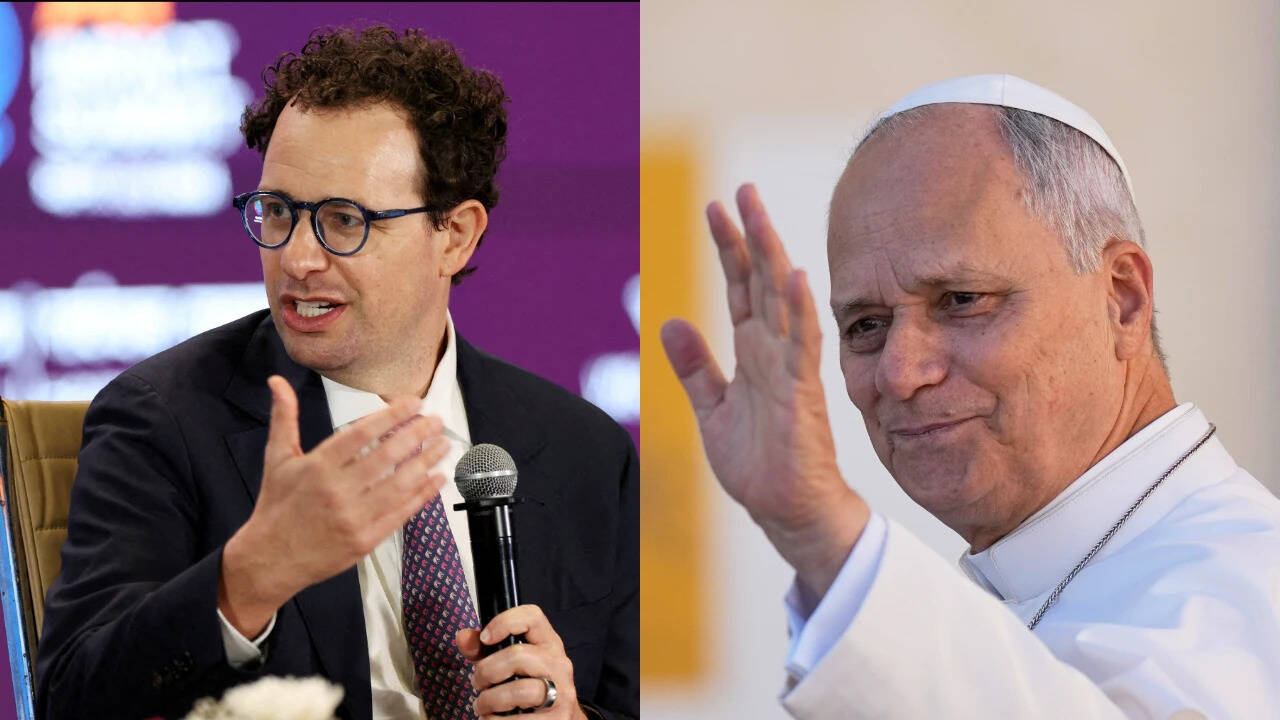
Anthropic co-founder Christopher Olah appeared at the Vatican for the release of the text, where he spoke onstage about the dangers of AI and how leaders must curb developers’ worst impulses. asserted
leaders → appear → impulses
Olah took the opportunity at the Vatican to counter-signal the pope and suggest that there was a mystical or sentient aspect to AI models. asserted
Olah → take → models
“I will be honest: We keep finding things that are mysterious, even unsettling,” Olah said at the event. asserted
Olah → find → event
“We find structures that mirror results from human neuroscience. asserted
that → find → neuroscience
We find evidence of introspection. asserted
We → find → introspection
We find internal states that functionally mirror joy, satisfaction, fear, grief and unease. asserted
that → find → joy
I don’t know what that means, but I think it warrants ongoing discernment.” asserted
it → know → discernment
When Pope Leo XIV was asked aboard a papal flight this week whether he can “sleep at night” despite his worries about AI, he downplayed his dread. asserted
he → ask → dread
“If someone were to ask me, am I in panic mode? asserted
I → ask → mode
No, I’m not … asserted
I → ’m → ?
I sleep at night,” he told the media. asserted
he → sleep → media
“I do think that the concerns raised by many of the experts, specialists in AI, should be taken seriously. asserted
concerns → think → AI
I don’t think that that is fake news.” asserted
that → think → ?
During his apostolic journey to France, the responsible development of AI was a recurring topic of his speeches — alongside dignity of life issues such as abortion and assisted suicide. asserted
development → recur → abortion

💬Give feedback
🕘History 🎫Support