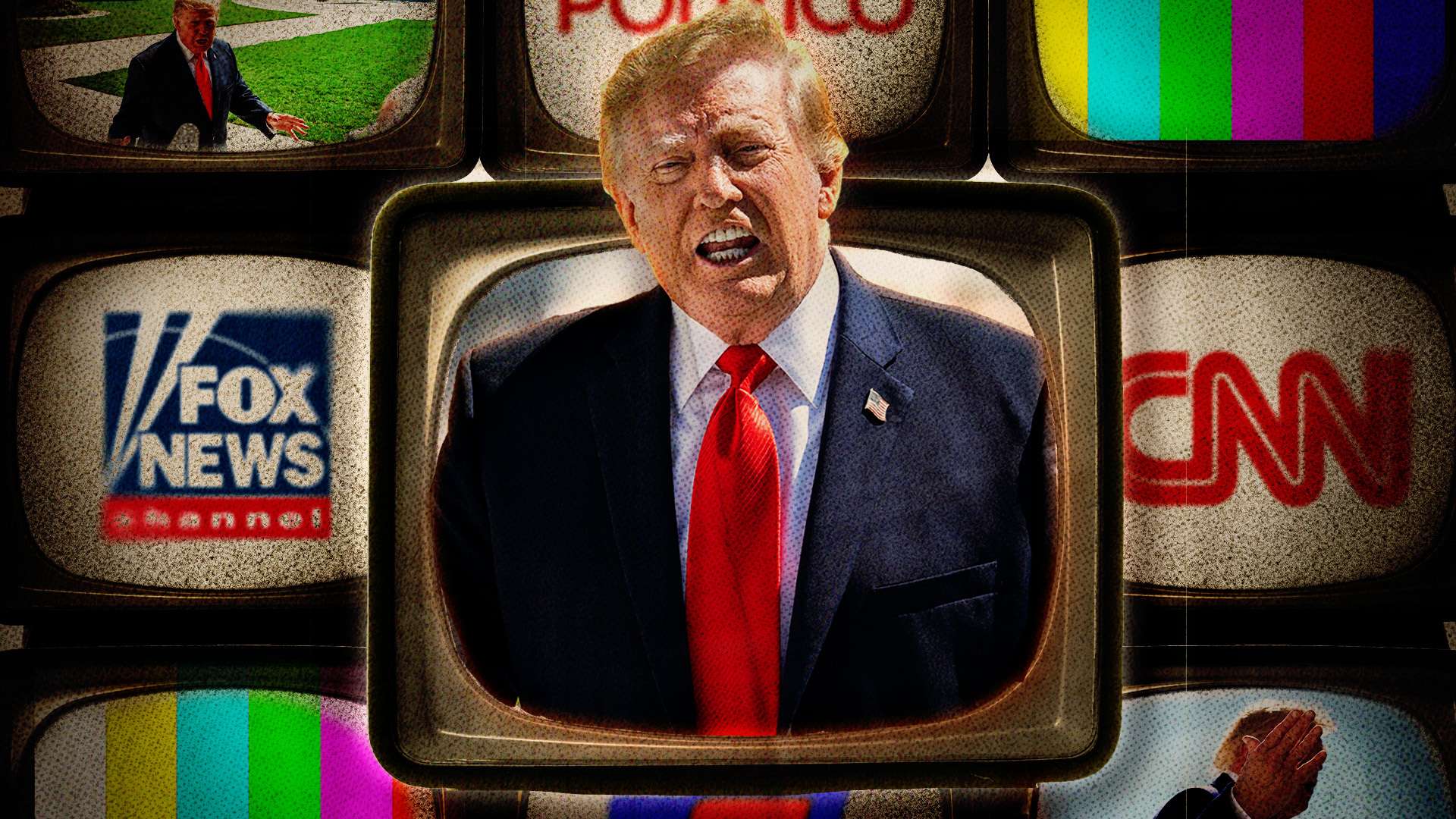
He's simultaneously been hostile to any coverage he sees as less than flattering.
asserted
he → see → coverage
Last month, he banned three news outlets from covering the White House, a likely unconstitutional act.
asserted
he → ban → act
This week, he singled out one of his more sympathetic outlets for criticism, suggesting he sees anything short of obsequious deference as improper.
asserted
he → single → deference
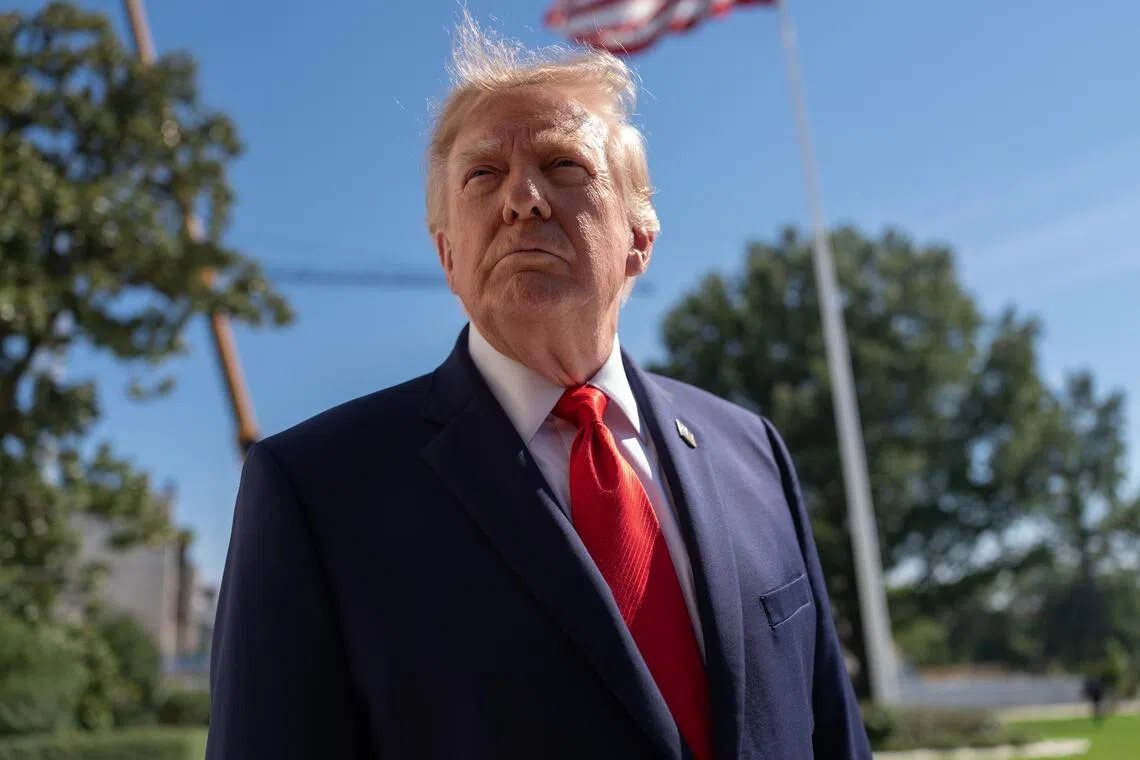
"Why does FoxNews [sic] always put Chuck Schumer, Hakeem Jeffries, Jessica Tarlov, and every Democrat on, saying bad things about the Republican Party and, of course, me?" Trump wrote Wednesday on Truth Social.
asserted
Trump → put → Social
"This is why MAGA, and REAL Patriots, will never like Fox!
asserted
MAGA → like → Fox
They repeat a completely negative narrative, on and on it goes, and then we get a quick retort.
asserted
we → repeat → retort
It's not a new critique: In a July 2024 post, Trump told Fox News, "STOP PUTTING ON THE ENEMY!"
asserted
Trump → tell → ENEMY
And they make a lot of media appearances, but "very rarely" on Fox, Alex Griffing wrote at Mediaite.
asserted
Griffing → make → Mediaite
"Jeffries last appeared on the Sunday Briefing in June, while Schumer has not been on in years."
asserted
Schumer → appear → years
Matt Gertz of Media Matters speculates that Trump likely saw a news clip of Schumer criticizing Republicans' policy on artificial intelligence, which aired on Fox just a few minutes before the president's post.
asserted
which → speculate → post
Meanwhile, Tarlov is a Democratic strategist who joined Fox News in 2017.
asserted
who → join → 2017
She is now a recurring panelist on The Five—where, yes, she is often critical of Trump and Republicans.
asserted
she → recur → Trump
But that show's format pits four Republicans against one Democrat, so it's not as if she does so without pushback.
asserted
she → pit → pushback
It's quite revealing that Trump's immediate response, when seeing any criticism on TV, is to blame the network for daring to air it.
asserted
response → see → it
But it's also perfectly consistent with how he has governed.
asserted
he → govern → ?
Dating back to his first term, Trump threatened broadcast networks for covering him negatively.
asserted
Trump → date → him
Specifically, he said the Federal Communications Commission (FCC) should revoke the networks' licenses to broadcast over public airwaves.
asserted
Commission → say → airwaves
Of course, the networks don't have licenses; their affiliate stations do.
asserted
stations → have → licenses
And the vast majority of ABC, NBC, and CBS affiliates are owned by private parties.
asserted
majority → own → parties
Besides, pulling a license over the editorial content of a broadcast would be a textbook First Amendment violation.
Ajit Pai, FCC chairman during Trump's first term, agreed.
asserted
Pai → pull → term
"I believe in the First Amendment," Pai said in 2017.
asserted
Pai → believe → 2017
"Under the law the FCC does not have the authority to revoke a license of a broadcast station based on the content of a particular newscast.
asserted
FCC → have → newscast
But to head the FCC in his second term, Trump nominated Brendan Carr, who is more willing to wade into Trumpian squabbles with the broadcast networks.
asserted
who → head → networks
Carr held up a merger until Paramount paid $16 million to settle Trump's laughable lawsuit against CBS, and he pressured ABC affiliates to take Jimmy Kimmel off the air after the late-night host's intemperate comments about the late conservative activist Charlie Kirk's murder.
asserted
he → hold → murder
Fox News, as a cable channel, does not require a license to broadcast.
asserted
News → require → license
Earlier this week, in a wide-ranging interview with Time, Trump was asked a number of questions about his construction projects around Washington, D.C.—many of which, like knocking down the East Wing of the White House and threatening to do the same to the Kennedy Center, are mired in controversy and have been held up in court.
asserted
Trump → range → court
The full transcript reveals the president's displeasure at having to discuss things he'd rather not talk about.
asserted
he → reveal → things
"You haven't asked me one fucking positive question," he complained.
asserted
he → ask → question
He asked why they had not brought up his incursion into Venezuela, which he called a "war that we already won."
asserted
we → ask → that
"Every question's a hit," he groused.
asserted
he → grouse → ?
"I don't know what the hell's wrong."
asserted
I → know → ?
Trump apparently sees the press' job as P.R., asking questions that let him brag about his apparent successes while avoiding topics that might reflect less favorably.
uncertain
that → see → topics
"I have read someplace that the networks were 97 percent against me," Trump said last year.
asserted
Trump → read → me
"I would think maybe their license should be taken away."
When "97 percent of the stories" are negative, he claimed, "that's no longer free speech."
Reporting negative things about a public figure is perfectly legal under the Constitution—in fact, one could argue that the entire purpose of the free press clause of the First Amendment is to let people report things that public figures wish would remain unknown.
uncertain
figures → think → things
Yet Trump clearly feels that negative coverage is inherently improper, at least about himself.
asserted
coverage → feel → himself
Ironically, Fox News provides him reliably positive coverage.
asserted
News → provide → coverage
"In September, weekday appearances on Fox News by congressional Republicans and Trump administration officials outnumbered appearances by congressional Democratic guest appearances by 148 to 7," Gertz notes.
asserted
Gertz → outnumber → 7
Trump's daughter-in-law also has a weekly show on the channel, and his longtime friend Sean Hannity is one of its most prominent on-air personalities.
asserted
friend → have → personalities
But Trump sees any criticism as an act of disloyalty, whether it be news footage or being asked questions he doesn't want to answer.
asserted
he → see → questions
All the more reason, then, that it shouldn't be so easy for the executive branch to threaten a new outlet's livelihood over a difference of opinion.
asserted
branch → threaten → opinion
 The Aporia