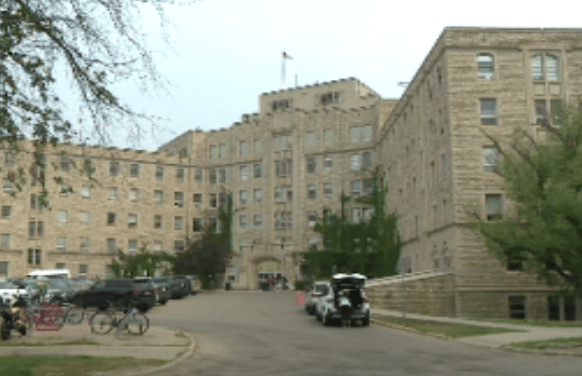
Photo via Global News

Saskatchewan prepares for involuntary addictions treatment as questions remain

Read the original at Global News ↗
Cite

Carr, C. (2026, October 2). Saskatchewan prepares for involuntary addictions treatment as questions remain. Global News. https://globalnews.ca/news/12084709/saskatchewan-prepares-for-involuntary-addictions-treatment-as-questions-remain/

Dated when The Aporia collected the article, usually within hours of publication. Check the original for its exact date and byline.

Global News · collected 2026-10-02 · by Chris Carr

Quick Summary

No summary of this article yet; the story summary below covers the event.

AI analysis

Story summary

The Saskatchewan government is preparing to implement The Compassionate Intervention Act, which aims to provide involuntary addiction treatment for individuals unable to seek help on their own despite health and safety risks. Initially slated for fall 2023, the program's launch has been delayed due to logistical challenges in establishing teams and tribunals to evaluate patients. According to Mental Health and Addictions minister Lori Carr, the province wants to ensure a smooth rollout of the system. The first treatment facility is scheduled to open in North Battleford, with referrals possible from family members, doctors, or police.

The act comes amid a worsening addictions crisis; the Saskatoon Fire Department has responded to 3,109 overdose calls as of September 22, 2024, compared to 1,282 in 2024 and 2,548 last year. Critics like Wendy Gore–Hickman are closely monitoring the program's effectiveness, citing concerns about insufficient numbers of addictions counselors, physicians with expertise in addiction treatment, and available facilities.

Written for “Saskatchewan Addictions Treatment Plan” on 2026-11-05, grounded in this article and the 0 other(s) covering the same event.

Story

📰 Saskatchewan Addictions Treatment Plan
Politics · 1 article(s) covering the same event.

Compared with similar articles

Nothing to compare against. No article is close enough to this one for the pipeline to have linked or judged the pair.
How this article was measured signals, leaning charts, publisher record, byline, topics and claims

Signals How these are calculated →

Claims extracted
33
sentences that state something as happening or true
Uncertain
9%
3 of 33 hedged ("reportedly", "may", "according to")
Leaning
Leans left
of the writing, not the subject · beta estimate
Publisher signals
63/100
Global News's corrections and hedging, across everything collected from it. Not a measure of accuracy.
Outlets on this story
1
Politics
Same framing elsewhere
1
articles that frame the event the way this one does
Analyzed 2026-10-02 · how these are computed

How this is being covered How these are calculated →

Article leaning vs. publisher reliability
Source leaning vs. consistency

Publisher

Global News · 2820 article(s) · 12 correction(s) detected
Running correction rate · 12 correction(s)

Who wrote this

Chris Carr
6 article(s) here · 1 carrying a prediction
🔮 “And I had seen other restaurants in Vancouver that I worked at succeed very well in areas like Gastown, and I thought this would be a great time to try a restaurant as a young person where I could actually afford the rent,” said Peters.
2026-10-30 · assertive framing · Shaping Saskatchewan: Christie Peters
🔮 Mayor Cynthia Block said the city continues to work with the provincial government to find solutions.
🔮 Slowly but surely, the Saskatchewan government is moving toward involuntary addiction treatment for people who may not be capable of seeking help themselves.
🔮 But Haight will have to make up for lost time.
2026-09-25 · assertive framing · Saskatchewan harvest faces higher costs and delays
🔮 They’re also calling for changes they hope will prevent this type of tragedy from happening again.
2026-09-16 · assertive framing · Saskatoon family in mourning seeks answers
🔮 The provincial government released its first-quarter financial update with a deficit now sitting at $825 million, slightly worse than the $819 million projected when the budget was released in March.
Also by Chris Carr
Shaping Saskatchewan: Christie Peters
2026-10-30 · Global News
Nothing else under this byline is closely related to this article, so these are simply their most recent.
All 6 articles by Chris Carr →

Topics

Mental Health and Addictions North Battleford Saskatchewan Saskatoon The Compassionate Intervention Act

Subjects

Salte PERSON · 6× Saskatchewan GPE · 4× Brian Salte PERSON · 1× Gore–Hickman PERSON · 1× Lori Carr PERSON · 1× Mental Health and Addictions ORG · 1× North Battleford GPE · 1× Saskatoon GPE · 1× Wendy Gore–Hickman PERSON · 1× the Saskatoon Fire Department ORG · 1×

Narrative

“Insufficient number of addictions counselors, there’s an insufficient number of physicians with expertise in this area, there’s insufficient number of places where you can actually provide this kind of treatment,” Salte added.
framing: assertive · carried by 1 article(s) · first seen 2026-10-02
🔮 Slowly but surely, the Saskatchewan government is moving toward involuntary addiction treatment for people who may not be capable of seeking help themselves.

Claims (33 extracted, 3 hedged)

Slowly but surely, the Saskatchewan government is moving toward involuntary addiction treatment for people who may not be capable of seeking help themselves. uncertain
who → move → help
The Compassionate Intervention Act, which passed in the legislature in May, will support people with severe addictions who are unable to seek help, despite serious health and safety risks. uncertain
who → pass → risks
Initially, the province said the system would come into effect this fall, but timelines are being pushed back. asserted
timelines → say → effect
“With something of this magnitude, we just want to make sure we do it right out of the gate,” said Mental Health and Addictions minister Lori Carr. asserted
Carr → want → gate
The government says once the facility opens in North Battleford people can be referred by family members, doctors or police. asserted
people → say → members
For now, the province says it is still setting up the teams and tribunals that will evaluate individuals. asserted
that → say → individuals
The new approach comes amidst a deepening addictions crisis. asserted
approach → come → crisis
According to the city of Saskatoon, the Saskatoon Fire Department has responded to 3,109 overdose calls as of Sept. 22 this year. uncertain
Department → accord → Sept.
That’s up dramatically from 1,282 in 2024 and 2,548 last year. asserted
That → ’ → 2024
A debate over whether involuntary treatment works Wendy Gore–Hickman is watching the rollout very closely. asserted
Hickman → work → rollout
She has helped hundreds of people struggling with addictions find their way to treatment following her own struggles with alcohol more than two decades ago. asserted
hundreds → help → alcohol
Get daily National news The retired physician and recovery advocate says many people with severe addictions don’t want to be using but continue to use, simply to avoid withdrawal. asserted
people → get → withdrawal
“99 per cent of people that get into treatment say it was the best thing they ever did for themselves, whether they wanted to go to begin with or not,” said Gore–Hickman. asserted
Hickman → get → themselves
He says there are too many questions about how it will work. asserted
it → say → ?
“We are really in uncharted waters here,” said Salte. asserted
Salte → say → waters
He wants more details on how decisions to force someone into treatment will be made. asserted
decisions → want → treatment
We don’t have details, so we feel that it’s really critically important that the tribunals be trained to try to deal with something that nobody’s ever done before,” Salte added. asserted
Salte → have → that
Salte also says the medical evidence remains thin on whether involuntary treatment will actually work. asserted
treatment → say → ?
He says there just isn’t enough data to draw from to prove it does. asserted
it → say → ?
Concerns about treatment capacity Salte also worries resources will be taken away from people seeking treatment voluntarily. asserted
resources → worry → treatment
“Seems very strange to be allocating resources to involuntary treatments in a scenario where we don’t have sufficient resources for voluntary treatment,” Salte contends. asserted
Salte → seem → treatment
He says Saskatchewan is already facing shortages in addiction treatment resources. asserted
Saskatchewan → say → resources
“Insufficient number of addictions counselors, there’s an insufficient number of physicians with expertise in this area, there’s insufficient number of places where you can actually provide this kind of treatment,” Salte added. asserted
Salte → ’ → treatment
Questions about consultation There are also questions over who has a voice in developing the new system. asserted
who → be → system
The First Nations Health Ombudsperson’s (FNHOO) office says it has reached out to the province and is still waiting for a response. asserted
it → say → response
“I had my executive assistant send another e-mail. asserted
assistant → have → mail
I’m concerned about it. asserted
I → ’m → it
Like, I’m not sure what’s going on actually,” said Dianne Lafond. asserted
Lafond → ’m → ?
Lafond says any system involving treatment needs culturally appropriate care. asserted
system → say → care
The province says it continues to work with various groups, including an Indigenous wing within the ministry, to consult with organizations as it sets up the tribunals. asserted
it → say → tribunals
More details on what involuntary treatment will look like in Saskatchewan are expected later this fall or early winter. asserted
treatment → look → Saskatchewan
For now, the province is still working to bring the pieces together that will take the compassionate intervention act from a law in the books to assist in practice in Saskatchewan. asserted
that → work → Saskatchewan
We can expect more details either later this fall, or early winter. asserted
We → expect → details

💬Give feedback · no sign-in needed

No sign-in needed for now. Your note is sent without a name, so it cannot be answered.

🕘History 🎫Support