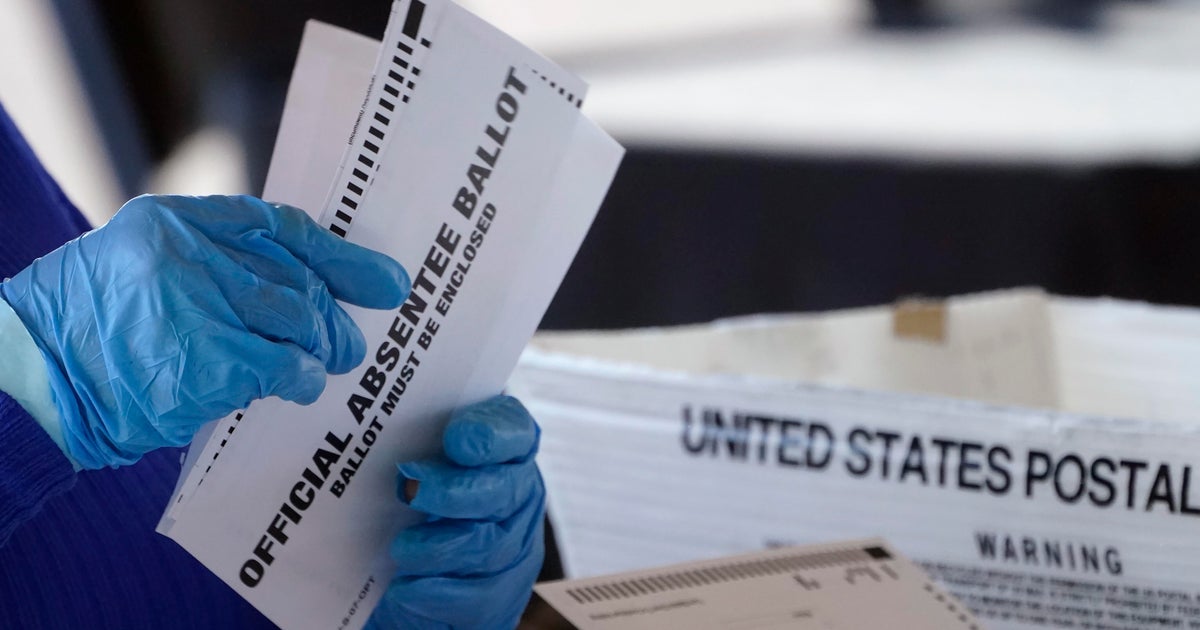
In a possible blow to the Trump administration's efforts to charge noncitizens with voting in U.S. elections, a judge has dismissed a federal case against a Jamaican national accused of illegally voting, finding the law she was charged under is unconstitutional.
asserted
she → charge → national
Miami-based U.S. District Judge David S. Leibowitz ruled Thursday in a 31-page order that the criminal case against Chelsea Cox, who was charged in October 2025 with a misdemeanor for illegally voting in 2020, must be dismissed.
asserted
who → base → 2020
He said a decades-old federal law that prohibits a non-U.S. citizen from voting in a federal election, 18 U.S.C. § 611, is unconstitutional.
asserted
that → say → election
Under the U.S. Constitution, Leibowitz wrote, only states can set voter qualifications, not Congress.
asserted
states → write → qualifications
The judge said state prosecutors in Florida could prosecute Cox under state law for unlawfully voting, not the federal government.
uncertain
prosecutors → say → law
The decision applies only to Cox and appears to be the first time a court has deemed the statute unconstitutional.
asserted
statute → apply → Cox
But it could dent the Justice Department's push to pursue noncitizen voting, a practice that most elections experts say is rare but that President Trump has long alleged — without evidence — is common.
uncertain
Trump → dent → evidence
Shortly after Leibowitz's decision, the Justice Department moved to appeal the ruling.
asserted
Department → move → ruling
A spokesperson for the Justice Department did not immediately respond to a request for comment.
asserted
spokesperson → respond → comment
The decision involved a federal law that makes it a misdemeanor for noncitizens to vote.
asserted
noncitizens → involve → law
It does not cover a separate law barring people from making false claims of citizenship in order to vote, another tool used by the Justice Department in recent months.
uncertain
It → cover → months
It rests upon a forty-year-old federal statute, 18 U.S.C. § 611, that prohibits the act of voting in a federal election by a non-U.S. citizen.
asserted
that → rest → citizen
Until very recently, no federal court has been presented with the following question about that statute: Did Congress have Constitutional authority to enact it?
asserted
Congress → present → it
That's unusual, all by itself," Leibowitz wrote.
asserted
Leibowitz → write → itself
The Biden-appointed judge went on to say the Justice Department's "principal defense of the statute's constitutionality invokes a single Supreme Court case that is very, very weak."
asserted
that → appoint → case
"So why does the Government lead with such a weak hand?
asserted
Government → lead → hand
Because it's the best hand it can play," he said.
asserted
he → play → ?
Because the text, structure, and original public meaning of the Constitution show that Congress does not have the constitutional power to enact this statute."
asserted
Congress → show → statute
In a phone conversation Friday night, Cox's attorney Bruce Udolf said his client is "gratified" by Leibowitz's ruling and said it was a "huge relief to her."
asserted
it → say → her
Udolf said Cox recently underwent a medical procedure, and he is working with the government to determine the next steps in the case and whether the Trump administration moves to deport her.
asserted
administration → say → her
In court papers, federal prosecutors accused Cox of overstaying a U.S. tourist visa more than 20 years ago and obtaining a Florida driver's license by presenting a fraudulent U.S. Virgin Islands birth certificate.
asserted
prosecutors → accuse → certificate
They alleged she cast ballots in several federal elections starting in 2012, with a vote in the 2020 general election leading to last year's charges.
asserted
vote → allege → charges
Cox's lawyers asked the court to dismiss the charges earlier this year, arguing the law used to charge her "exceeds Congress's authority and intrudes on a power reserved to the States."
Federal prosecutors pushed back, arguing the Constitution "provides that the federal government play a significant role in overseeing such elections.
asserted
government → ask → elections
"Whether it is to regulate the manner of federal elections or to preserve a distinct privilege of federal citizenship, surely the United States has the right to exclude non-citizens from voting in federal elections," attorneys for the Justice Department wrote.
asserted
attorneys → regulate → Department
To help him resolve the issue, Leibowitz asked a conservative legal heavyweight to offer his analysis: Paul Clement, who served as solicitor general during the George W. Bush administration and is one of the country's best-known Supreme Court litigators.
asserted
who → help → litigators
In an amicus brief filed over the summer, Clement found that Congress likely "overstepped constitutional bounds in enacting §611."
asserted
Congress → file → 611
He noted that, while no state currently allows noncitizens to vote in federal elections, there is some history of states allowing the practice.
asserted
states → note → practice
Clement wrote that "states, not the federal government, determine voter qualifications."
asserted
states → write → qualifications
 The Aporia