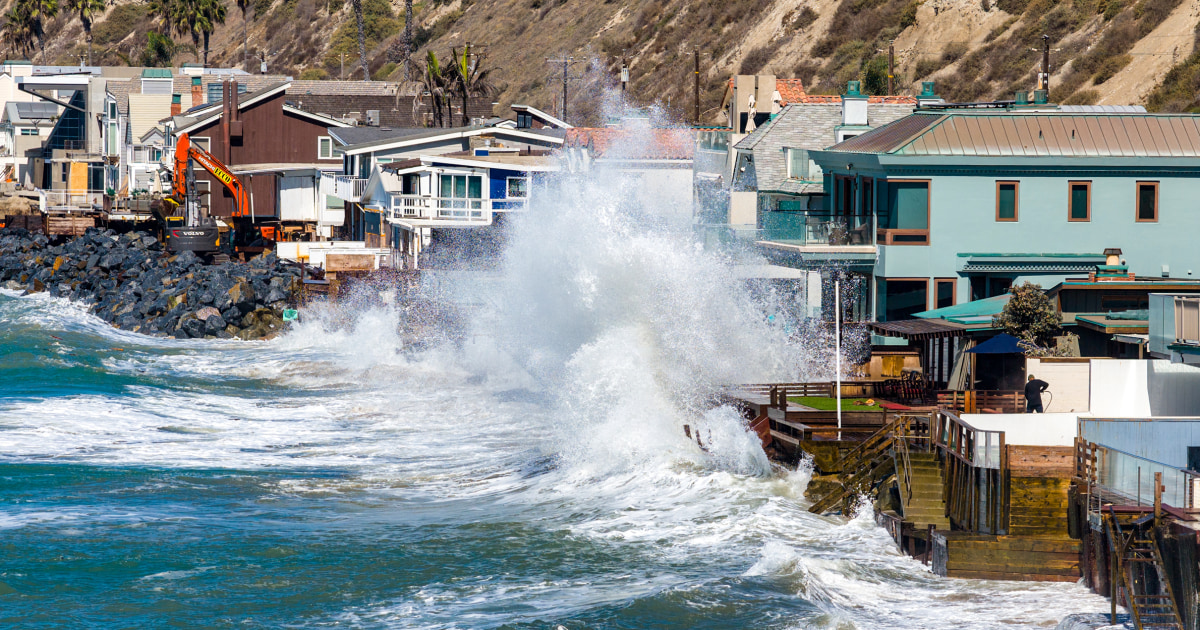
Photo via BBC News

Could El Niño mean there are no Atlantic hurricanes this year?

Read the original at BBC News ↗
Cite

King, S. (2026, October 3). Could El Niño mean there are no Atlantic hurricanes this year? BBC News. https://www.bbc.co.uk/weather/articles/cwgkvyyg8115o?at_medium=RSS&at_campaign=rss

Dated when The Aporia collected the article, usually within hours of publication. Check the original for its exact date and byline.

BBC News · collected 2026-10-03 · by Simon King

Quick Summary

The Atlantic hurricane season has seen an unusually quiet September, with no hurricanes forming for the first time since the satellite era began in the 1960s. This is largely attributed to a strong El Niño, which typically increases wind shear over the Atlantic, inhibiting storm development while simultaneously boosting activity in the eastern North Pacific. Predictions by the US National Hurricane Center and Colorado State University forecast below-normal hurricane activity for the remainder of this season due to continued El Niño influence, making it possible that no hurricanes will form at all in 2026.
Written by AI on 2026-10-03, from this article's own text only (the story summary below draws on all the coverage).

AI analysis

Story summary

For the first time in over 30 years, September 2026 saw no hurricanes form in the Atlantic, despite it being traditionally the most active month for such storms. Forecasters at Colorado State University and the US National Hurricane Center predict a below-normal activity level due to a strong El Niño, which disrupts wind patterns across the Atlantic. The National Hurricane Center had initially forecasted a season with eight to 14 named storms, but only three to six becoming hurricanes, and one to three major hurricanes. With just two months left in the hurricane season, there is an increasing possibility that no hurricanes will develop at all, making this the first year since the satellite era (starting in the 1960s) without a single hurricane forming. This unusual quietness continues with four named tropical storms already formed this year, but none reaching hurricane status.

Written for “El Nino And Hurricanes” on 2026-11-04, grounded in this article and the 0 other(s) covering the same event.

Story

📰 El Nino And Hurricanes
Environment · 1 article(s) covering the same event.

Compared with similar articles

This article reads unscored and hedges 8% of its claims. Each row says how that neighbour differs.
NBC News
Hedges 5 of 22 claims Outlet record 78/100
“The articles discuss different aspects of El Niño's effects: one focuses on its impact on the Atlantic hurricane season, while the other discusses record-breaking sea surface temperatures and global consequences.”
How this article was measured signals, leaning charts, publisher record, byline, topics and claims

Signals How these are calculated →

Claims extracted
24
sentences that state something as happening or true
Uncertain
8%
2 of 24 hedged ("reportedly", "may", "according to")
Leaning
not political
takes no side on a contested political question
Publisher signals
68/100
BBC News's corrections and hedging, across everything collected from it. Not a measure of accuracy.
Outlets on this story
1
Environment
Same framing elsewhere
1
articles that frame the event the way this one does
Analyzed 2026-10-03 · how these are computed

How this is being covered How these are calculated →

Article leaning vs. publisher reliability
Source leaning vs. consistency

Publisher

BBC News · 5045 article(s) · 6 correction(s) detected
Running correction rate · 6 correction(s)

Who wrote this

Simon King
7 article(s) here · 1 carrying a prediction
🔮 However, the National Drought Group have said it will take sustained and above average rainfall over a seven month period for conditions to improve to normal.
🔮 The eerily quiet season continues and with just two months left, there is an increasing possibility that no hurricanes will develop at all.
🔮 - Published Temperatures could reach as high as 25C in parts of the UK on Tuesday in a burst of late September warmth.
🔮 - Published It is set to turn warmer across the United Kingdom over the next few days, with temperatures peaking around 25C (77F).
🔮 - Published Much of the UK is set to feel cooler from Tuesday, as more changeable weather moves in.
🔮 - Published A new hurricane season record will be set this week as a historic and still strengthening El Niño stifles tropical development in the Atlantic.
🔮 - Published The Met Office has issued a rare amber weather warning for extreme heat, external for parts of England on Thursday, where temperatures could peak at 38C. The highest temperatures will be in parts of the east, south-east and the Midlands and may lead to impacts on transport, infrastructure and health.
Also by Simon King
Nothing else under this byline is closely related to this article, so these are simply their most recent.
All 7 articles by Simon King →

Topics

Colorado State University El Niño The National Hurricane Center an El Niño the US National Hurricane Center

Subjects

Colorado State University ORG · 1× Edouard PERSON · 1× Fay PERSON · 1× Gonzalo PERSON · 1× Hanna ORG · 1× The National Hurricane Center ORG · 1× the Accumulated Cyclone Energy ORG · 1× the US National Hurricane Center ORG · 1×

Narrative

Forecasters at Colorado State University, who also monitor activity, suggest the strong El Niño is likely to disrupt wind patterns across the Atlantic and "likely result in below-normal activity" over the next two-weeks.
framing: assertive · carried by 1 article(s) · first seen 2026-10-03
🔮 The eerily quiet season continues and with just two months left, there is an increasing possibility that no hurricanes will develop at all.
2026-10-03 · BBC News
Could El Niño mean there are no Atlantic hurricanes this year? · assertive framing

Claims (24 extracted, 2 hedged)

- Published For the first time in more than 30 years, a hurricane has not formed in the Atlantic throughout September - normally the most active month for hurricane activity. asserted
hurricane → publish → activity
The eerily quiet season continues and with just two months left, there is an increasing possibility that no hurricanes will develop at all. asserted
hurricanes → continue → ?
This would make the 2026 Atlantic hurricane season the only one in the satellite era without a hurricane. asserted
season → make → hurricane
The biggest reason for this is El Niño, which traditionally stifles activity in the Atlantic but brings a very active season in the eastern North Pacific. asserted
which → stifle → Pacific
The Atlantic hurricane season was predicted to be quieter than normal as a result of this. asserted
season → predict → this
With a very strong El Niño forecast, the US National Hurricane Center in May predicted a total of eight to 14 named storms. uncertain
Center → predict → storms
Of those, three to six were predicted to become hurricanes, with one to three becoming major hurricanes. asserted
three → predict → those
But, this year marks the latest date on record since the start of the satellite era (1960s onward) where no hurricane has formed in the North Atlantic. asserted
hurricane → mark → Atlantic
There were, however, four named tropical storms which formed in September: Edouard, Fay, Gonzalo and Hanna. asserted
which → be → September
All but Edouard stayed out in the open waters of the Atlantic. asserted
All → stay → Atlantic
The National Hurricane Center suggests there is no sign of any tropical storm activity or hurricane over the next week at least. uncertain
Center → suggest → week
Forecasters at Colorado State University, who also monitor activity, suggest the strong El Niño is likely to disrupt wind patterns across the Atlantic and "likely result in below-normal activity" over the next two-weeks. asserted
Niño → monitor → weeks
As the typical peak of the season has passed and is now on a downward trend until 30 November, a season without a single hurricane is looking increasingly possible. asserted
season → pass → hurricane
However, this was pre-satellite monitoring so it is impossible to say with certainty that none formed. asserted
none → say → certainty
How does El Niño affect tropical development? asserted
Niño → affect → development
While El Niño is the natural warming of the tropical Pacific, it can disrupt weather patterns around the globe. asserted
it → disrupt → globe
As wind patterns shift during an El Niño, upper winds over the Atlantic increase and this leads to more wind shear, where wind changes rapidly with height. asserted
wind → shift → height
Increased wind shear rips apart thunderstorms, preventing them from growing into tropical storms or hurricanes. asserted
shear → rip → storms
Meanwhile, the Pacific typically becomes more active during El Niño because the sea surface temperatures here are much higher, combined with more favourable wind patterns. asserted
temperatures → become → patterns
The warmer waters give storms more energy to grow into tropical storms and hurricanes. asserted
waters → give → storms
This year, temperature records have already been broken in a key region of the central-eastern Pacific, with daily sea surface temperatures now exceeding the previous record set during the very strong El Niño of 2015. asserted
temperatures → break → 2015
There have so far been 17 named storms in the basin including nine hurricanes, seven of which were major. asserted
seven → name → which
In terms of the amount of energy these storms have produced - known as the Accumulated Cyclone Energy - this season is around two and half times more active than normal at this point. asserted
season → produce → point
El Niño is predicted to continue to strengthen with forecasts suggesting it will reach its peak in November or December. asserted
it → predict → November

💬Give feedback
🕘History 🎫Support