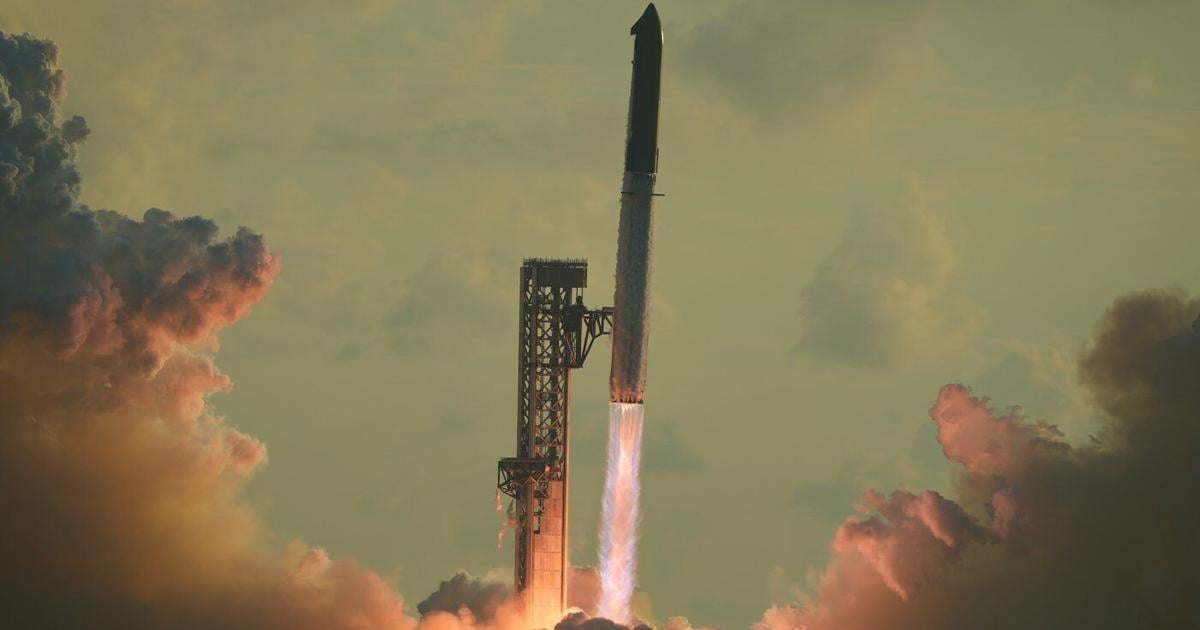
Photo via BBC News

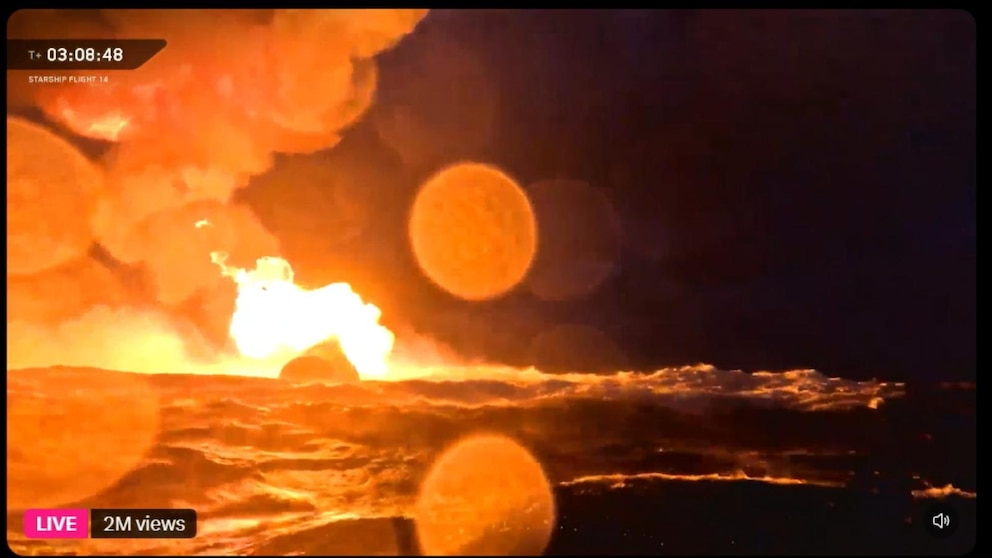
Watch: Starship splashdown ends in fireball

Read the original at BBC News ↗
Cite

Watch: Starship splashdown ends in fireball. (2026, October 3). BBC News. https://www.bbc.co.uk/news/videos/c6j9xkdvrd94o?at_medium=RSS&at_campaign=rss

Dated when The Aporia collected the article, usually within hours of publication. Check the original for its exact date and byline.

BBC News · collected 2026-10-03

Quick Summary

SpaceX's Starship splashed down in the Pacific Ocean following a three-hour orbital flight that ended prematurely after only 90 minutes. The mission was intended to last ten hours but was cut short for unspecified reasons. During its time in orbit, the ship deployed 26 new Starlink V3 satellites designed to enhance broadband internet services on Earth.
Written by AI on 2026-10-03, from this article's own text only (the story summary below draws on all the coverage).

AI analysis

Story summary

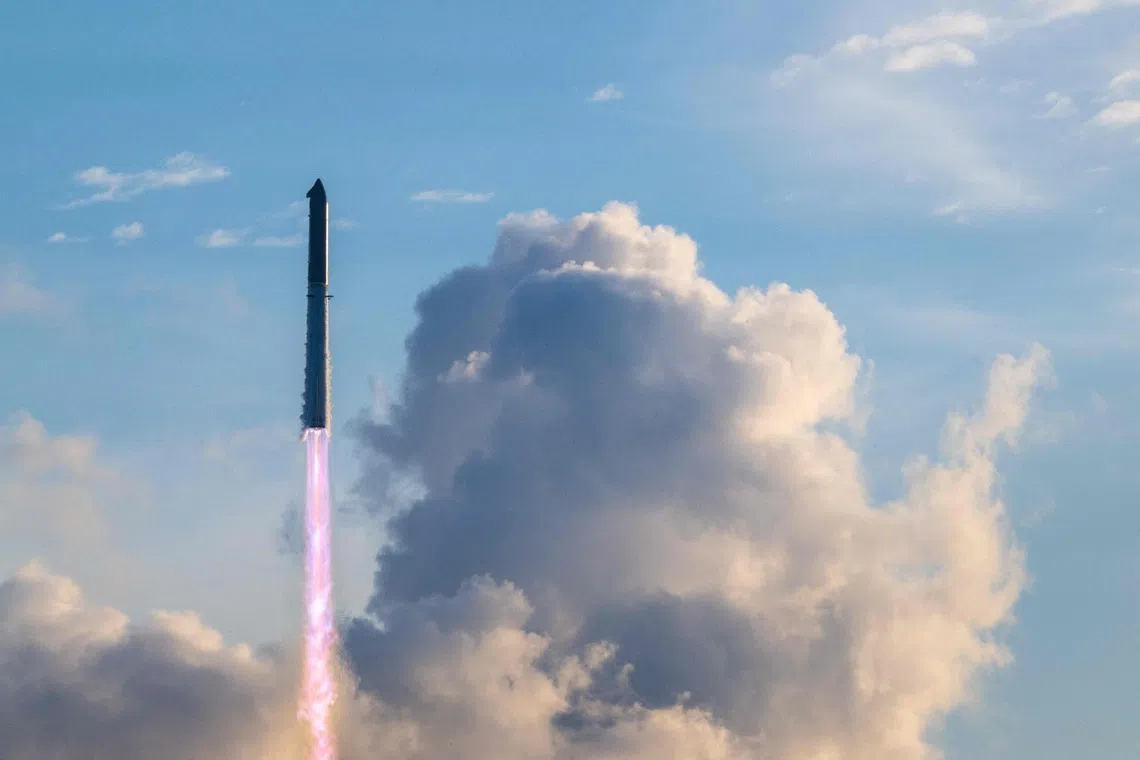
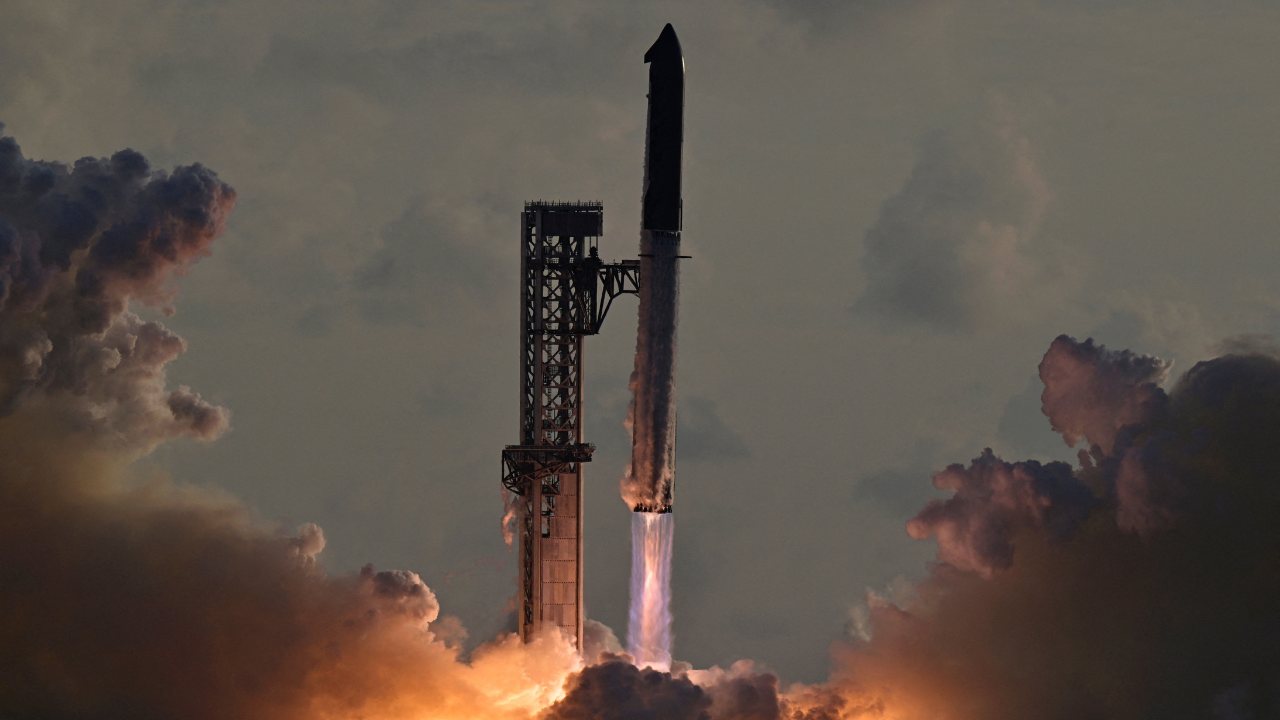
On Monday, SpaceX launched its enormous Starship, the largest and most powerful rocket ever built, from Boca Chica Beach in Texas. The mission was originally planned to last for approximately 10 hours, completing about six orbits around Earth at an altitude of roughly 170 miles (275 km) before a splashdown in the Pacific Ocean west of Chile. However, due to an engine failure shortly after launch, SpaceX decided to cut the flight short and ended it within three hours instead.

Despite initial concerns, mission control announced that "Starship is orbital," marking the first time Starship successfully achieved orbit. The spacecraft also deployed 26 of its newest Starlink satellites during this test flight, bringing the total number of active Starlinks to over 11,000, providing internet services worldwide. This historic mission aims to pave the way for future missions to the Moon and Mars under NASA’s Artemis program.

Written for “SpaceX Starship Orbital Test” on 2026-11-05, grounded in this article and the 15 other(s) covering the same event.

Story

📰 SpaceX Starship Orbital Test
Technology · 16 article(s) covering the same event. Compare every outlet's account →

Compared with similar articles

This article reads unscored and hedges 0% of its claims. Each row says how that neighbour differs.
BBC News
Hedges 0 of 6 claims Outlet record 66/100
Toronto Star
Hedges 1 of 32 claims Outlet record 64/100
CBC News
Hedges 1 of 30 claims Outlet record 71/100
ABC News (US)
Hedges 0 of 2 claims Outlet record 67/100
The Straits Times
Hedges 3 of 20 claims Outlet record 66/100
Al Jazeera
Hedges 0 of 2 claims Outlet record 60/100
Washington Examiner
Hedges 1 of 12 claims Outlet record 69/100
“While both articles discuss SpaceX's Starship orbital flight test involving satellite deployment and splashdown in the Pacific, Article A describes the planned mission before launch, while Article B reports on the actual outcome of a shorter-than-expected flight.”
The Sydney Morning Herald
Hedges 0 of 26 claims Outlet record 61/100
“While both articles describe different phases of the same mission, Article A covers the launch and initial orbit entry while Article B reports on the splashdown after a shortened mission duration.”
The Guardian
Hedges 1 of 31 claims Outlet record 66/100
“Article A describes the initial launch and orbit of SpaceX's Starship rocket, while Article B reports on its splashdown after completing a shorter-than-expected orbital flight.”
Times of India
Hedges 1 of 13 claims Outlet record 59/100
“Article A describes the launch and orbit phase of SpaceX's Starship test flight, while Article B focuses on the premature splashdown and deployment of satellites during a later stage of the same mission.”
How this article was measured signals, leaning charts, publisher record, byline, topics and claims

Signals How these are calculated →

Claims extracted
4
sentences that state something as happening or true
Uncertain
0%
0 of 4 hedged ("reportedly", "may", "according to")
Leaning
not political
takes no side on a contested political question
Publisher signals
66/100
BBC News's corrections and hedging, across everything collected from it. Not a measure of accuracy.
Outlets on this story
16
Technology
Same framing elsewhere
1
articles that frame the event the way this one does
Analyzed 2026-10-03 · how these are computed

How this is being covered How these are calculated →

Article leaning vs. publisher reliability
Source leaning vs. consistency

Publisher

BBC News · 5145 article(s) · 7 correction(s) detected
Running correction rate · 7 correction(s)

Who wrote this

No reporter is named on this article.

Topics

SpaceX Starlink V3 Starship

Subjects

SpaceX ORG · 2×

Narrative

During the trip, the ship deployed 26 "next generation" Starlink V3 satellites, joining the existing constellation which deliver broadband internet on Earth.
framing: assertive · carried by 1 article(s) · first seen 2026-10-03
2026-10-03 · BBC News
Watch: Starship splashdown ends in fireball · assertive framing

Claims (4 extracted, 0 hedged)

Watch: Starship splashdown ends in fireball asserted
splashdown → watch → fireball
SpaceX's Starship splashed down in the Pacific Ocean after completing about three hours of orbital flight. asserted
Starship → splash → flight
The mission was supposed to last 10 hours, but SpaceX announced it was ending early after 90 minutes. asserted
it → suppose → minutes
During the trip, the ship deployed 26 "next generation" Starlink V3 satellites, joining the existing constellation which deliver broadband internet on Earth. asserted
which → deploy → Earth
💬Give feedback · no sign-in needed

No sign-in needed for now. Your note is sent without a name, so it cannot be answered.

🕘History 🎫Support