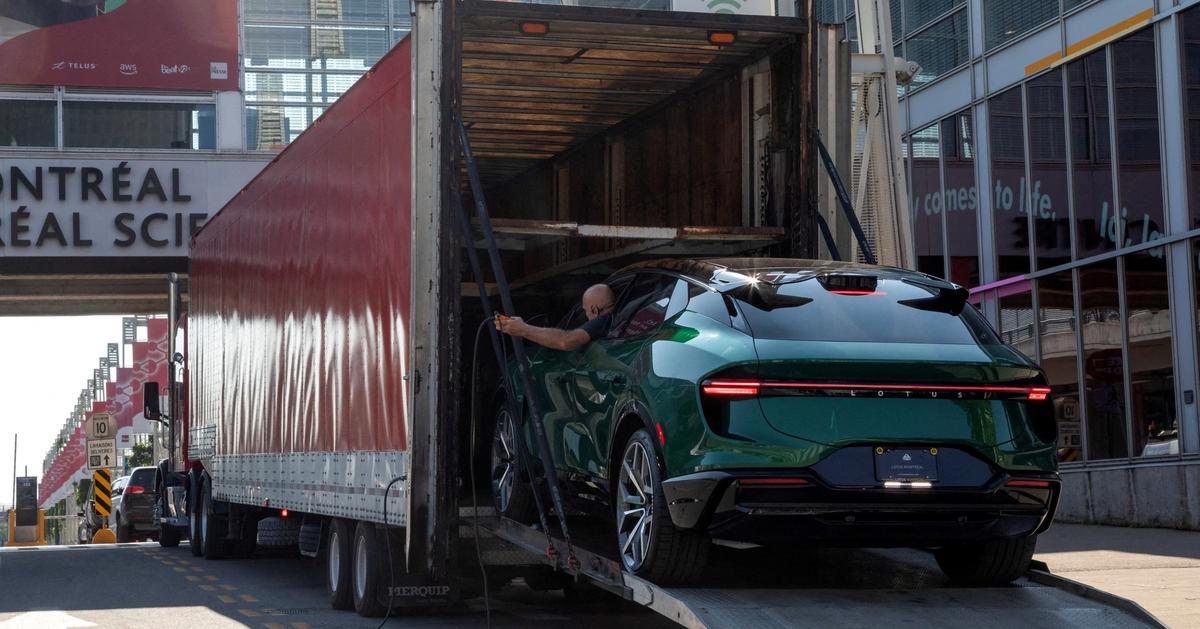
Photo via South China Morning Post

Can Britain really afford to diverge from EU tariffs on Chinese EVs?

Read the original at South China Morning Post ↗
Cite

Kasonta, A. (2026, October 3). Can Britain really afford to diverge from EU tariffs on Chinese EVs? South China Morning Post. https://www.scmp.com/opinion/world-opinion/article/3369331/can-britain-really-afford-diverge-eu-tariffs-chinese-evs?utm_source=rss_feed

Dated when The Aporia collected the article, usually within hours of publication. Check the original for its exact date and byline.

South China Morning Post · collected 2026-10-03 · by Adriel Kasonta

Quick Summary

The article discusses Britain's potential divergence from the EU’s tariffs on Chinese electric vehicles (EVs). It highlights that if Britain raises tariffs independently, it may face negative consequences such as exclusion from an integrated European industrial framework unless it can leverage its independent tariff policy for meaningful negotiations with China. The piece notes significant growth in China’s EV exports to Europe, with August figures showing a 33% year-on-year increase and nearly 95,000 units shipped to the region that month alone.
Written by AI on 2026-10-03, from this article's own text only (the story summary below draws on all the coverage).

AI analysis

Story summary

The European Union is pressuring Britain to increase tariffs on Chinese electric vehicles (EVs), highlighting the challenges Britain faces after Brexit. China exported over 284,000 EVs in August 2023 alone, marking a 33% year-on-year growth, with almost 95,000 of those exports going to Europe. The EU's demand underscores that despite Britain leaving the bloc, it still heavily relies on an integrated European industrial framework and may struggle to negotiate independently with Beijing without losing significant trade benefits.
Written for “UK EU Tariffs Chinese EVs” on 2026-11-03, grounded in this article and the 0 other(s) covering the same event.

Story

📰 UK EU Tariffs Chinese EVs
Politics · 1 article(s) covering the same event.

Compared with similar articles

This article reads leans left and hedges 17% of its claims. Each row says how that neighbour differs.
Semafor
⚖️ Leans left Hedges 0 of 5 claims Outlet record 59/100
“The articles discuss different aspects of tariffs and market entry for Chinese EVs, with Article A focusing on US policies under Trump and competition from other automakers, while Article B addresses Britain's tariff divergence from the EU.”
Al Jazeera
Hedges 2 of 22 claims Outlet record 60/100
“The articles discuss different aspects of EU-China trade relations and do not describe the same specific incident.”
Euronews
⚖️ Leans right further right than this Hedges 0 of 20 claims Outlet record 60/100
“The articles describe different events related to trade tensions between China and the EU, but they do not refer to the same specific incident or time.”
The Sydney Morning Herald
⚖️ Leans right further right than this Hedges 9 of 46 claims Outlet record 61/100
“Article A discusses Britain's divergence from EU tariffs on Chinese EVs, while Article B focuses on European Union trade negotiations with China regarding overall imports and exports.”
The Sydney Morning Herald
⚖️ Leans right further right than this Hedges 6 of 28 claims Outlet record 61/100
“While both articles discuss potential tariffs on Chinese electric vehicles in Britain, they describe different stages of the process: Article A discusses the EU's demand for Britain to raise tariffs and the broader implications, while Article B reports on Britain considering imposing tariffs based on concerns about market flooding.”
The Guardian
⚖️ Leans right further right than this Hedges 2 of 23 claims Outlet record 66/100
“While both articles discuss potential tariff alignment with the EU regarding Chinese car imports, they describe different stages of the process: one focuses on the consequences and implications of divergence, while the other reports on current considerations for aligning tariffs.”
The Straits Times
⚖️ Leans right further right than this Hedges 4 of 11 claims Outlet record 66/100
“Article A discusses the EU's demand for Britain to raise tariffs on Chinese cars and its implications, while Article B reports that Britain is considering imposing tariffs on Chinese electric vehicles due to concerns about market flooding.”
Daily Mail
⚖️ Leans right further right than this Hedges 0 of 16 claims Outlet record 69/100
“The articles discuss related policy considerations but describe different decisions and timing regarding tariffs on Chinese EVs.”
The Guardian
⚖️ Leans left Hedges 6 of 24 claims Outlet record 66/100
“The articles discuss related issues about the UK's trade policy with China and EU, but describe different aspects and timings of discussions and warnings.”
Semafor
⚖️ Leans right further right than this Hedges 2 of 5 claims Outlet record 59/100
“The articles discuss different aspects of EU-China trade relations and do not describe the same specific incident.”
How this article was measured signals, leaning charts, publisher record, byline, topics and claims

Signals How these are calculated →

Claims extracted
6
sentences that state something as happening or true
Uncertain
17%
1 of 6 hedged ("reportedly", "may", "according to")
Leaning
Leans left
of the writing, not the subject · beta estimate
Publisher signals
62/100
South China Morning Post's corrections and hedging, across everything collected from it. Not a measure of accuracy.
Outlets on this story
1
Politics
Same framing elsewhere
1
articles that frame the event the way this one does
Analyzed 2026-10-03 · how these are computed

How this is being covered How these are calculated →

Article leaning vs. publisher reliability
Source leaning vs. consistency

Publisher

South China Morning Post · 3686 article(s) · 8 correction(s) detected
Running correction rate · 8 correction(s)

Who wrote this

Adriel Kasonta
1 article(s) here · 1 carrying a prediction
🔮 Unless London can turn its independent tariff policy into real bargaining power with Beijing, it will lose more by being shut out of an integrated European industrial framework The European Union’s demand that Britain raise tariffs on Chinese cars exposes an awkward truth about post-Brexit trade.
The only article under this byline in the corpus.

Topics

Beijing Britain Chinese European London

Subjects

Britain GPE · 3× Chinese NORP · 2× Beijing GPE · 1× China GPE · 1× European NORP · 1× London GPE · 1× The European Union’s ORG · 1×

Narrative

Unless London can turn its independent tariff policy into real bargaining power with Beijing, it will lose more by being shut out of an integrated European industrial framework The European Union’s demand that Britain raise tariffs on Chinese cars exposes an awkward truth about post-Brexit trade.
framing: assertive · carried by 1 article(s) · first seen 2026-10-03
🔮 Unless London can turn its independent tariff policy into real bargaining power with Beijing, it will lose more by being shut out of an integrated European industrial framework The European Union’s demand that Britain raise tariffs on Chinese cars exposes an awkward truth about post-Brexit trade.
2026-10-03 · South China Morning Post
Can Britain really afford to diverge from EU tariffs on Chinese EVs? · assertive framing

Claims (6 extracted, 1 hedged)

Can Britain really afford to diverge from EU tariffs on Chinese EVs? asserted
Britain → afford → EVs
Unless London can turn its independent tariff policy into real bargaining power with Beijing, it will lose more by being shut out of an integrated European industrial framework The European Union’s demand that Britain raise tariffs on Chinese cars exposes an awkward truth about post-Brexit trade. asserted
Britain → turn → trade
Britain might have left the EU, but it cannot easily escape the bloc’s industrial policy. uncertain
it → leave → policy
China’s car export machine is accelerating. asserted
machine → accelerate → ?
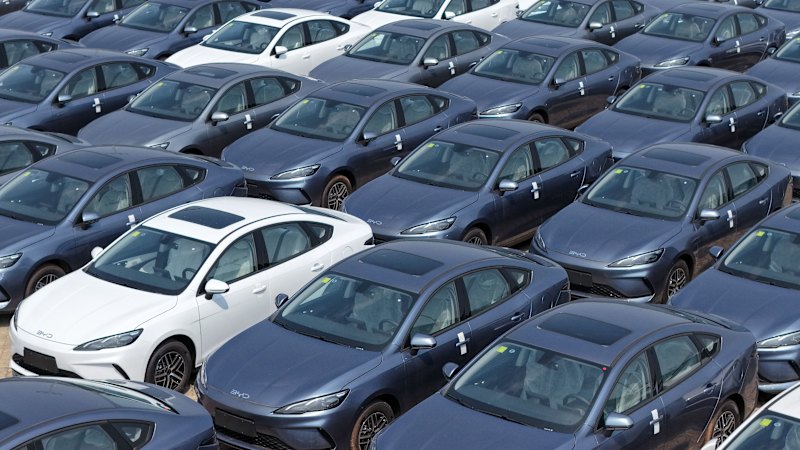
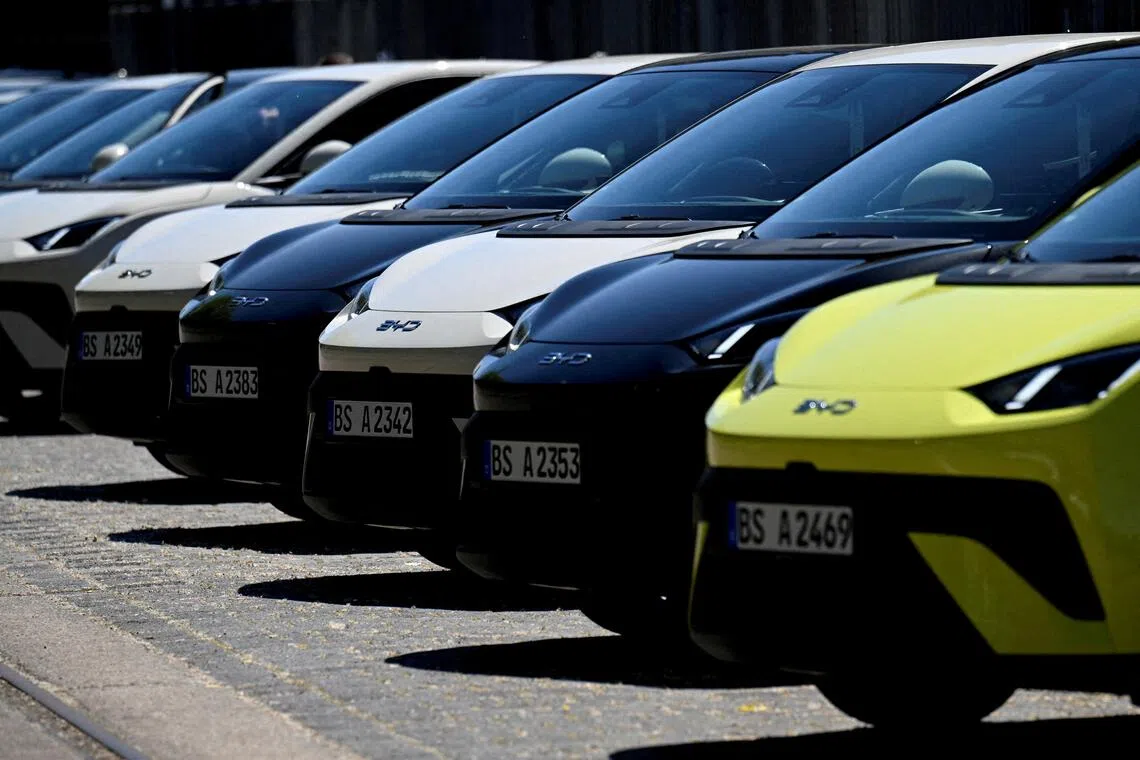
Its electric vehicle (EV) exports in August rose 33 per cent year on year to more than 284,000, while year-to-date exports as of the end of August were more than 2.1 million, up 53 per cent year on year. asserted
exports → rise → year
Almost 95,000 of those exports went to Europe in August. asserted
95,000 → go → August
💬Give feedback
🕘History 🎫Support