Sign up for our weekly newsletter to get our journalism delivered directly to your inbox.
asserted
journalism → sign → inbox
In 2012, psychologist Cindra Kamphoff was running a marathon.
asserted
Kamphoff → run → marathon
Then at Mile 22, her self-doubt started to kick in.
asserted
doubt → start → Mile
She remembers telling herself, "This is dumb.
asserted
This → remember → herself
Why am I doing this?"
asserted
I → do → this
Kamphoff, who works with top athletes on how to overcome performance anxiety — including from the Minnesota Vikings and USA Track & Field — was prepared.
asserted
who → work → Vikings
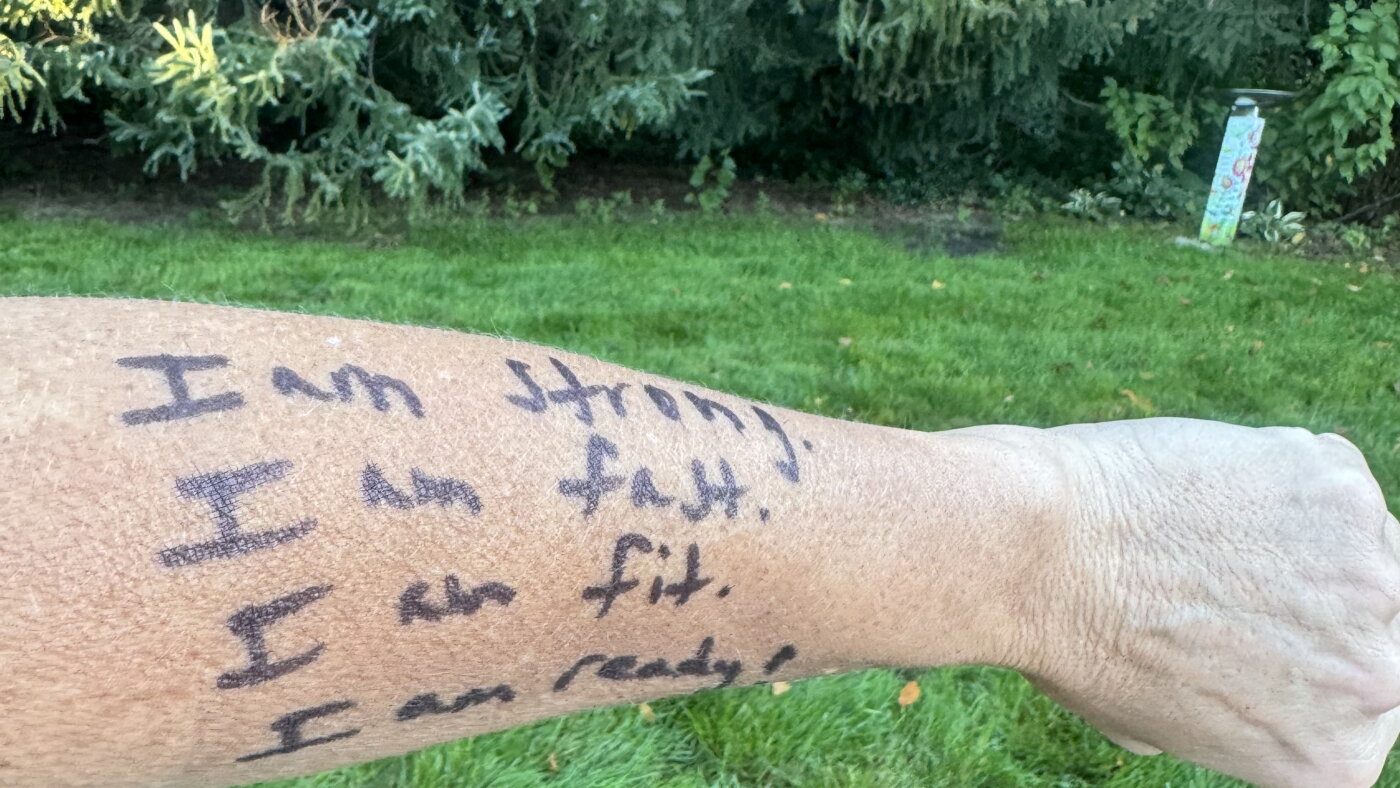
She had written positive phrases on her arm that she could read when she needed a boost during the race: "I'm strong, I'm fast, I'm fit, I'm ready."
uncertain
I → write → race
This is just one of many techniques that Kamphoff shares in The Confidence Habit: 7 Core Practices to Transform Self-Doubt to Self-Belief, published in September.
asserted
Kamphoff → share → September
The book offers creative ways to manage fear and negativity — like pretend-flushing your mistakes down the toilet — before, during and after a high-stakes task.
asserted
book → offer → task
These tools can be applied to any situation, whether it's a race, work presentation or a job interview.
asserted
it → apply → situation
The goal is for people to "be their best in the moments that matter most to them," she says.
asserted
she → matter → them
Kamphoff, who has a PhD in sport and performance psychology, shares four tools you can try today.
asserted
you → have → tools
Maybe you fumble the ball in a big game or forget the lines in your school play and can't stop thinking about it afterward.
asserted
you → fumble → it
If you make a mistake during a high-stakes moment, Kamphoff says it's important to move on quickly.
asserted
it → make → moment
She suggests a tool she calls "learn, burn, return" to build back your confidence and keep your goals in reach.
uncertain
she → suggest → reach
Try this if you fumble mid-performance, or as a way to reflect after the event.
asserted
you → try → event
Learn: Ask yourself, what did you learn?
asserted
you → learn → what
Use this prompt: Next time, I will _____.
Burn: Think of a motion or a cue you can use to remind yourself to move on quickly.
asserted
you → use → yourself
Kamphoff says you can snap your fingers, say "that fast" or "you might literally pretend to flush a toilet."
uncertain
you → say → toilet
She taught the toilet flush move to former Minnesota Vikings player Adam Thielen, who used it after he fumbled during a playoff game in 2020.
asserted
he → teach → 2020
He then went on to catch a 43-yard pass over his head that helped the Vikings win the game.
asserted
Vikings → go → game
Using the same motion or phrase every time you "burn" helps your brain strengthen new neural pathways when it comes to moving through anxiety, she says.
asserted
she → use → anxiety
Return: Now it's time to build yourself back up.
asserted
it → return → yourself
Remind yourself, "you got this, you're doing the best that you can," says Kamphoff.
asserted
Kamphoff → remind → best
How you talk to yourself matters, Kamphoff says.
asserted
Kamphoff → talk → yourself
According to the American Psychological Association, self-affirmations, even in small doses, can have lasting effects on our self-esteem.
uncertain
affirmations → accord → esteem
When Kamphoff wrote positive messages on her arm to motivate her during her marathon, they worked because she was giving her brain evidence that she could be successful.
uncertain
she → write → evidence
As Kamphoff repeated these phrases during her race, her pace picked up.
asserted
pace → repeat → race
She ended up not only winning the race in her division, but running her last four miles the fastest out of any part of the marathon.
asserted
She → end → marathon
To make what Kamphoff calls a "power phrase," choose a statement that starts with I will, I can or I am.
asserted
I → make → statement
Then ask yourself, How am I at my best?
asserted
I → ask → best
What does that look like? What does that feel like?"
asserted
that → look → What
Kamphoff chose phrases that reminded her of her love for running — and that she had trained for hundreds of miles to run the race.
asserted
she → choose → race
Kamphoff recommends creating a "gold, silver and bronze goal," she says.
asserted
she → recommend → goal
Let's say you're running the mile in track.
asserted
you → let → track
Your bronze goal might be running a time you're generally happy with, your silver goal might be to run a personal best, and your gold goal might be to win the race.
uncertain
goal → run → race
This can help decrease anxiety and increase confidence by removing the pressure of one ideal performance and shifting focus to the present moment.
asserted
This → help → moment
Especially because "an outcome is something you can't control," she says.
asserted
she → control → ?
If you're feeling overcome with negative thoughts right before a job interview or a big test, ask yourself three questions:
- Is that thought true?
- Is that thought serving you?
- What would be a more empowering statement?
This method is similar to other frameworks, like acceptance commitment therapy and cognitive behavioral therapy.
asserted
method → feel → therapy
It can pause negative thoughts and help you get back to the present moment.
asserted
you → pause → moment
…and 16 more, not listed.
 The Aporia