Maxx Bonnefoy’s mortgage renewal couldn’t come sooner.
asserted
renewal → come → ?
In 2023, the 37-year-old army veteran and his partner signed a contract to buy a pre-construction home in Tyndall, a village in rural Manitoba.
asserted
veteran → sign → Manitoba
Around the time, he was preapproved for a rate of around 3.99 to 4.5 per cent.
asserted
he → preapprove → cent
But by the time the property — a four-bedroom, semi-detached house — became ready for occupancy in 2024 and they were able to get a mortgage, rates had gone up dramatically.
asserted
rates → become → mortgage
The couple decided to lock in a three-year fixed rate at 5.6 per cent, with hopes of getting a lower rate in early 2027.
asserted
couple → decide → 2027
“I was like: you know what?
asserted
you → know → what
There’s no going back,” said Bonnefoy, who was working three jobs at the time to support his family.
asserted
who → ’ → family
“I’ve already committed to the purchase.
asserted
I → commit → purchase
I’m not backing out of the deal.
asserted
I → back → deal
”
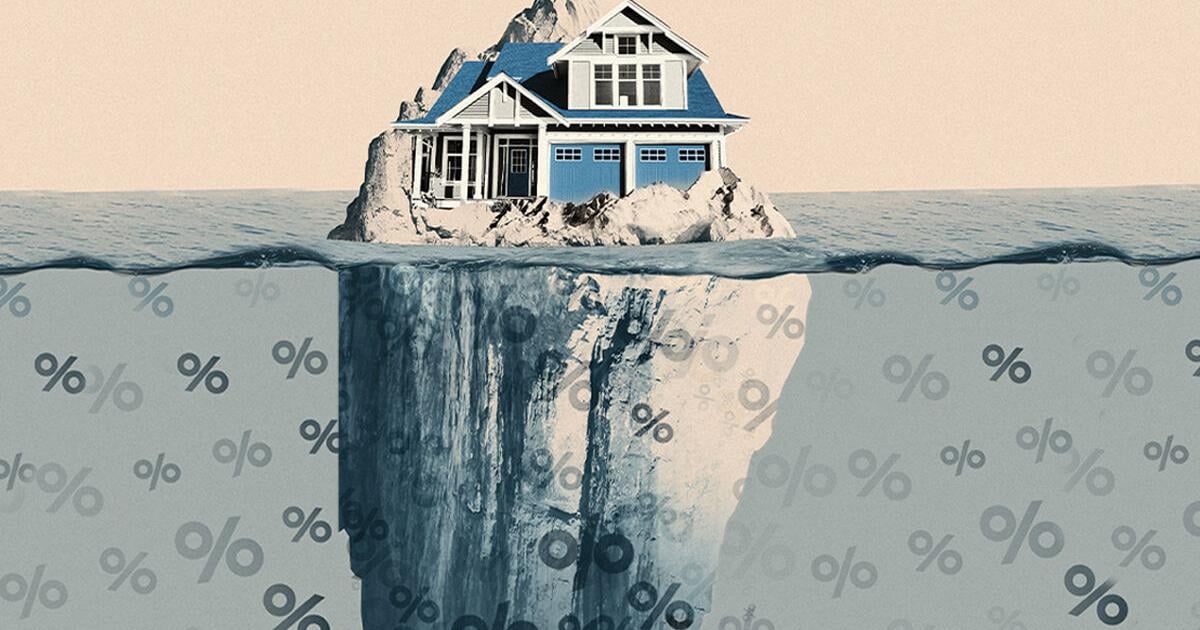
But as his renewal date nears, Bonnefoy might not get the big break he’s looking for as rates tick up due to larger forces beyond his control.
uncertain
rates → near → control
When interest rates started coming down in 2024, more Canadians turned to shorter fixed-rate mortgages, hoping that rates would fall even further.
asserted
rates → start → mortgages
For a while, borrowing costs did drop, with the Bank of Canada lowering its policy rate to 2.25 per cent from a post-pandemic peak of five per cent.
asserted
Bank → drop → cent
But, in recent weeks, fixed rates have jumped by around 25 basis points due to surging energy costs and the AI data centre boom.
asserted
rates → fix → costs
The U.S. Federal Reserve already hiked its benchmark interest rate, while the Bank of Canada has warned it may have to raise its policy rate if oil prices remain high, which would immediately increase variable rates.
uncertain
which → hike → rates
That means some borrowers who took out shorter term mortgages will be renewing at higher rates than they likely expected.
asserted
they → mean → rates
That includes more borrowers than it used to.
asserted
it → include → borrowers
Data from the Canada Mortgage and Housing Corp. (CMHC) shows a meaningful increase in fixed-rate mortgages of less than five years, and in the last few months interest in variable mortgages has grown.
asserted
interest → show → mortgages
This trend has CMHC’s chief economist worried, as he expects rates to be higher and more volatile going forward.
asserted
rates → have → ?
Borrowers renewing their mortgages more frequently are more exposed to “interest-rate risk,” as they are prone to payment shocks that can lead to affordability struggles and even distressed home sales, says Aled ab Iorwerth.
asserted
Iorwerth → renew → struggles
While he’s concerned for individual homeowners, he also fears the ripple effect this can have on the Canadian economy.
“While some of those decisions may have been OK in the last 20 years, I’m just a little bit — I’m not sure what the word is — cautious, nervous, uncertain that maybe the future isn’t what it used to be.”
uncertain
it → ’ → ’m
Why fixed interest rates are rising
asserted
rates → fix → ?
While variable mortgage rates are determined by the Bank of Canada’s policy rate, fixed rates are linked to the bond market.
asserted
rates → determine → market
A bond is a loan to the government or a corporation with a rate of return called a yield.
asserted
bond → call → return
When more people want to buy bonds, which are considered a low-risk investment, the bond issuer can offer a lower yield.
asserted
issuer → want → yield
When fewer people want them, they need to offer a higher yield to attract investors.
asserted
they → want → investors
When bond yields rise, fixed rates also go up because lenders use bonds to fund mortgages.
asserted
lenders → rise → mortgages
Recently, fixed rates have been under pressure, with the 10-year U.S. Treasury yield rising 80 basis points between late February and the first week of September, according to TD Economics.
uncertain
yield → fix → Economics
Part of the increase in yields can be attributed to temporary factors, such as inflation concerns fuelled by the ongoing conflict in the Middle East, said Vikram Rai, senior economist at TD.
asserted
Rai → attribute → TD
Inflation reduces the value of bonds by eroding future returns, leading issuers to raise yields.
asserted
Inflation → reduce → yields
“As that uncertainty comes away and inflation comes down, we would expect that long-term bond yields would also see some pressure come off,” he said, adding the U.S. Federal Reserve has begun tackling inflation risk by raising its policy rate in mid-September.
asserted
Reserve → come → September
But other factors are “structural,” according to both Rai and ab Iorwerth.
uncertain
factors → accord → Rai
One issue is that, while the U.S. government’s deficit has ballooned, there’s been less demand from global central banks for U.S. government bonds.
asserted
deficit → balloon → bonds
“Now we’re in a world where most foreign central banks are satisfied with how much U.S. treasuries they have in their central bank reserves, and they’re diversifying or they’re not expanding their reserves,” said Rai.
asserted
Rai → ’re → reserves
As hyperscalers such as Amazon and Microsoft race to build AI infrastructure, they’ve been borrowing more money through private loans.
asserted
they → race → loans
With companies issuing more private debt, governments have to offer a higher yield to make their bonds more attractive to investors, said Rai.
asserted
Rai → issue → investors
Volatility in the U.S. bond market has inevitably spilled over into Canada, resulting in the recent rise in fixed mortgage rates.
asserted
Volatility → spill → rates
“In the last week, fixed rates have jumped by probably 0.15 to 0.25 per cent,” Mary Sialtsis, a Toronto-based mortgage broker, said in an interview on Sept. 22.
asserted
Sialtsis → fix → Sept.
Why short-term mortgages bring more risk
As interest rates become more volatile, the burden from rate changes is borne by households more so than lenders, according to a recent report by CMHC.
uncertain
burden → bring → CMHC
“In the U.S., they have 30-year mortgages, and so generally what happens is that interest-rate risk is borne more by the financial sector, by the banks,” said ab Iorwerth.
asserted
Iorwerth → have → banks
Canadians have long preferred a five-year mortgage.
asserted
Canadians → prefer → mortgage
…and 30 more, not listed.
 The Aporia