A long-running search for lost and unmarked graves at two remote Australian cemeteries has identified 658 previously unmarked burials.
asserted
search → run → burials
According to Central Darling Shire Council, which funded and commissioned the project, specialist investigators located 338 unmarked graves at White Cliffs Cemetery and another 320 at Menindee Cemetery.
uncertain
investigators → accord → Cemetery
The work was carried out to help identify and preserve graves that had been lost over time, while giving the council a clearer picture of the two historic cemeteries.
asserted
that → carry → cemeteries
The findings could also help with future cemetery management and heritage preservation in the region.
uncertain
findings → help → region
Specialists searched two remote cemeteries
asserted
Specialists → search → cemeteries
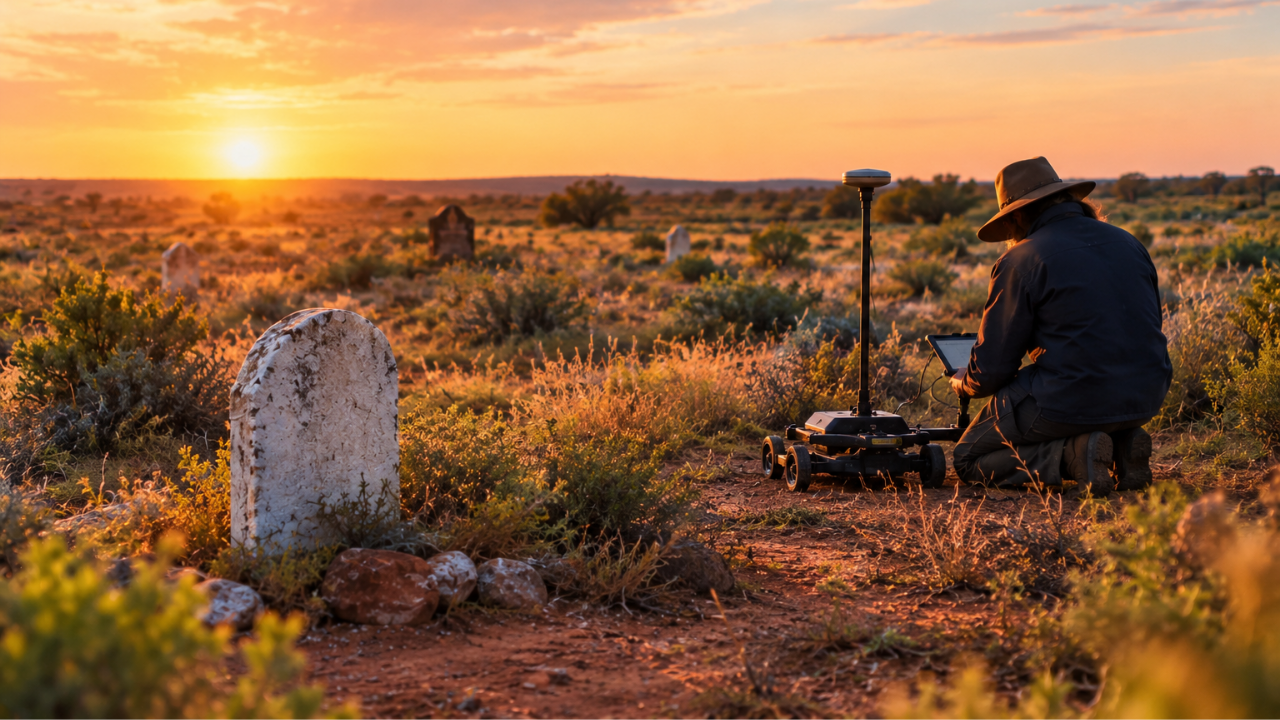
Central Darling Shire Council contracted Hunter Geophysics, a company that specialises in locating lost, forgotten and unmarked graves, for the project.
asserted
that → contract → project
The work began in July 2025 and used specialist, non-invasive scanning technology to examine the cemetery grounds without the need for digging.
asserted
work → begin → digging
The project focused on White Cliffs and Menindee, two communities within the Central Darling Shire in New South Wales.
asserted
project → focus → Wales
The area is known for its remote outback setting and long history, with cemeteries containing graves dating back through earlier generations of the communities.
asserted
area → know → communities
Rather than relying only on visible headstones or grave markers, the specialist search was designed to identify burial locations that were no longer clearly marked or recorded.
asserted
that → rely → locations
This allowed investigators to map areas where burials were believed to exist even when there was little visible evidence at the surface.
asserted
burials → allow → surface
658 unmarked graves identified
The completed survey identified 338 unmarked graves at White Cliffs Cemetery and 320 at Menindee Cemetery, bringing the total to 658, according to Central Darling Shire Council.
uncertain
survey → identify → Council
The discoveries do not mean that the identities of the people buried at the sites are now known.
asserted
identities → mean → sites
According to the council, the passage of time means there are no details available about the individuals associated with the newly identified unmarked graves.
uncertain
passage → accord → graves
The scanning project instead established the locations of the burials, helping distinguish them from areas where no grave was detected.
asserted
grave → scan → areas
The results provide a more complete picture of the cemeteries and give the council information that can be used to protect the burial sites from accidental disturbance.
asserted
that → provide → disturbance
The discovery of 658 unmarked graves gives a clearer record of two cemeteries that have accumulated generations of burials (Image Credit: Central Darling Shire Council)
Why locating the graves matters
Finding previously unmarked graves is important not only for cemetery management but also for preserving the history of the communities in which they are located.
asserted
they → give → which
Central Darling Shire Council said the project would help preserve the history and heritage of its cemeteries and towns.
asserted
project → say → cemeteries
For local authorities, knowing where graves are located can also make future maintenance, planning and development work easier.
asserted
work → know → authorities
Areas containing previously unidentified burials can be mapped and managed appropriately, reducing the risk of graves being disturbed during work within the cemetery.
asserted
graves → contain → cemetery
The project also adds to broader efforts to document the region's historic burial grounds.
asserted
project → add → grounds
Central Darling Shire Council has previously worked on cemetery heritage projects intended to record information about graves and the people connected with the region's history.
asserted
Council → work → history
Council documents describe regional cemeteries as important repositories of historical information about the communities and individuals who lived in the area.
asserted
who → describe → area
A memorial at White Cliffs
The newly identified graves are also being incorporated into plans to recognise the cemetery's history.
asserted
graves → identify → history
At White Cliffs, a large rock has been placed in the cemetery to provide space for memorial plaques, according to the council's project information.
uncertain
rock → place → information
The memorial provides a way to acknowledge people whose burial locations can now be identified even though their names and other personal details have been lost.
asserted
names → provide → people
Hunter Geophysics describes its work as using methods that can find and map buried features without excavation, including lost human graves and archaeological remains.
asserted
that → describe → graves
Preserving cemetery history for the future
The discovery of 658 unmarked graves gives Central Darling Shire Council a clearer record of two cemeteries that have accumulated generations of burials.
asserted
that → preserve → burials
While the project cannot recover the identities of those buried in the unmarked graves, identifying their locations provides an important step towards protecting the sites.
asserted
identifying → recover → sites
The White Cliffs and Menindee survey ultimately turns areas of uncertainty into mapped burial sites.
asserted
survey → turn → sites
For the council, that information can support future cemetery planning, heritage conservation and respectful management of the grounds, while helping preserve a part of the history of two remote Australian communities.
asserted
information → support → communities
 The Aporia