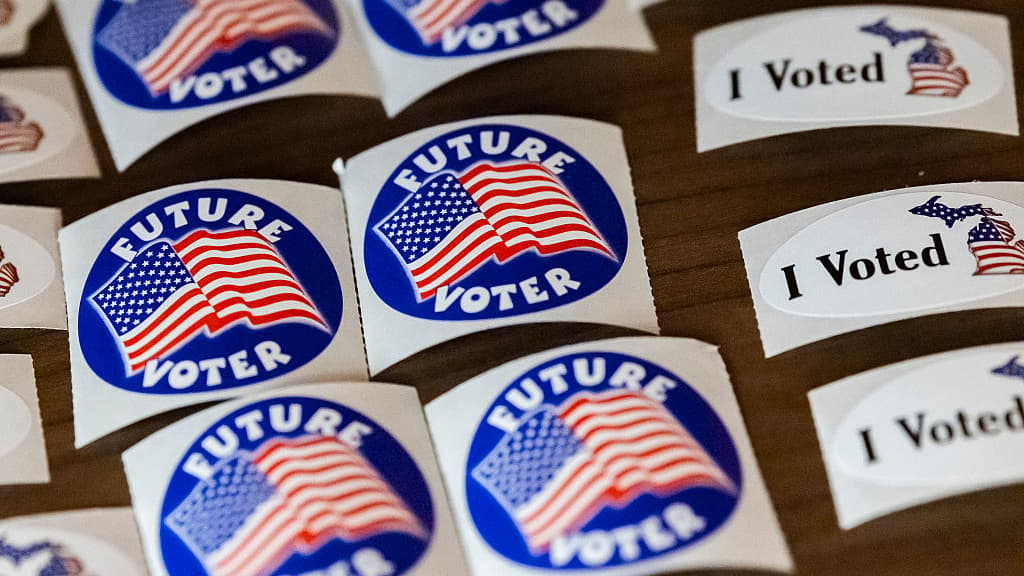
Every election, when I head to the polls, I try to bring my kids with me.
asserted
I → head → me
They love to get their “future voter” sticker.
asserted
They → love → sticker
My kids are 11 and 9 years old now, which means they’re old enough to understand that something important is happening when we vote, and curious enough to ask plenty of questions.
asserted
we → mean → questions
I want them to ask those questions.
asserted
them → want → questions
I’ve spent nearly 30 years at the League of Women Voters, helping people understand how they can shape our democracy, participate in elections, connect with elected leaders, and make their voices heard.
asserted
voices → spend → leaders
I care deeply about this work.
asserted
I → care → work
Becoming a parent made my work feel even more personal.
asserted
work → become → ?
I want my children to understand they have the power to influence the decisions that shape their lives.
asserted
that → want → lives
My kids can’t vote yet, but the consequences of democratic decisions already affect nearly every part of their lives.
asserted
consequences → vote → lives
Those decisions shape the funding available for their schools, parks, playgrounds, and pools, as well as the libraries and community resources available to them.
asserted
decisions → shape → them
They determine the safety of the bike lanes and roads we use daily.
asserted
we → determine → lanes
The choices our elected leaders make today will shape the opportunities available to all our children tomorrow.
asserted
leaders → elect → children
Kids don’t vote for the officials meant to represent them, but that doesn’t mean kids shouldn’t understand how decisions are made—or how, one day, they can have a say in them.
asserted
they → vote → them
That’s why I bring my children with me when I vote—and to rallies and community meetings.
asserted
I → ’ → rallies
In nearly three decades at the League of Women Voters, I have seen how powerful it can be when people understand that democracy belongs to them.
asserted
democracy → see → them
I’ve also seen why we can’t take that understanding for granted.
asserted
we → see → understanding
I want my kids to see democracy in action: something people do, not just something they learn about in school.
asserted
they → want → school
When we walk into a polling place, they see neighbors and community members showing up.
asserted
neighbors → walk → place
They see me check in, receive my ballot, and make my choices.
asserted
me → see → choices
And they see that participating in our democracy is a normal part of being a member of a community.
asserted
participating → see → community
For me, these trips also lead to bigger conversations.
asserted
trips → lead → conversations
Both pre-teens, my kids are at slightly different stages in understanding how government and elections work.
asserted
government → understand → stages
But both have very clear ideas of what is fair and just, and they recognize when something happening in the world affects them, our community, and the people they care about.
asserted
they → have → them
I want them to know what they can do about it.
asserted
they → want → it
Voting is important, but it’s not the only answer.
asserted
it → ’ → ?
Democracy gives us many ways to use our voices.
asserted
Democracy → give → voices
We can learn about issues.
asserted
We → learn → issues
We can ask questions until we’re satisfied with the answers.
asserted
we → ask → answers
We can contact our elected officials.
asserted
We → contact → officials
We can speak up at a school board or city council meeting.
asserted
We → speak → meeting
We can organize with other people who care about the same thing.
asserted
who → organize → thing
And, when we’re old enough, we can vote for those we want representing us.
asserted
we → ’re → us
No one wakes up on their 18th birthday automatically knowing how to participate in democracy.
asserted
one → wake → democracy
We have to teach it.
asserted
We → have → it
More importantly, we have to model it.
asserted
we → have → it
Our kids watch how we treat people, how we respond to problems, and how we care for our communities.
asserted
we → watch → communities
They watch how we participate, too.
asserted
we → watch → ?
Let me be clear: this doesn’t mean telling our children what to think or whom they should someday vote for.
asserted
they → let → whom
In fact, I want the opposite for my kids.
asserted
I → want → kids
I want them to grow into people who ask questions, seek out reliable information, listen to others, and reach their own conclusions.
asserted
who → want → conclusions
…and 12 more, not listed.
 The Aporia