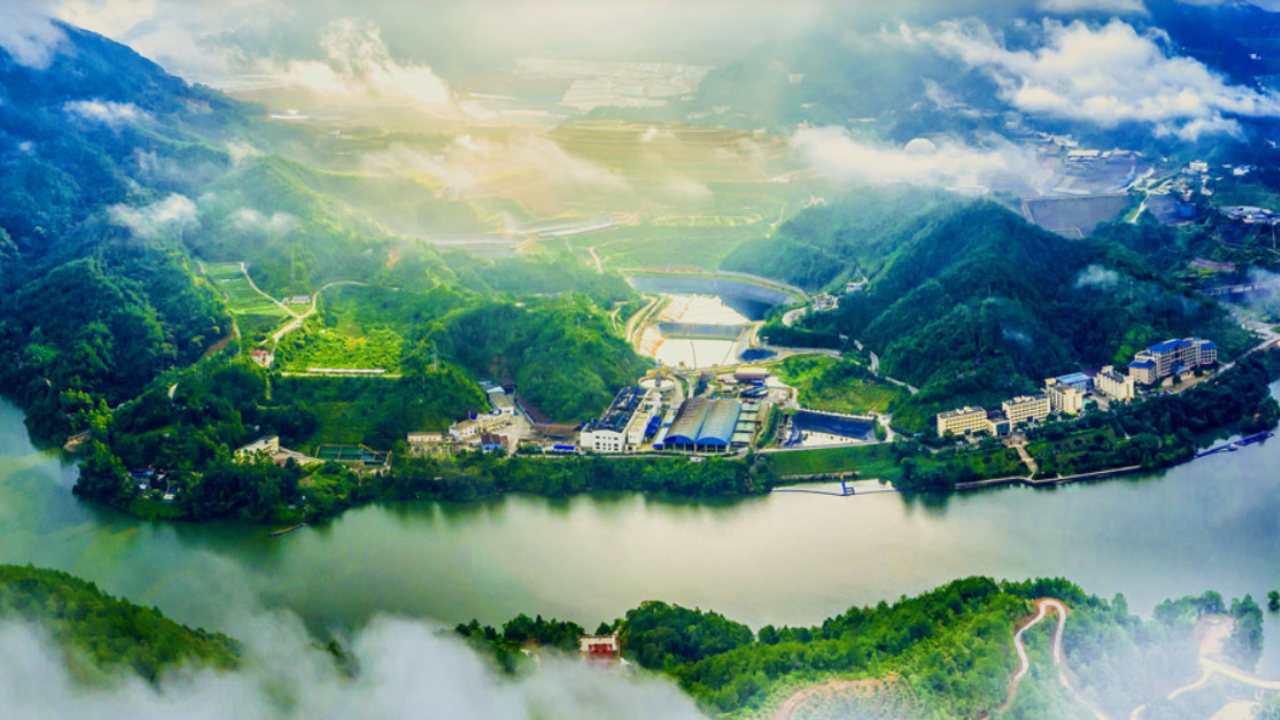
A gold and copper mine in Longyan, China, has shown that its own waste can become the road beneath its heaviest vehicles.
asserted
waste → show → vehicles
According to ‘
Sustainable valorisation of mine-derived solid wastes into cementitious pavement materials: Mechanical performance and microstructural insights,’ researchers mixed blasting slag, neutralised dreg and a binder made from steel slag, waste cement and lime slag, all taken from the Zijinshan Gold-Copper Mine, then laid test roads that carried 100-ton trucks.
uncertain
that → accord → trucks
After 28 days, the best mixture resisted deformation better than rock, soil and plain blasting slag, and it met groundwater limits for three toxic metals.
asserted
it → resist → metals
This article explains how the mixture works, what the field tests found, and what limits remain, using a recent study.
asserted
limits → explain → study
Why open-pit gold mines in China need stronger haul roads and a better use for stockpiled mine waste
Open-pit mining generates large volumes of solid waste, including blasting slag, waste rock and treatment residues, which need extensive land for disposal and storage.
asserted
which → need → disposal
The roads that carry ore are also under heavy strain, because they face intense rainfall, wind erosion and flooding while taking repeated heavy loads, which leads to potholes, rutting and uneven settling.
asserted
which → carry → potholes
Blasting slag is produced when ore is excavated, while neutralised dreg is a powder left over from treating acid mine drainage.
asserted
dreg → blast → drainage
The dreg is the harder material to reuse.
asserted
dreg → reuse → ?
It can contain heavy metals, so reusing it without careful testing could create environmental and engineering risks.
uncertain
reusing → contain → risks
How researchers turned blasting slag, neutralised dreg and steel slag into cementitious pavement material
The research team, made up of Jia-Ming Wen, Xiu-Zhu Su, Yuliang Guo and Xian-Lei Fu, built the mixture entirely from material found at the mine.
asserted
team → turn → mine
The binder, called composite solid waste, combined water-quenched steel slag, waste cement and lime slag in a ratio of 17 to 2 to 1 by dry weight.
asserted
binder → call → weight
An equal mix of blasting slag and neutralised dreg packed down the most densely, reaching a maximum dry density of 2.09 grams per cubic centimetre.
asserted
mix → blast → centimetre
The samples were cured for only three days, which was a deliberate choice.
asserted
which → cure → days
Haul roads must be put into service quickly to keep material moving, and the mine's construction-to-service window was limited to 72 hours.
asserted
window → put → hours
As the binder content rose from 3 to 15 per cent, compressive strength climbed from 0.98 to 4.92 megapascals, and mixtures above 9 per cent met the 3.0 megapascal reference for cement-stabilised road bases.
Microscope and pore analysis explained why.
asserted
analysis → rise → bases
The binder produced calcium silicate hydrate gel and ettringite crystals that coated the slag particles and filled the gaps between them, and total pore volume fell from 0.257 to 0.171 millilitres per gram.
asserted
volume → produce → gram
The roads carry 100-ton truck traffic and seasonal rain (Image: zijinmining)
How the recycled pavement base performed under 100-ton trucks at the Zijinshan Gold-Copper Mine
The trials took place on main haul roads at the 670-metre and 730-metre levels of the waste dump area, where the mixtures with 9 and 15 per cent binder were applied, and the roads carry 100-ton truck traffic and seasonal rain.
asserted
roads → carry → traffic
Each pavement base was 30 centimetres thick, and each test section covered about 2,500 square metres.
asserted
section → cover → metres
After 28 days of service, the team measured how much each surface bent under load, where a lower figure means stronger resistance to deformation.
asserted
figure → measure → deformation
The mixture with 15 per cent binder cut deflection by 97.19 per cent compared with a compacted blasting slag base, 63.90 per cent compared with rock, and 73.02 per cent compared with soil.
asserted
mixture → cut → soil
The plain blasting slag base was the only one that failed the design limit, which the authors interpreted as deterioration after 28 days.
asserted
authors → fail → days
The 9 per cent mixture performed worse.
asserted
mixture → perform → ?
Its deflection was nearly ten times higher than the 15 per cent mixture, so the authors concluded that 15 per cent was better suited to long-term use.
asserted
cent → conclude → use
Environmental safety, heavy metal leaching and carbon emission savings of mine waste roads
The safety results matter as much as the strength results.
asserted
results → matter → results
Untreated neutralised dreg released cadmium, mercury and chromium above the groundwater Class IV standard, even after long immersion.
asserted
dreg → neutralise → immersion
In the 15 per cent road base, those metals leached at 0.007, 0.00003 and 0.02 milligrams per litre, all within the standard.
asserted
metals → leach → standard
The carbon comparison also favoured the waste-based mixture.
asserted
comparison → favour → mixture
Cradle-to-gate emissions were about 7.5 kilograms of carbon dioxide per square metre for the new materials, against 14.043 for cement-stabilised and 13.430 for fly ash-stabilised bases.
asserted
emissions → stabilise → bases
That works out to roughly 55 per cent lower than cement and about 53 per cent lower than fly ash.
asserted
That → work → ash
Cost, limitations and what comes next for recycled mine waste pavement
asserted
what → come → pavement
The authors estimated material costs of 5.86 US dollars per square metre for the 9 per cent mixture and 6.99 for the 15 per cent mixture, compared with 6.92 for cement-stabilised and 6.81 for fly ash-stabilised bases.
asserted
authors → estimate → bases
Plain blasting slag was the cheapest at 5.65, and the authors described the 9 per cent mixture as the most cost-balanced choice.
asserted
authors → describe → choice
That sits awkwardly beside their field finding that 15 per cent performed better, so the right choice depends on how long a road must last.
asserted
road → sit → field
The work covers early-age strength, a 28-day field trial and emissions only up to the factory gate, so long-term performance and maintenance savings still need to be confirmed through extended monitoring.
asserted
performance → cover → monitoring
 The Aporia