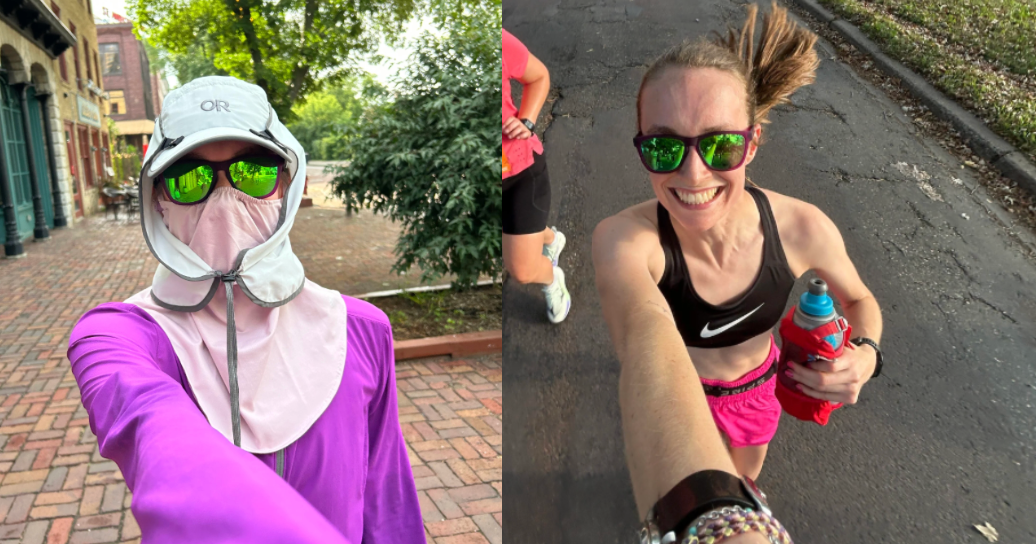
Photo via CBS News

Clinical trial helps treat woman's "insufferable pain" from sunlight

Read the original at CBS News ↗
Cite

Breen, K. (2026, October 3). Clinical trial helps treat woman's "insufferable pain" from sunlight. CBS News. https://www.cbsnews.com/news/sunlight-allergy-erythropoietic-protoporphyria-bitopentin/

Dated when The Aporia collected the article, usually within hours of publication. Check the original for its exact date and byline.

CBS News · collected 2026-10-03 · by Kerry Breen

Quick Summary

Emily Pearson, 25, suffers from erythropoietic protoporphyria (EPP), a rare condition causing severe pain from sunlight exposure since she was eight years old. In 2025, she joined a clinical trial for bitopertin, a drug that reduces the painful reactions by lowering levels of protoporphyrin IX in patients with EPP. The trial offers hope to Pearson and others like her who previously had no treatment options.
Written by AI on 2026-10-03, from this article's own text only (the story summary below draws on all the coverage).

AI analysis

Story summary

Emily Pearson, now 27 and living in Minneapolis, has suffered from erythropoietic protoporphyria (EPP) since the age of 8, experiencing severe pain when exposed to sunlight. Just minutes outdoors caused her hands and feet to hurt intensely, similar to being poked with pins and needles or placed in a hot oven. After years of searching for answers, she was diagnosed at Mayo Clinic in Rochester, Minnesota, at 17.

A recent clinical trial involving the drug bitopertin has shown promise, significantly reducing protoporphyrin-IX levels and improving sunlight tolerance for EPP patients like Pearson. Currently, bitopertin is in Phase 3 trials with 183 participants, with expected results by the end of 2026's fourth quarter. For Pearson, whose condition has severely limited her daily activities and vacations, the trial offers hope for a better quality of life.

Written for “Light Sensitivity Treatment” on 2026-11-01, grounded in this article and the 0 other(s) covering the same event.

Story

📰 Light Sensitivity Treatment
Health · 1 article(s) covering the same event.

Compared with similar articles

Nothing to compare against. No article is close enough to this one for the pipeline to have linked or judged the pair.
How this article was measured signals, leaning charts, publisher record, byline, topics and claims

Signals How these are calculated →

Claims extracted
64
sentences that state something as happening or true
Uncertain
6%
4 of 64 hedged ("reportedly", "may", "according to")
Leaning
not political
takes no side on a contested political question
Publisher signals
66/100
CBS News's corrections and hedging, across everything collected from it. Not a measure of accuracy.
Outlets on this story
1
Health
Same framing elsewhere
1
articles that frame the event the way this one does
Analyzed 2026-10-03 · how these are computed

How this is being covered How these are calculated →

Article leaning vs. publisher reliability
Source leaning vs. consistency

Publisher

CBS News · 4349 article(s) · 6 correction(s) detected
Running correction rate · 6 correction(s)

Who wrote this

Kerry Breen
31 article(s) here · 1 carrying a prediction
🔮 She had just graduated from college and expected to be in the prime of her life.
🔮 The rock itself may have been formed even earlier, NASA said.
🔮 "He has been held in the warm embrace of family and friends, surrounded by live music, prayer, tears, laughter, and the kind of profound emotion that only he could inspire after a lifetime of devotion to us all," Novak said.
🔮 The piece of jewelry might have been considered "magical" during the Roman era, the park said.
🔮 CBS News chief medical correspondent Dr. Jon LaPook cautioned that that figure may be an overestimate.
🔮 Huerta, 95, wrote that she kept the assaults secret because she "believed that exposing the truth would hurt the farmworker movement I have spent my entire life fighting for."
🔮 Brand said he believes he would have checked in with the woman during the encounter, and denied raping her.
🔮 Parker also told Nunez that Smith would throw and break things when he lost his temper, according to the affidavit.
🔮 (Brumel said most MS treatments, especially the ones most commonly used, are "very safe" and wouldn't put a person's health in danger.)
🔮 Giamanco and his family asked for privacy and said they will not be giving interviews.
Also by Kerry Breen
Nothing else under this byline is closely related to this article, so these are simply their most recent.
All 31 articles by Kerry Breen →

Topics

Minneapolis Minnesota Rochester Sun Escape the Mayo Clinic

Subjects

Pearson PERSON · 11× Keel ORG · 2× Minnesota ORG · 2× Emily Pearson PERSON · 1× Minneapolis GPE · 1× Rochester GPE · 1× Sioban Keel PERSON · 1× Sun Escape ORG · 1× the Mayo Clinic ORG · 1× the University of Washington ORG · 1×

Narrative

Clinical trial data published by Disc Medicine in April said the use of the medication "significantly reduced protoporphyrin-IX levels" and led to "improved measures of sunlight tolerance" for EPP patients, with "no notable safety concerns." EXTERNAL EXPERT QUOTE "My life has literally changed so much" Bitopertin is now in Phase 3 clinical trials, with 183 patients enrolled and data expected in the final quarter of 2026.
framing: assertive · carried by 1 article(s) · first seen 2026-10-03
🔮 Just minutes in the sun would leave her hands and feet hurting.
2026-10-03 · CBS News
Clinical trial helps treat woman's "insufferable pain" from sunlight · assertive framing

Claims (64 extracted, 4 hedged)

Emily Pearson was 8 years old when the attacks started. asserted
attacks → start → ?
Just minutes in the sun would leave her hands and feet hurting. asserted
minutes → leave → hands
Her extremities "felt like they were in a hot oven" while being poked "with pins and needles." asserted
they → feel → pins
A short while outdoors could leave her in pain for days. uncertain
while → leave → days
Worst of all, no one knew why. asserted
one → know → all
Over the next decade, Pearson's parents tried to identify the cause of her reactions. asserted
parents → try → reactions
Sunblock didn't help. asserted
Sunblock → help → ?
She started wearing protective clothing and staying indoors as much as possible. asserted
She → start → clothing
Vacations at her family's Minnesota cabin became an endurance test. asserted
Vacations → become → cabin
If she slipped up and found herself in the sun for too long, her hands, feet and face paid the price. asserted
hands → slip → price
I would never wish that pain upon anyone, because it's so horrible," said Pearson, who lives in Minneapolis. asserted
who → wish → Minneapolis
When she was 17, a doctor at the Mayo Clinic in Rochester, Minnesota, made the diagnosis of erythropoietic protoporphyria, a rare skin disorder that means a person is essentially allergic to the sun. asserted
person → make → sun
Having an answer was a relief, Pearson said — but it also meant she had to grapple with not being able to do much about her condition. asserted
she → have → condition
Pearson had been a competitive swimmer for 12 years, then transitioned into running half-marathons out of high school. asserted
Pearson → transition → school
She had to either layer up or run in the dark, at sunrise or at sunset, to avoid having a reaction. asserted
She → have → reaction
But the difficulties were worth the joy it brought her, she said. asserted
she → bring → her
Pearson dreamed of running a marathon, but believed her condition made that impossible. asserted
that → dream → marathon
Throughout college, braving the sun for a few hours of fun without protective gear would leave her "in severe pain" later. asserted
braving → brave → pain
"Going to the grocery store, going to get gas, going for any kind of car ride or working outside, you constantly have to think about what you're doing and how it's going to affect your health, and dealing with those consequences after," Pearson, now 25, said. asserted
Pearson → go → consequences
It was a big mental load, and it was never-ending. asserted
it → end → ?
In 2025, Pearson volunteered at Sun Escape, a weekend camp for kids with EPP and similar conditions. asserted
Pearson → volunteer → EPP
There, she learned about a clinical trial for a drug called bitopertin. asserted
she → learn → drug
She was intrigued and searched for more information. asserted
She → intrigue → information
"I was very wary of it, like, 'Does it really work? asserted
it → work → it
I know it works for other people, but will it work for me?'" asserted
it → know → me
Pearson remembered. asserted
Pearson → remember → ?
"I can't believe I'm hearing this" asserted
I → believe → this
Bitopertin works by targeting protoporphyrin IX, a naturally occurring molecule in the skin that is activated when people are exposed to sunlight, said Dr. Sioban Keel, a porphyria expert at the University of Washington who is involved in the clinical trial. asserted
who → work → trial
In patients with EPP and similar conditions, mutations mean the body creates too much protoporphyrin IX, resulting in painful reactions. asserted
body → mean → reactions
Bitopertin, taken as a once-daily pill, lowers the amount of protoporphyrin IX in those patients, Keel explained. asserted
Keel → take → patients
Clinical trials in the U.S. have four phases, as defined by the U.S. Food and Drug Administration. asserted
trials → have → Administration
The first stage involves a small group of participants and determines if a drug is safe and sets its dosage. asserted
drug → involve → dosage
In the second phase, up to several hundred people are studied for months or years. asserted
people → study → months
This is the stage that determines how effective a drug is, as well as what side effects it may have. uncertain
it → determine → effects
The third and fourth stages expand that to an even larger population for longer periods. asserted
stages → expand → periods
After the process is complete, the FDA reviews the data and decides whether or not to approve the medication for use in the general public. asserted
FDA → review → public
As a participant in the trial's second stage, Pearson began taking bitopertin regularly in July 2025. asserted
Pearson → begin → July
She had regular appointments with physicians in Boston to follow her progress. asserted
She → have → progress
Within weeks, she began to do "really, really well," and her tolerance to the sun started to increase. asserted
tolerance → begin → sun
Keel, who did not treat Pearson, said she's heard similar stories from other patients involved in the trial. asserted
she → treat → trial
…and 24 more, not listed.

💬Give feedback
🕘History 🎫Support