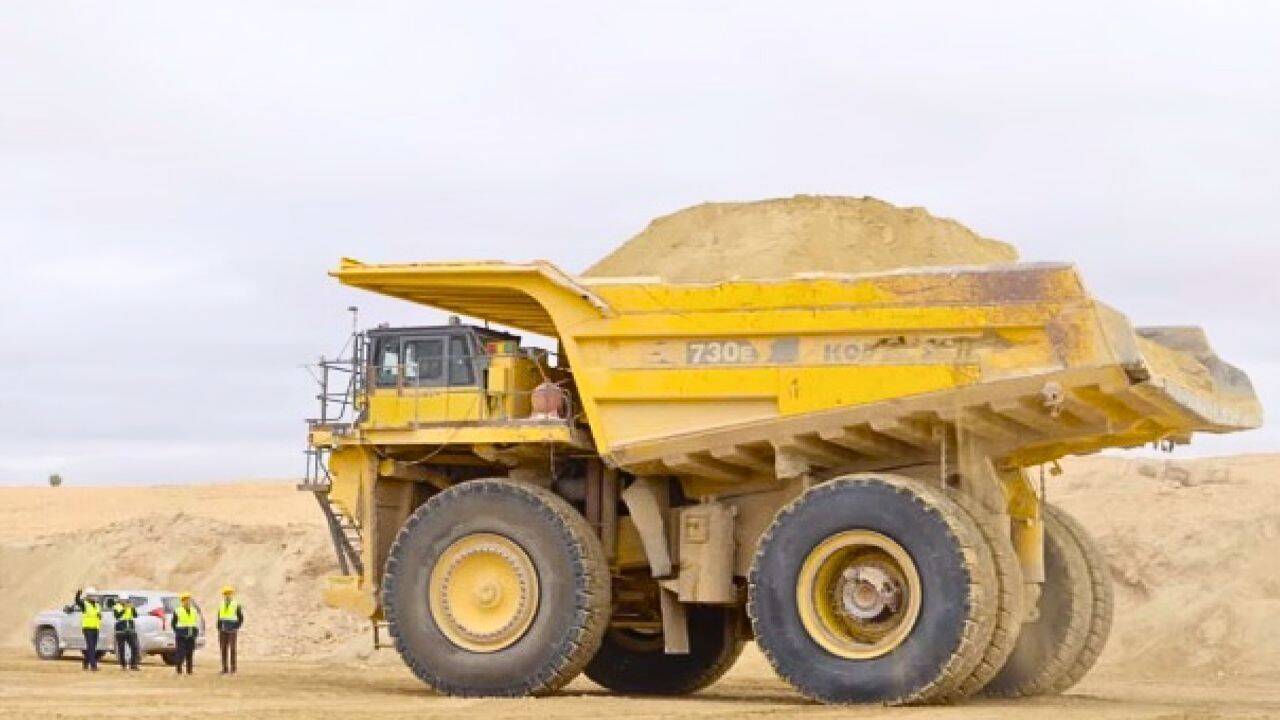
Photo via Times of India

A Moroccan mine built a road from phosphate waste rock; field tests cut dust emissions by 91%

Read the original at Times of India ↗
Cite

TOI World Desk. (2026, October 3). A Moroccan mine built a road from phosphate waste rock; field tests cut dust emissions by 91%. Times of India. https://timesofindia.indiatimes.com/world/rest-of-world/a-moroccan-mine-built-a-heavy-truck-road-from-phosphate-waste-rock-field-tests-cut-dust-emissions-by-91/articleshow/134658013.cms

Dated when The Aporia collected the article, usually within hours of publication. Check the original for its exact date and byline.

Times of India · collected 2026-10-03 · by TOI World Desk

Quick Summary

Researchers at a phosphate mine in Morocco tested a haul-road pavement made from waste rock produced during phosphate extraction. The three-layer pavement, including crushed phosphate mine waste and phosphated flint, significantly reduced dust emissions by 91% while maintaining structural integrity under heavy truck traffic. Laboratory tests confirmed the material's durability with a stiffness modulus of 9160 MPa and fatigue resistance of 139.6 microstrains at failure. Field testing showed that the new surface not only controlled dust but also improved visibility on the heavily trafficked road carrying about 22.35 kilotonnes of material daily.
Written by AI on 2026-10-03, from this article's own text only (the story summary below draws on all the coverage).

AI analysis

Story summary

Researchers at a phosphate mine in Benguerir, Morocco tested a new road construction method using waste rock from the mining process. The study focused on creating a pavement that could handle heavy loads from mining trucks while reducing dust emissions. The design included three layers: a sub-base of 0.35 meters made from crushed phosphate waste rock, a base layer of 0.25 meters, and an asphalt wearing course of 0.07 meters. Field tests showed the road cut dust emissions by 91%. This innovative solution aims to reduce environmental impact while maintaining cost-effectiveness for mining operations that move about 22.35 kilotonnes of material daily.

Written for “Moroccan Mine Road Innovation” on 2026-11-03, grounded in this article and the 0 other(s) covering the same event.

Story

📰 Moroccan Mine Road Innovation
Environment · 1 article(s) covering the same event.

Compared with similar articles

Nothing to compare against. No article is close enough to this one for the pipeline to have linked or judged the pair.
How this article was measured signals, leaning charts, publisher record, byline, topics and claims

Signals How these are calculated →

Claims extracted
32
sentences that state something as happening or true
Uncertain
16%
5 of 32 hedged ("reportedly", "may", "according to")
Leaning
not political
takes no side on a contested political question
Publisher signals
59/100
Times of India's corrections and hedging, across everything collected from it. Not a measure of accuracy.
Outlets on this story
1
Environment
Same framing elsewhere
1
articles that frame the event the way this one does
Analyzed 2026-10-03 · how these are computed

How this is being covered How these are calculated →

Article leaning vs. publisher reliability
Source leaning vs. consistency

Publisher

Times of India · 3984 article(s) · 3 correction(s) detected
Running correction rate · 3 correction(s)

Who wrote this

TOI World Desk
1381 article(s) here · 1 carrying a prediction
🔮 The restored property will take time to develop into a mature habitat, but the project offers an example of how privately owned agricultural land can contribute to biodiversity recovery.
🔮 The return of these mammals is therefore expected to benefit more than just the animals themselves.
🔮 Origins of the emergency relief campaign The project started in early 2020 when Dozier realised that federal emergency support money could take months to reach low-income workers who were at immediate risk of losing their homes.
🔮 Before that, visitors could participate in organised activities such as guided hikes, birdwatching, educational programmes and public hunts.
🔮 While their decision to buy an abandoned French hamlet might appear like an unexpected adventure, Yip and Paul's official website reveals that their story together began decades earlier.
🔮 Hundreds of polar bears are expected to gather near the Canadian town of Churchill in Manitoba as temperatures fall and the animals wait for Hudson Bay to freeze.
🔮 Together they would support the reforestation of Mutuba trees in Uganda for three years.
🔮 In the letter, he apologised for forgetting to send his greetings earlier and expressed hope that they would meet the following year again.
🔮 Meeker told Signal Akron that the sculpture contained details that people could continue discovering over time.
🔮 The possibility that the farm could eventually reach another generation now seems less remote.
Wire or desk byline, not an individual reporter.
Also by TOI World Desk
Nothing else under this byline is closely related to this article, so these are simply their most recent.
All 1381 articles by TOI World Desk →

Topics

Benguerir Mining Moroccan Morocco

Subjects

Benguerir GPE · 2× Mining ORG · 1× Moroccan NORP · 1× Morocco GPE · 1× OCP ORG · 1× OCP Group's ORG · 1×

Narrative

The pavement was designed to withstand permanent deformation and structural rutting under heavy loads while controlling dust and keeping construction costs economically viable at Benguerir.
framing: assertive · carried by 1 article(s) · first seen 2026-10-03
🔮 Researchers examined whether the material could withstand the extreme loads created by mining trucks while also reducing dust from the road surface.

Claims (32 extracted, 5 hedged)

A phosphate mine in Morocco has tested a haul-road pavement made entirely from waste rock produced during phosphate extraction, according to the study. uncertain
mine → test → study
Researchers examined whether the material could withstand the extreme loads created by mining trucks while also reducing dust from the road surface. uncertain
material → examine → surface
They designed a three-layer pavement using crushed phosphate mine waste rock and phosphated flint. asserted
They → design → rock
According to the research published in Mining, titled ‘ Innovative Pavement Design for Heavy-Haul Mining Roads Using Phosphate Mine Waste Rock: Dust Emission Control, Mechanical and Operational Performance Improvements’, the pavement included a 0.35-metre sub-base, a 0.25-metre base and a 0.07-metre asphalt wearing course. uncertain
pavement → accord → base
How did the Moroccan mine build a heavy-truck road from phosphate waste rock Researchers designed the pavement for a heavily trafficked haul road at the Benguerir phosphate mine. asserted
Researchers → build → mine
The road carries about 22.35 kilotonnes of material each day and is used by large mining trucks. asserted
road → carry → trucks
The proposed structure had three layers. asserted
structure → propose → layers
The sub-base was 0.35 metres thick and used crushed phosphate mine waste rock graded from 0 to 100 millimetres. asserted
base → use → millimetres
The 0.25-metre base layer was made from 0 to 63-millimetre crushed screening waste rock. asserted
layer → make → rock
The surface layer was a 0.07-metre BBSG 0-20 millimetre wearing course made with phosphated flint aggregates and modified bitumen. asserted
layer → wear → aggregates
The pavement was designed to withstand permanent deformation and structural rutting under heavy loads while controlling dust and keeping construction costs economically viable at Benguerir. asserted
pavement → design → Benguerir
How did the pavement perform under heavy mining traffic Laboratory tests were used to assess whether the proposed materials could withstand heavy mining traffic. uncertain
materials → perform → traffic
The asphalt mixture was tested at three bitumen contents: 4.9%, 5.1%, and 5.3%. asserted
mixture → test → contents
At 5.1%, the mixture reached its selected balance of mechanical and volumetric performance. asserted
mixture → reach → performance
It recorded a stiffness modulus of 9160 MPa and fatigue resistance of 139.6 microstrains at failure. asserted
It → record → failure
Field testing then examined the bearing capacity of the compacted pavement layers. asserted
testing → examine → layers
The sub-base recorded an average EV2 value of 153 MPa. asserted
base → record → MPa
The base reached 181 MPa. asserted
base → reach → MPa
These measurements confirmed the load-bearing capacity recorded in the experimental pavement. asserted
measurements → confirm → pavement
The new haul-road surface reduced dust and improved visibility The field trial also measured dust before and after the pavement was constructed. asserted
pavement → reduce → dust
Measurements covered PM2.5 and PM10 at two locations along the experimental haul road. asserted
Measurements → cover → road
The unpaved section represented the mine's existing practice, which included daily watering and routine grading. asserted
which → represent → watering
Its average dust concentration reached 91,730.16 micrograms per cubic metre. asserted
concentration → reach → metre
After the full pavement structure was installed, the asphalt-treated section recorded an average concentration of 8570.10 micrograms per cubic metre. asserted
section → instal → metre
The study calculated a reduction of about 91%. asserted
study → calculate → %
This exceeded OCP Group's target of reducing airborne dust emissions by more than 80%. asserted
This → exceed → %
The researchers also reported a smoother and more stable road surface after paving, with improved visibility and reduced surface roughness during truck operations. asserted
researchers → report → operations
How did the paved road affect mining productivity and maintenance The proposed pavement was estimated to cost about €23.97 per square metre for the experimental section. asserted
pavement → affect → section
The calculation included the required construction work and a 25% allowance for bulking and wastage. asserted
calculation → include → bulking
The study assumed the crushing unit would be within 5 kilometres of the works and the asphalt plant within 25 kilometres. asserted
unit → assume → kilometres
After 15 months of continuous operation under actual mining traffic, an internal assessment by OCP indicated that wider use could produce an estimated annual productivity gain of about 15%. uncertain
use → indicate → %
The study linked the expected gains to higher truck speeds, fewer spare-part replacements, including tyres and wheel motors, longer fleet service life and less daily haul-road maintenance. asserted
study → link → tyres

💬Give feedback
🕘History 🎫Support