A deep-sea expedition off the coast of Argentina has yielded a remarkable scientific harvest.
asserted
expedition → yield → harvest
After analysing samples collected in the Mar del Plata Submarine Canyon, an international team confirmed the discovery of 57 new marine species and five new genera in just two weeks of intensive work.
asserted
team → analyse → work
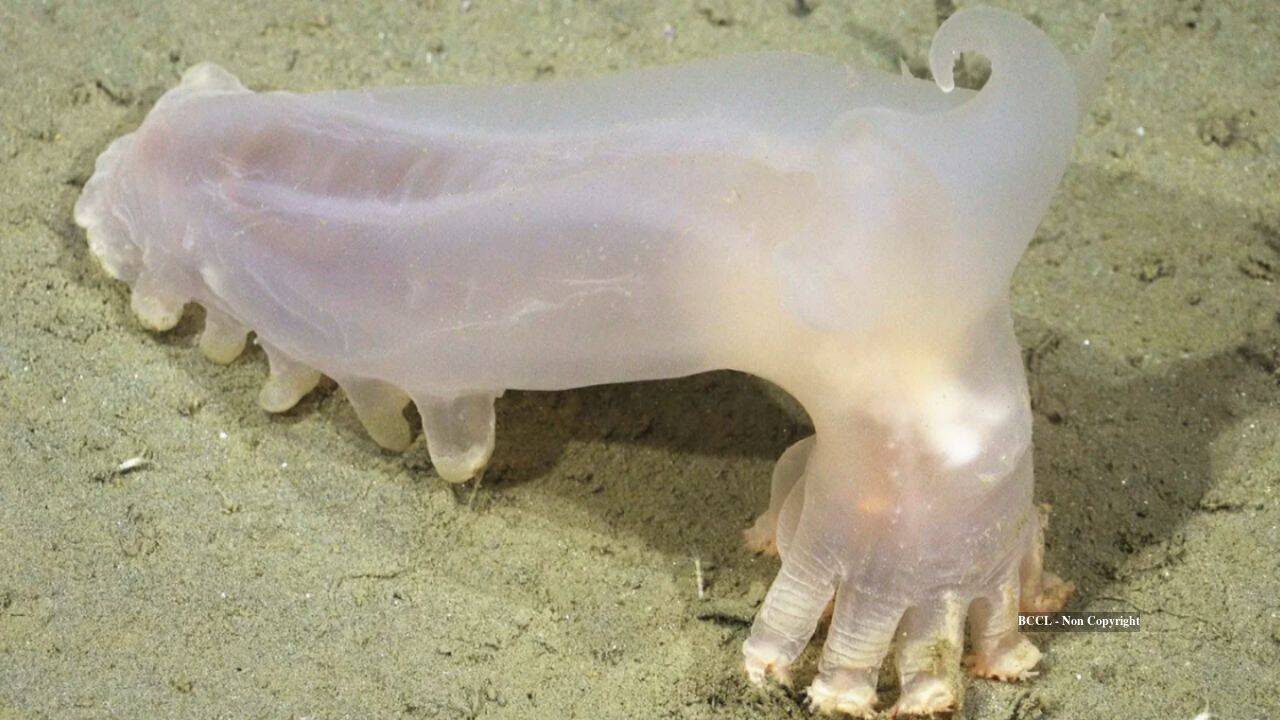
Among the most eye-catching finds is a translucent sea cucumber with horn-like appendages that researchers nicknamed Loki, a nod to the horned Norse god, according to reports from Ocean Census and Oceanographic Magazine.
uncertain
researchers → catch → Census
A canyon that hides a world of life
The Mar del Plata Submarine Canyon is a vast underwater valley that cuts into the continental slope off Argentina’s Atlantic coast.
asserted
that → hide → coast
Such canyons act as conduits for nutrients and organic material, creating rich habitats for diverse deep-sea communities.
asserted
canyons → act → communities
During the Talud Continental IV campaign in August 2025, the research vessel R/V Falkor (too) used a remotely operated vehicle to descend to nearly 3,900 metres and collect biological samples from the canyon walls and floor.
asserted
vessel → use → walls
The specimens were later brought to a Species Discovery Workshop in San Carlos de Bariloche, where about twenty taxonomists from Latin America and Europe examined them under microscopes and compared them with known species.
asserted
taxonomists → bring → species
What began as a preliminary estimate of around 40 new species grew to 57 as the experts worked through the collections, revealing a level of biodiversity that had been largely invisible until the expedition, as per the reports.
Loki and other strange residents of the deep
The star of the new discoveries is a deep-sea sea cucumber in the genus Peniagone, informally called Loki.
asserted
star → begin → genus
Found at a depth of 2,577 metres, this echinoderm stands out for its translucent body and a pair of horn-like appendages that evoke the imagery of the Norse deity.
asserted
that → find → deity
The nickname captures both its unusual appearance and the sense of wonder that deep-sea creatures often inspire when they are first brought into the light, reported Scubaverse.com.
asserted
Scubaverse.com → capture → light
Beyond Loki, the workshop identified a wide range of previously unknown life forms.
asserted
workshop → identify → forms
The tally includes 20 new species of copepods, tiny crustaceans that play key roles in marine food webs, as well as 22 new echinoderms such as sea cucumbers and crinoids.
asserted
that → include → cucumbers
Researchers also described 14 new cnidarians, including octocorals, sea pens, and stony corals, along with one new scaphopod mollusc, adding further detail to the canyon’s biological inventory, as per the report.
asserted
Researchers → describe → report
The speed of these discoveries reflects a shift in how scientists approach deep-sea exploration.
asserted
scientists → reflect → exploration
Instead of waiting years for specimens to be described, the Ocean Census Network and Schmidt Ocean Institute organised a focused workshop to fast-track identification.
asserted
Network → wait → identification
In just two weeks, the team moved from raw samples to confirmed new species and genera, using open data and collaborative methods to accelerate the process.
asserted
team → move → process
This approach is designed to keep pace with rapid advances in ocean exploration technology.
asserted
approach → design → technology
Remotely operated vehicles and high-resolution imaging now allow researchers to collect far more material than in the past, but traditional taxonomy can struggle to keep up.
asserted
taxonomy → operate → past
By bringing specialists together in one place and sharing data openly, the workshop model helps turn expedition footage and specimens into formal scientific knowledge much more quickly.
asserted
model → bring → knowledge
Why the Mar del Plata Canyon matters
The Mar del Plata Canyon is not only a hotspot for biodiversity but also a critical part of the South Atlantic’s marine ecosystem.
asserted
Canyon → matter → ecosystem
Its steep sides and diverse habitats provide homes for life from tiny copepods to large corals and echinoderms.
asserted
sides → provide → corals
Many of these species are adapted to low light, high pressure and cold temperatures, making them unique to life in the deep ocean.
asserted
them → adapt → ocean
Understanding this biodiversity is crucial for informed conservation and management.
asserted
Understanding → understand → conservation
As interest in deep-sea fishing, mining and other activities grows, knowing what lives in these canyons helps policymakers decide how to protect vulnerable ecosystems.
asserted
policymakers → grow → ecosystems
The discovery of 57 new species and five new genera emphasizes how much is still unknown and why areas like the Mar del Plata Canyon deserve careful attention.
asserted
areas → emphasize → attention
A collaborative effort across continents
The expedition and subsequent workshop brought together scientists from Argentina’s CONICET, Ocean Census, the Schmidt Ocean Institute, and institutions across Latin America and Europe.
asserted
expedition → bring → America
The international collaboration made it possible for the specialists to combine their knowledge of different taxonomic groups and to process large collections efficiently.
asserted
specialists → make → collections
The result was a more complete picture of the canyon’s fauna than any single team could have produced alone.
uncertain
team → produce → fauna
Researchers expect that further analysis of the Talud Continental IV samples will reveal even more new species in the coming months.
asserted
analysis → expect → months
The current count of 57 is likely to grow as specialists continue to examine less familiar groups and compare specimens with global databases.
asserted
specialists → grow → databases
Each new description adds another piece to the puzzle of life in the deep South Atlantic.
asserted
description → add → Atlantic
Turning an ROV video from the ocean floor into an officially recognized species is a slow, careful process.
asserted
Turning → turn → species
Researchers must collect and preserve the specimen, run genetic tests, examine microscopic details, and compare against museum type specimens.
asserted
Researchers → collect → specimens
The “Loki sea cucumber” may sound like a catchy nickname, but in the end it needs a formal Latin scientific description to give researchers a common benchmark.
uncertain
it → sound → benchmark
While this process may seem slow compared to the thrill of immediate discovery, it’s a process that guaranties scientific rigor.
uncertain
that → seem → rigor
Documenting species in concert with reference specimens gives future scientists the clarity to recognize and track deep-sea life with confidence, illustrating how modern tech and classical taxonomy work hand in hand in places like the Mar del Plata Canyon.
asserted
tech → document → Canyon
 The Aporia