Photo via Daily Mail

United Nations adopt new world map that shows Africa much bigger and cuts size of UK and US

Read the original at Daily Mail ↗
Cite

Roy, C. (2026, September 6). United Nations adopt new world map that shows Africa much bigger and cuts size of UK and US. Daily Mail. https://www.dailymail.com/news/article-16107743/United-Nations-adopt-new-world-map.html?ns_mchannel=rss&ns_campaign=1490&ito=1490

Dated when The Aporia collected the article, usually within hours of publication. Check the original for its exact date and byline.

Daily Mail · collected 2026-09-06 · by Cameron Roy

Quick Summary

The United Nations General Assembly has voted to adopt a new world map, known as the Equal Earth projection, which makes Africa appear larger and corrects what critics call "cartographic colonialism". The resolution, sponsored by Togo and backed by 164 member states, aims to move away from the centuries-old Mercator map. A key aspect of the change is that Africa will appear about 14 times larger than it does on the current map, while countries in the northern hemisphere such as the UK and US will be slightly smaller. The new map's adoption has been criticized by the US, which voted against the resolution, with some accusing it of promoting "cognitive justice" and reparations.
Written by AI on 2026-09-06, from this article's own text only (the story summary below draws on all the coverage).

AI analysis

Story summary

September 4th, 164 countries, including France and the UK, voted in favor of a resolution at the UN General Assembly to adopt a new world map that more accurately reflects the size of Africa. Only the US voted against it, with six other states abstaining. The new map, known as the Equal Earth cartographic projection, aims to provide a more accurate representation of continental landmasses and reduce distortions caused by the traditional Mercator projection, which has been widely used since the 16th century. According to Foreign Minister Robert Dussey of Togo, "a fair world begins with a fair map," highlighting the importance of cartography in shaping our understanding of the world. The resolution promotes the use of the Equal Earth projection over the Mercator projection, which distorts the relative size of land masses by expanding those nearer the poles, making Greenland appear roughly the same size as Africa, although Africa is about 14 times larger.

Written for “UN Adopts New World Map” on 2026-10-31, grounded in this article and the 24 other(s) covering the same event.

Story

📰 UN Adopts New World Map
World · 25 article(s) covering the same event. Compare every outlet's account →

Compared with similar articles

This article reads unscored and hedges 4% of its claims. Each row says how that neighbour differs.
South China Morning Post
⚖️ Leans left Hedges 0 of 6 claims Outlet record 64/100
Times of India
⚖️ Leans left Hedges 1 of 21 claims Outlet record 59/100
The Guardian
Hedges 1 of 31 claims Outlet record 66/100
National Post
⚖️ Leans left Hedges 0 of 17 claims Outlet record 60/100
ABC News (AU)
⚖️ Leans left Hedges 0 of 21 claims Outlet record 68/100
The Hindu
Hedges 0 of 17 claims Outlet record 60/100
The Straits Times
Hedges 0 of 18 claims Outlet record 66/100
BBC News
Hedges 1 of 26 claims Outlet record 68/100
Al Jazeera
⚖️ Leans left Hedges 0 of 26 claims Outlet record 60/100
Dawn
Hedges 0 of 17 claims Outlet record 72/100
How this article was measured signals, leaning charts, publisher record, byline, topics and claims

Signals How these are calculated →

Claims extracted
23
sentences that state something as happening or true
Uncertain
4%
1 of 23 hedged ("reportedly", "may", "according to")
Leaning
withheld
no quote in the article backed the model's score
Publisher signals
68/100
Daily Mail's corrections and hedging, across everything collected from it. Not a measure of accuracy.
Outlets on this story
25
World
Same framing elsewhere
1
articles that frame the event the way this one does
Analyzed 2026-09-06 · how these are computed

How this is being covered How these are calculated →

Article leaning vs. publisher reliability
Source leaning vs. consistency

Publisher

Daily Mail · 8501 article(s) · 20 correction(s) detected
Running correction rate · 20 correction(s)

Who wrote this

Cameron Roy
5 article(s) here · 0 carrying a prediction
🔮 We can't use it to close our budget gap and, to our immense frustration, we've never been told what projects would be acceptable.
🔮 When the charity's chief executive Colin McInnes explained to the local authority it would not be able to house the woman for the night as it was at full capacity, he said: 'They told me, 'Unfortunately this lady is going to have to sleep on the streets because we won't be accommodating her'.'
🔮 ' 'As soon as the full and confirmed details are formally shared with me, I will provide a further update to residents. '
🔮 Maritime Police spokesman Ricardo Sa Granja admitted late yesterday, without confirming the existence of the CCTV footage: 'Today, the strongest indications are that he may have fallen into the water. '
Also by Cameron Roy
Nothing else under this byline is closely related to this article, so these are simply their most recent.

Topics

African Daily Mail Mercator The General Assembly The United Nations

Subjects

Robert Dussey PERSON · 2× The General Assembly ORG · 2× African NORP · 1× Daily Mail ORG · 1× Reuters ORG · 1× The United Nations ORG · 1× Togo GPE · 1× Togolese NORP · 1× Western NORP · 1× the African Union ORG · 1×

Narrative

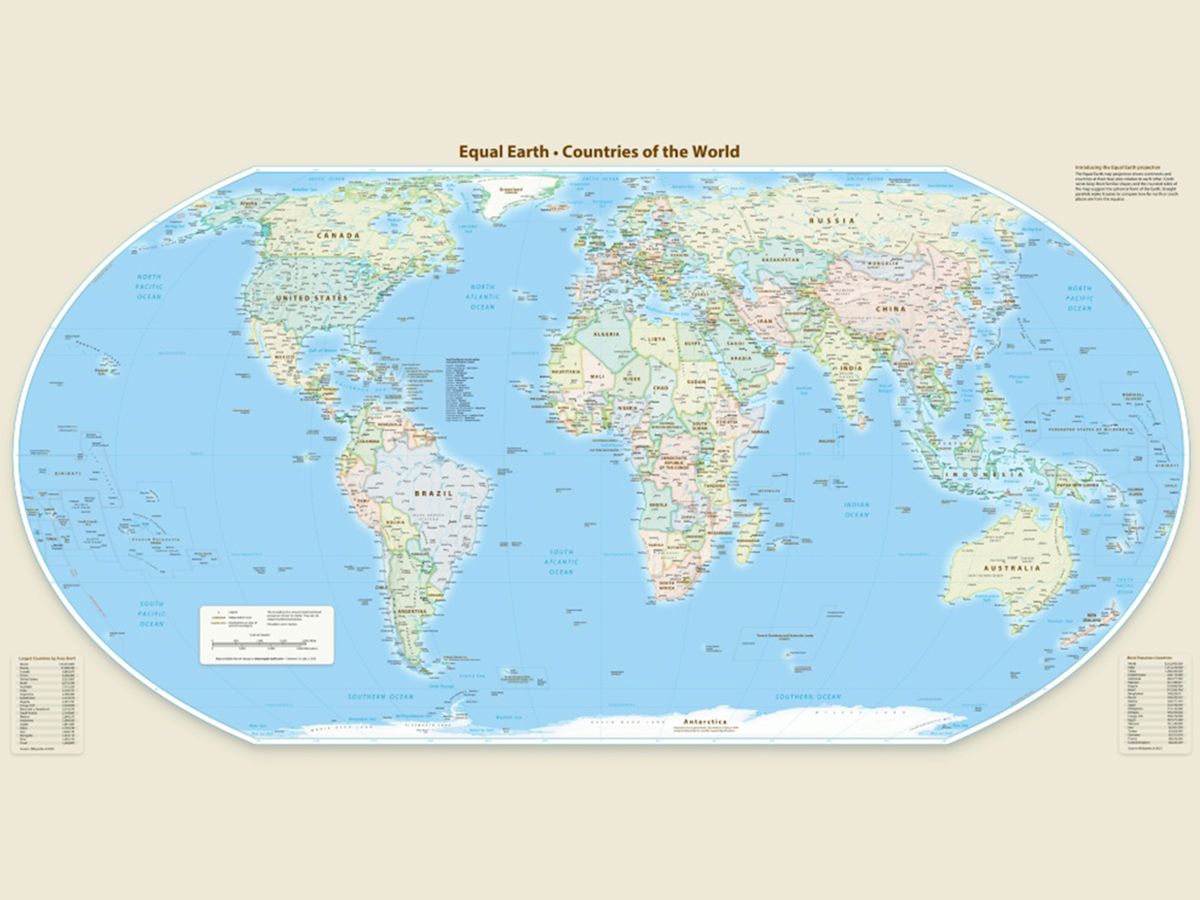
The UN has voted to replace the centuries-old Mercator map (pictured) with one that vastly increases the size of Africa - while shrinking the UK and US The General Assembly has accepted the 'Correct the Map' resolution and decided to move towards a new map, the Equal Earth projection (pictured) Graphic showing how the Mercator map increases the apparent size of countries in the northern hemisphere, while shrinking those near the equator A supporter of the change, Togolese Foreign Minister Robert Dussey, told news agency Reuters: 'A fair world begins with a fair map.' He told a UN briefing earlier: 'A map is never neutral.
framing: assertive · carried by 1 article(s) · first seen 2026-09-06

Claims (23 extracted, 1 hedged)

- See more Daily Mail on Google - save us as a Preferred Source The United Nations has voted to replace the predominant world map with one that vastly increases the size of Africa – while shrinking the UK and US. It is the culmination of a recent campaign led by African countries and advocacy groups to reject 'cartographic colonialism'. asserted
It → see → colonialism
The General Assembly has accepted the 'Correct the Map' resolution and decided to move away from the centuries-old Mercator map and replace it with a new map, the Equal Earth projection. asserted
Assembly → accept → map
Critics of the Mercator map, which was originally designed for sea travel and not general use, have long argued it reflects Western assumptions about the world by making Africa smaller. asserted
Africa → design → world
The Mercator projection makes Greenland and Africa appear about the same size, even though Africa is in reality about 14 times larger. asserted
Africa → make → reality
Campaigners argue the map causes a psychological effect by making some places look smaller than they are and others larger, as we instinctively view bigger things as more important. asserted
we → argue → things
The UN has voted to replace the centuries-old Mercator map (pictured) with one that vastly increases the size of Africa - while shrinking the UK and US The General Assembly has accepted the 'Correct the Map' resolution and decided to move towards a new map, the Equal Earth projection (pictured) Graphic showing how the Mercator map increases the apparent size of countries in the northern hemisphere, while shrinking those near the equator A supporter of the change, Togolese Foreign Minister Robert Dussey, told news agency Reuters: 'A fair world begins with a fair map.' He told a UN briefing earlier: 'A map is never neutral. asserted
map → vote → briefing
It shapes perceptions, influences how the place of peoples and continents in the world is understood.' asserted
place → shape → world
Friday's resolution was sponsored by Togo and backed by members of the African Union, passing with 164 member states voting in favour. asserted
states → sponsor → favour
Only the US voted against it while six other countries – Serbia, Estonia, Georgia, Lithuania, Moldova and Ukraine - abstained. The new resolution does not ban the Mercator projection or impose a replacement, it only encourages governments and institutions worldwide to use the Equal Earth projection. 'Maps shape our understanding of the world,' the global body quoted Togo´s Foreign Minister Robert Dussey as saying before the vote. asserted
body → vote → vote
'They guide education, nourish the imagination, and influence collective perceptions.' But US representative at the UN, Yaryna Ferencevych, said the resolution mocked the work and purpose of the UN General Assembly. She said: 'Instead of focusing on genuine problems of international peace, prosperity, or good relations, this body is debating map projects from the 16th Century, and their role in promoting reparations and "cognitive justice".' asserted
body → guide → reparations
The US was also critical when a UN resolution was adopted in March declaring the transatlantic slave trade 'the gravest crime against humanity'. asserted
trade → adopt → humanity
The Mercator map was designed in 1569 by Flemish cartographer Gerardus Mercator to help Europeans navigate across the world at sea. asserted
Europeans → design → sea
But to help with this task, he distorted the map to accommodate the curvature of the Earth by making countries near the equator seem smaller than they are, with countries nearer the poles appearing larger. asserted
countries → help → poles
Whenever a map of the world is drawn, compromises need to be made, as it is impossible to accurately represent the surface of a globe on a two-dimensional chart. asserted
it → draw → chart
Geographers say the traditional map is only useful for navigation. asserted
map → say → navigation
Despite its issues, more than 450 years on, Mercator's creation is still the basis for many of the maps we see in classrooms, on TV and online, including Google Maps. asserted
we → see → Maps
In an effort to address Mercator's weaknesses, a team of cartographers in 2018 created an equal area map they called the Equal Earth projection. asserted
they → address → map
It follows the Earth´s curvature and shows continents in their true proportions. But to do this, it sacrifices the straight lines that made the Mercator projection perfect for navigating with – meaning it cannot be used for measuring the true distance between different places. asserted
it → follow → places
Africa No Filter, one of the lead campaigners for the adoption of the new map, hailed the resolution, adding: 'We want to see accurate maps in schools, textbooks, newsrooms, businesses and on the digital platforms billions of people use every day.' Several countries hailed the adoption, with French Foreign Minister Jean-Noël Barrot writing on X after the vote: 'Changing the map obviously doesn´t change the world. asserted
Changing → hail → world
But correcting a representation that distorts it is already an act of truth. asserted
that → correct → truth
Lerato Mogoatlhe from Africa No Filter, one of the groups behind the campaign to ditch the Mercator map, told the BBC: 'Africa's misrepresentation on world maps is not just a cartographic error - it's a narrative issue.' asserted
it → ditch → maps
She claims it was part of efforts to stop the 'world's longest misinformation and disinformation' about Africa. uncertain
it → claim → Africa
Kenyan geographer Kioko Muendo argued it implicitly downplayed Africa's vast resources, population and investment opportunities. asserted
it → argue → resources

💬Give feedback
🕘History 🎫Support