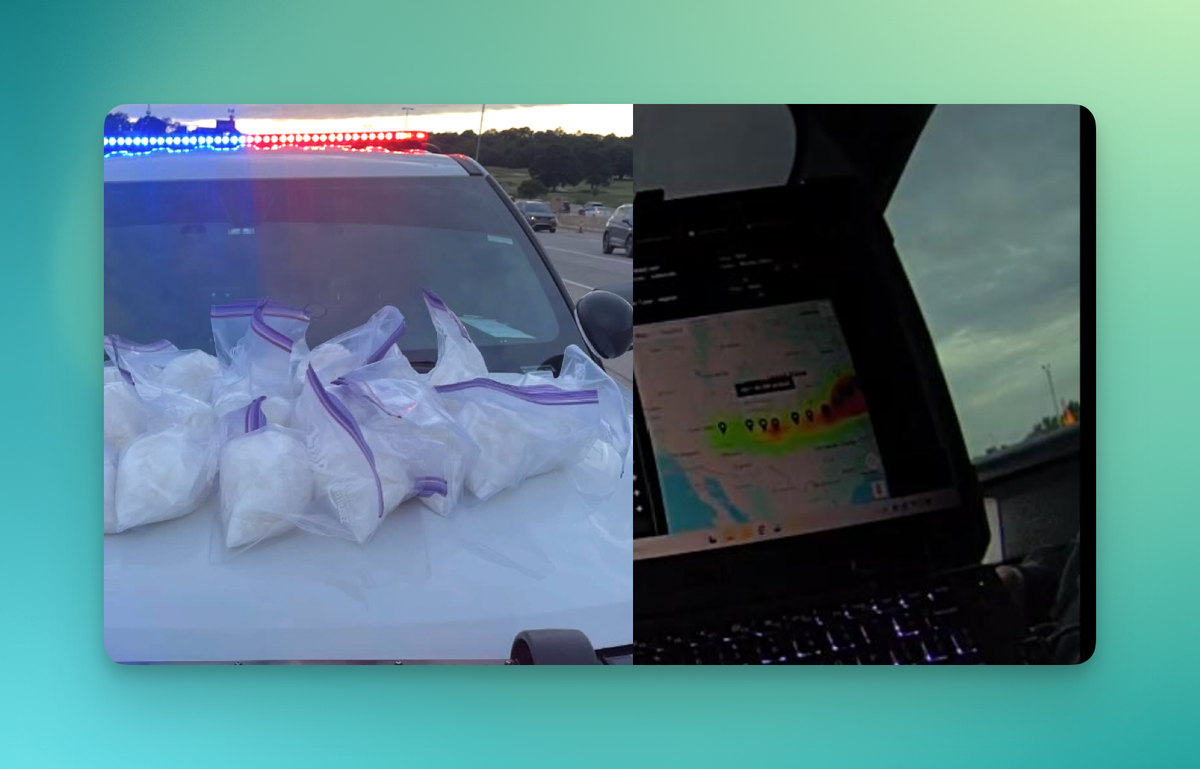
Photo via Washington Examiner

Judge rules Flock cameras violate the Fourth Amendment

Read the original at Washington Examiner ↗
Cite

Rowe, R. (2026, October 3). Judge rules Flock cameras violate the Fourth Amendment. Washington Examiner. https://www.washingtonexaminer.com/news/justice/4753114/judge-rule-flock-camera-car-search-violate-fourth-amendment-patrol-vehicle-data/

Dated when The Aporia collected the article, usually within hours of publication. Check the original for its exact date and byline.

Washington Examiner · collected 2026-10-03 · by Rena Rowe

Quick Summary

A federal judge in Tulsa ruled that use of Flock license plate reader technology by a sheriff’s deputy violated the Fourth Amendment, arguing it constitutes an unconstitutional search due to the risk of mass surveillance. Judge Sara E. Hill suppressed evidence obtained after the ALPR data search, finding the deputy's access to over 50 sightings of Melisa Kyle’s vehicle across multiple states was unjustified under current technology capabilities. The case highlights concerns about how modern tracking systems can infringe on privacy rights despite individuals having no expectation of privacy for their movements on public roads.
Written by AI on 2026-10-04, from this article's own text only (the story summary below draws on all the coverage).

AI analysis

Story summary

In Oklahoma, Federal Judge Sara Hill ruled that a police officer violated the Fourth Amendment when he searched a license plate in Flock’s automated license plate reader (ALPR) system, simply because it was from California. The judge found that this use of ALPR systems was an unconstitutional warrantless search and not supported by probable cause. The case involved Tulsa County Deputy Sheriff Freddie Alaniz who stopped Melisa Kyle for minor traffic violations and used Flock to access a month’s worth of her vehicle's travel history across multiple states. Judge Hill noted that such searches risk creating a nationwide "dragnet" of mass surveillance, and ordered evidence obtained after the search suppressed. There are currently more than 100,000 warrantless searches of the Flock system every month according to audit logs.

Written for “Flock Camera Surveillance Ruling” on 2026-10-31, grounded in this article and the 1 other(s) covering the same event.

Story

📰 Flock Camera Surveillance Ruling
Crime & Law · 2 article(s) covering the same event. See how they differ ↓

Compared with similar articles

This article reads leans strongly left and hedges 7% of its claims. Each row says how that neighbour differs.
404 Media
⚖️ Leans strongly left Hedges 3 of 49 claims Outlet record 95/100
Washington Examiner
Hedges 0 of 13 claims Outlet record 70/100
“The articles describe two different events - one is about introducing legislation to ban Flock Safety cameras, while the other reports a court ruling that their use violates the Fourth Amendment.”
Daily Mail
⚖️ Leans left further right than this Hedges 4 of 69 claims Outlet record 68/100
“The articles describe different events involving the use of surveillance technology to violate Fourth Amendment rights, but in distinct locations and cases (Tulsa County vs. San Antonio/Bexar County).”
Washington Examiner
⚖️ Leans strongly left Hedges 2 of 23 claims Outlet record 70/100
“Article A reports on a specific court ruling and its implications, while Article B discusses broader privacy concerns related to Flock cameras.”
How this article was measured signals, leaning charts, publisher record, byline, topics and claims

Signals How these are calculated →

Claims extracted
29
sentences that state something as happening or true
Uncertain
7%
2 of 29 hedged ("reportedly", "may", "according to")
Leaning
Leans strongly left
of the writing, not the subject · beta estimate
Publisher signals
70/100
Washington Examiner's corrections and hedging, across everything collected from it. Not a measure of accuracy.
Outlets on this story
2
Crime & Law
Same framing elsewhere
1
articles that frame the event the way this one does
Analyzed 2026-10-04 · how these are computed

How this is being covered How these are calculated →

Article leaning vs. publisher reliability
Source leaning vs. consistency

Publisher

Washington Examiner · 3814 article(s) · 7 correction(s) detected
Running correction rate · 7 correction(s)

Who wrote this

Rena Rowe
99 article(s) here · 1 carrying a prediction
🔮 A federal judge overseeing a legal fight over President Donald Trump’s plans to remake Washington, D.C.’s East Potomac Golf Links said Friday she would investigate whether administration officials misled the court and violated professional ethics rules during the proceedings.
🔮 Gov. Mike Dunleavy (R-AK) has ordered an investigation into whether Alaska Democratic Senate candidate Mary Peltola’s campaign illegally recruited a spoiler candidate to siphon votes from Sen. Dan Sullivan (R-AK), escalating a controversy that could reshape one of the country’s most competitive Senate races days before Election Day.
🔮 President Donald Trump is set to hold a rally on Wednesday in Chillicothe, Ohio, at 7 p.m., less than a week before the 2026 midterm election.
🔮 Federal Reserve Chairman Kevin Warsh is set to announce the central bank’s interest rate decision on Wednesday at 2:30 p.m.
🔮 Secretary of State Marco Rubio is set to campaign with President Donald Trump in Ohio on Thursday, expanding his role on the campaign trail as Republicans travel across the country to shore up support ahead of next week’s midterm elections.
🔮 The ultra-Orthodox Shas party joined the request, citing unusually long lines and warning that voters could be prevented from casting ballots before polls closed.
🔮 Florida Democratic Senate nominee Angie Nixon said that assumptions about racism in the South may be contributing to Democrats’ reluctance to invest in her campaign, arguing that the party has repeatedly underestimated the state’s political potential.
🔮 President Donald Trump is set to hold a rally at 5:30 p.m. Eastern on Thursday in Sioux City, Iowa, to boost GOP candidates ahead of the looming Nov. 3 election.
🔮 Federal Communications Commission Chairman Brendan Carr warned broadcasters against airing fabricated election polls, saying stations could face regulatory scrutiny if they knowingly mislead viewers through false polling data.
🔮 Kagan’s remarks, made Tuesday at Catholic University’s law school in Washington, D.C., come less than two weeks before the Nov. 3 elections, when voters will decide control of the House and Senate.
Also by Rena Rowe
Nothing else under this byline is closely related to this article, so these are simply their most recent.
All 99 articles by Rena Rowe →

Topics

California Flock Tulsa County U.S. the Fourth Amendment

Subjects

Alaniz PERSON · 9× Hill PERSON · 7× Kyle GPE · 5× California GPE · 2× Tulsa County GPE · 2× the Supreme Court ORG · 2× Biden PERSON · 1× Freddie Alaniz PERSON · 1× Sara E. Hill PERSON · 1× U.S. GPE · 1×

Narrative

A federal judge has ruled that a Tulsa County sheriff’s deputy violated the Fourth Amendment when he used Flock license plate reader technology to access weeks of a driver’s travel history, warning that the system risks creating a nationwide “dragnet” of mass surveillance.
framing: assertive · carried by 1 article(s) · first seen 2026-10-04
🔮 The judge said the case demonstrated why courts may need to reconsider how older Fourth Amendment precedents apply as surveillance technology advances.
2026-10-04 · Washington Examiner
Judge rules Flock cameras violate the Fourth Amendment · assertive framing

Claims (29 extracted, 2 hedged)

A federal judge has ruled that a Tulsa County sheriff’s deputy violated the Fourth Amendment when he used Flock license plate reader technology to access weeks of a driver’s travel history, warning that the system risks creating a nationwide “dragnet” of mass surveillance. asserted
system → rule → surveillance
U.S. District Judge Sara E. Hill, a Biden appointee, ordered evidence obtained after the search suppressed, finding that the deputy’s use of automated license plate reader data, also known as ALPR data, was an unconstitutional search in violation of the Fourth Amendment. asserted
use → order → Amendment
The case arose after Tulsa County Deputy Sheriff Freddie Alaniz stopped Melisa Kyle while she was driving a car with California plates. asserted
she → arise → plates
Alaniz initially followed Kyle after seeing the out-of-state plate and searched the Flock system for the vehicle. asserted
Alaniz → follow → vehicle
The search gave Alaniz access to a month of location data showing more than 50 sightings of the vehicle across multiple states. asserted
search → give → states
Alaniz then stopped Kyle for following another vehicle too closely and allegedly failing to properly signal lane changes. uncertain
Alaniz → stop → changes
After questioning her about a short trip to California, Alaniz asked for consent to search her vehicle. asserted
Alaniz → question → vehicle
Kyle refused. asserted
Kyle → refuse → ?
Alaniz then detained her for a drug-sniffing dog, which alerted to the vehicle. asserted
which → detain → vehicle
Officers searched it and arrested Kyle after finding marijuana. asserted
Officers → search → marijuana
Kyle challenged the stop, the continued detention, and Alaniz’s use of the ALPR systems. asserted
Kyle → challenge → systems
Hill found that Alaniz had an objectively reasonable basis for the initial traffic stop but concluded that the subsequent ALPR search violated the Fourth Amendment. asserted
search → find → Amendment
The judge acknowledged that people generally do not have an expectation of privacy in their movements on public roads. asserted
people → acknowledge → roads
But she said courts must account for how technology has transformed the government’s ability to track those movements. asserted
technology → say → movements
“More than 40 years have passed” since the Supreme Court’s 1983 decision in United States v. Knotts, Hill wrote, and courts now face technology “approaching the dragnet type law enforcement practice” that the Supreme Court had warned about. asserted
Court → pass → that
The difference, Hill said, is that Flock is not merely observing an individual vehicle in real time. asserted
Flock → say → time
The system continuously collects information about vehicles captured by cameras across its network and allows law enforcement to retrieve that information later. asserted
enforcement → collect → information
“This is a type of indiscriminate mass surveillance,” Hill wrote. asserted
Hill → write → surveillance
“It is a tool that collects information about all vehicles that pass by any network-connected camera at all times, and it serves up the information to law enforcement on demand.” She noted that the system available to Alaniz was not limited to stationary cameras. asserted
system → collect → cameras
His patrol vehicle itself contributed data to the network. asserted
vehicle → contribute → network
“It is also no longer difficult to imagine law enforcement using a fleet of drones hovering over an entire city so they don’t miss the movement of a single vehicle,” Hill wrote. asserted
Hill → imagine → vehicle
“This is not hypothetical catastrophizing.” asserted
This → catastrophize → ?
The judge said the case demonstrated why courts may need to reconsider how older Fourth Amendment precedents apply as surveillance technology advances. uncertain
technology → say → ?
“No doubt, ALPR technology comes with remarkable benefits that the Court cannot ignore,” she wrote. asserted
she → come → that
“But the Fourth Amendment requires courts to draw a line when the cost is too great.” asserted
cost → require → line
Hill ultimately ruled that the evidence obtained after Alaniz initiated the ALPR search had to be suppressed under the exclusionary rule. asserted
Alaniz → rule → rule
“Because the government does not identify any adequate exception to the exclusionary rule,” she wrote, the evidence was suppressed as “fruit of the poisonous tree.” asserted
evidence → identify → tree
The ruling comes as courts grapple with whether increasingly sophisticated automated license plate reader networks amount to searches under the Fourth Amendment. asserted
networks → come → Amendment
Hill noted that neither the Supreme Court nor the 10th Circuit has yet definitively resolved the question, though most courts that have considered the issue have found that ALPR use does not constitute a search. asserted
use → note → search

💬Give feedback
🕘History 🎫Support