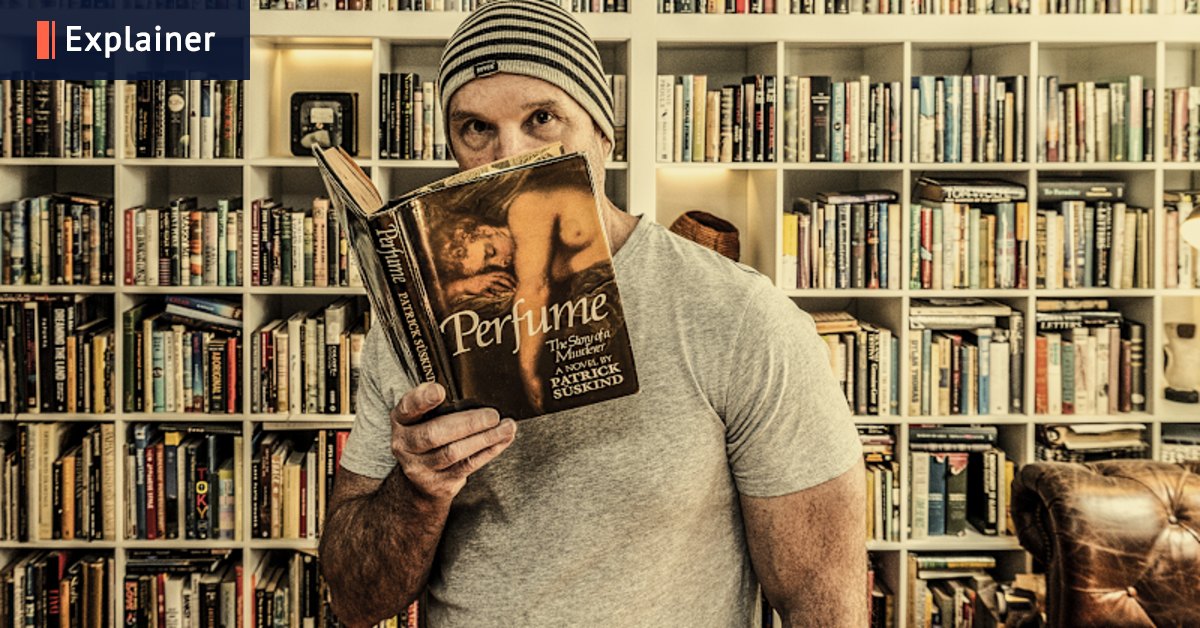
Danny Yee faced a dilemma 15 years ago when he and his partner moved from Sydney to Britain: what to do with all the books he’d amassed over the years?
asserted
he → face → years
If you’ve ever moved house, you’ve probably been in the same predicament.
asserted
you → move → predicament
They’re heavy, they take up space, they’re a pain to shift.
asserted
they → ’re → space
If you’ve actually read the books, then why keep them – will you ever read them again?
asserted
you → read → them
Then there are those books you’ve accumulated but never opened and probably never will, possibly stacked neatly on that Ikea bookcase or languishing in a holding pattern on your bedside table.
uncertain
you → be → table
The Japanese have a word for this: tsundoku, from tsunde-oku, meaning to pile things up for later, and dokusho, the reading of books.
asserted
Japanese → have → books
If you have older children, there’s probably a Harry Potter or 10 on a shelf somewhere destined to never again be pored over.
asserted
you → have → shelf
Some volumes might even date back to a burst of optimism in your own youth when you thought you’d have the time and inclination to brave Finnegan’s Wake, Infinite Jest or War and Peace … but never did.
uncertain
you → date → Wake
Before he went overseas, Danny Yee, an IT specialist, estimates he had 3000 volumes, the result of simply acquiring books over time.
asserted
he → go → time
“When I was a teenager, my trip home from school took me past Tyrrell’s Bookshop in Crows Nest in Sydney, which at that time was a general secondhand shop where most paperbacks were $2.
asserted
paperbacks → take → time
And my pocket money was a (then) generous $10 a week, so I could buy pretty much a book a day.”
uncertain
I → buy → book
When he moved to the UK, he shipped only the books he hadn’t read, put the rest in storage and planned to give away any that remained unread when he returned to Sydney.
asserted
he → move → Sydney
In the end, he never moved back.
asserted
he → move → end
“So we ended up shipping the rest of the books, which had been sitting in boxes under my mother’s house for some time.
asserted
which → end → time
For some, collecting books is a passion that scratches a particular collecting itch.
asserted
that → collect → itch
But many of us occupy a middle ground: our books are not necessarily prized possessions but are somehow too valuable to throw away, even if, technically, they’re not worth much at all (and op shops probably won’t even take them).
asserted
shops → occupy → them
Why do we hang on to them?
asserted
we → hang → them
And what’s the difference between a bibliophile and a “bibliomaniac”?
asserted
difference → ’ → bibliophile
Like the first Apple iPod music player, launched in 2001, which promised “1000 songs in your pocket”, Amazon’s Kindle e-reader and similar competitors offer overwhelming convenience compared to their paper-based, or analogue, predecessors: even a basic e-reader can hold 3000 books while models with extra memory can contain 20,000 or more, equivalent to that of a small municipal library (perhaps they should have called it the Tsundoku).
asserted
they → launch → it
Lightweight, waterproof and with a built-in light so you can read in the dark, these must be better, surely, than a traditional book in every way.
asserted
these → build → way
“For disposable fiction, the sort of thing that you might read on a plane or a beach, or you read it once, the e-reader is a good format,” concedes Tim White, owner of the specialist food and wine bookstore Books for Cooks and president of the Australian and New Zealand Association of Antiquarian Booksellers.
uncertain
White → read → Booksellers
“But for things that require illustration, that have a design component, the physical, I think, really matters, particularly for illustrated nonfiction.”
asserted
I → require → nonfiction
‘We are seeing a resurgence in collectors, particularly young collectors.
asserted
We → see → collectors
Sydney writer, editor and designer Yvonne Frindle makes the same concession.
asserted
Frindle → make → concession
She maintains a personal work library – mostly focused on music, the arts and design – of around 1500 physical volumes.
asserted
She → maintain → volumes
She buys e-books only when it’s expedient but doesn’t mind the format for fiction because it’s linear: “You start at the beginning, you read to the end, and that’s it,” she says.
asserted
she → buy → end
“But I don’t find the e-book format very friendly for non-fiction books when I’m working because I like to have them around me, open on the floor, and to be able to consult multiple books at once.
asserted
I → find → books
The physicality of the book and where information sits in a book is really important to me.
asserted
information → sit → me
Indeed, bookshops continue to flourish.
asserted
bookshops → continue → ?
The Japanese chain Kinokuniya recently expanded from its sole Australian outpost in Sydney to Melbourne, where a concept store offering “a carefully curated selection of Australian and international literature, Japanese and Chinese language books, manga, children’s books, stationery, gifts and lifestyle products” will become a permanent large-scale offering in 2028.
asserted
store → expand → 2028
Much as vinyl has made a comeback – including in the popularity of earnest “listening rooms”, anchored by old-school turntable hi-fi systems – so has a connection to paper books endured.
asserted
vinyl → make → books
“We are seeing a resurgence in collectors, particularly young collectors,” says White.
asserted
White → see → collectors
We had a record number turn up to [Melbourne’s] Rare Book Fair this year [Sydney’s is from October 22] and the people who attended were much younger, on average, than we had experienced ever before.”
asserted
we → have → October
Amos Groth’s company, Groth and Sons, designs and builds bespoke home libraries.
asserted
company → design → libraries
“A collection isn’t simply information,” he tells us.
asserted
he → tell → us
“It becomes autobiographical.
asserted
It → become → ?
You can look along somebody’s shelves and learn something about them: what interested them at 20, what they studied, where they’ve travelled, what they inherited, what they became curious about.
asserted
they → look → what
“If they’re physically around me and they just occupy the space, they’ll occupy my mind in some way.
asserted
they → ’re → way
The more I’ve read and the more I feel attached to certain books
asserted
I → read → books
, I think I understand what they mean, that you can kind of be changed over time by a book, not even necessarily by reading it from cover to cover, but even just having its spine poking out at some level.
asserted
spine → think → level
…and 112 more, not listed.
 The Aporia