Claims extracted
24
sentences that state something as happening or true
Uncertain
12%
3 of 24 hedged
("reportedly", "may", "according to")
Leaning
withheld
no quote in the article backed the model's score
Publisher signals
69/100
Washington Examiner's corrections and
hedging, across everything collected from it. Not a measure of accuracy.
Outlets on this story
3
Politics
Same framing elsewhere
1
articles that frame the event the way this one does
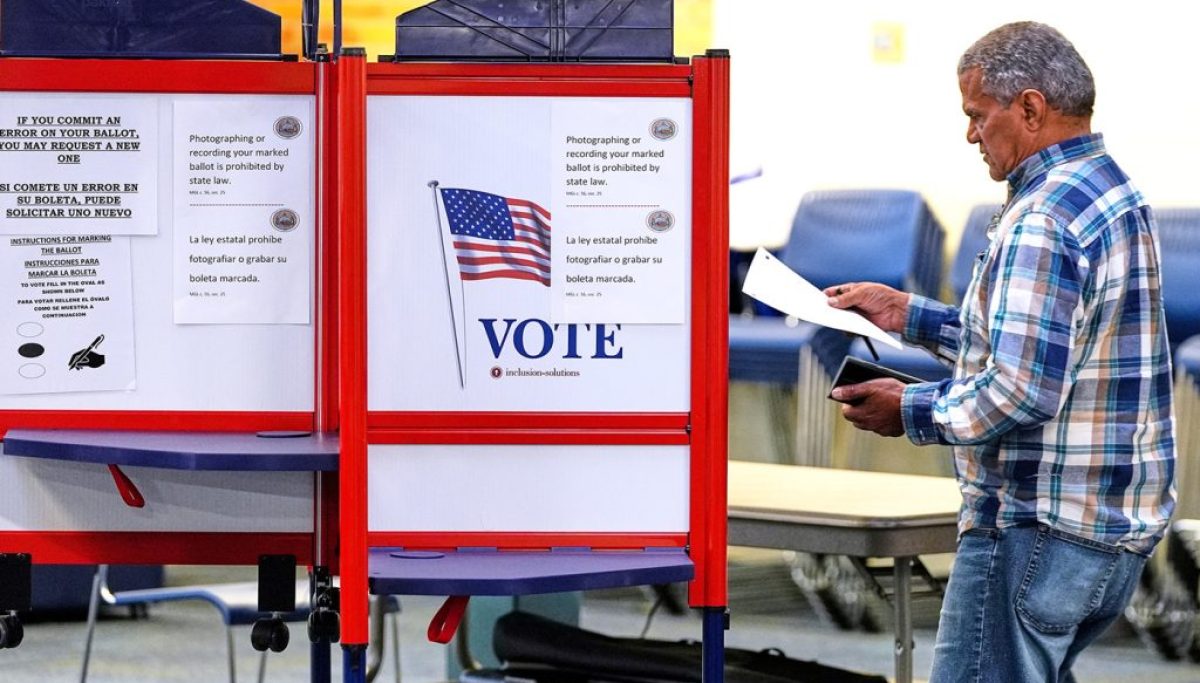
Voters are favoring Democrats over Republicans on the economy and cost of living, but large shares of the public say they do not trust either party to solve the country’s problems, according to recent polling.
uncertain
they → favor → polling
Thirty-eight percent of registered voters said Democrats would do a better job handling the cost of living, compared with 27% who chose Republicans.
asserted
who → register → Republicans
Another 27% said neither party would do a good job, according to an Associated Press-NORC poll conducted last week.
uncertain
party → say → poll
Democrats have also gained ground on the economy.
asserted
Democrats → gain → economy
About 4 in 10 registered voters now say Democrats would handle the economy better, up from 26% of U.S. adults who said the same in February.
asserted
who → register → February
But the poll found broad dissatisfaction with both parties.
asserted
poll → find → parties
Fifty-five percent of registered voters said the Republican Party is not able to solve important problems, while 48% said the same of Democrats.
asserted
% → register → Democrats
Only about 2 in 10 voters said either party is focused on helping people like them or is able to solve important problems.
asserted
party → say → problems
Republicans were more likely than Democrats to be viewed as focused on wealthy and powerful people.
asserted
Republicans → view → people
About 6 in 10 registered voters said the description “focused on helping rich and powerful people” described the Republican Party “extremely” or “very” well, compared with 32% who said the same of Democrats.
asserted
who → register → Democrats
Nearly half of voters also said the word “corrupt” describes the Republican Party “extremely” or “very” well, compared with 37% for Democrats.
asserted
word → say → Democrats
President Donald Trump faces similarly negative assessments.
asserted
Trump → face → assessments
Sixty-eight percent of registered voters described Trump as “too extreme,” including about one-third of Republicans.
asserted
percent → register → Republicans
Fifty-five percent said the Republican Party itself is too extreme, compared with 45% who said the same of Democrats.
asserted
who → say → Democrats
The poll also found divisions within the Democratic Party.
asserted
poll → find → Party
Forty-six percent of Democratic voters said their party is too moderate, while a similar share said its current level of moderation is about right.
asserted
level → say → moderation
Republican voters were more likely to say their party is about right.
asserted
party → say → ?
The findings come as both parties prepare for the Nov. 3 midterm elections, with economic concerns emerging as a central issue.
asserted
concerns → come → issue
The Cook Political Report recently shifted 15 House race ratings toward Democrats in September, saying Republicans risk losing their House majority.
asserted
Republicans → shift → majority
Democrats currently hold 215 House seats and need a net gain of three to reach a majority.
asserted
Democrats → hold → majority
Cook estimates Democrats could gain between five and 15 seats.
uncertain
Democrats → estimate → seats
Projections for the Senate are looking similarly bleak for Republicans.
asserted
Projections → look → Republicans
A recent New York Times/Siena College poll showed reliably red states found Democratic Senate candidates tied or ahead of their Republican opponents in states Trump won by between 11 and 16 percentage points in 2024.
asserted
Trump → show → 2024
The AP-NORC poll was conducted Sept. 24 to 28 among 2,140 U.S. adults, including 1,766 registered voters.
asserted
poll → conduct → voters
 The Aporia