Photo via Times of India

Scientists revive 160-million-year-old proteins to fight drug-resistant bacteria

Read the original at Times of India ↗
Cite

TOI Science Desk. (2026, October 3). Scientists revive 160-million-year-old proteins to fight drug-resistant bacteria. Times of India. https://timesofindia.indiatimes.com/science/discovery/scientists-resurrected-160-million-year-old-proteins-from-extinct-mammals-some-were-stronger-against-drug-resistant-bacteria-than-modern-human-versions-raising-new-hopes-for-antibiotic-research/articleshow/134639995.cms

Dated when The Aporia collected the article, usually within hours of publication. Check the original for its exact date and byline.

Times of India · collected 2026-10-03 · by TOI Science Desk

Quick Summary

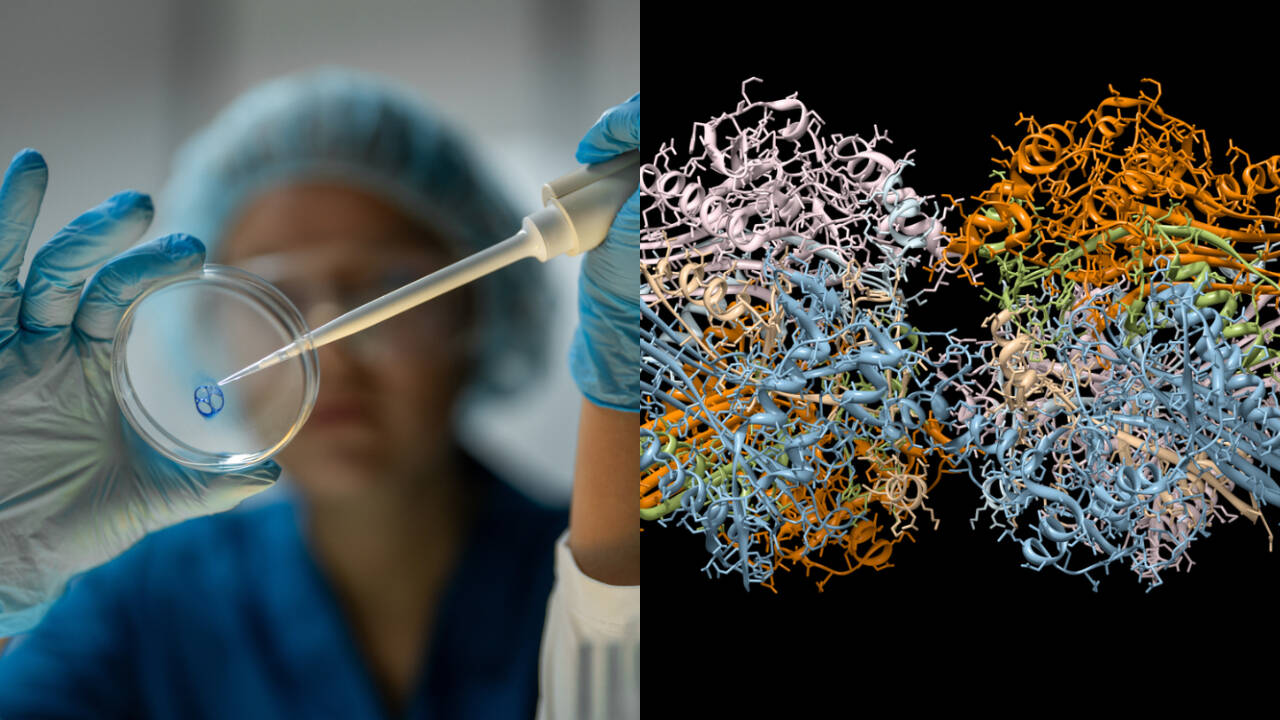
Scientists at the University of Oregon reconstructed ancient proteins from 160 million years ago and tested their antimicrobial capabilities against modern drug-resistant bacteria, with results published in PLOS Biology on August 25. They focused on lactoferrin, an immune protein containing antimicrobial peptides that attack bacterial membranes. Through evolutionary mapping, researchers produced ancestral versions of lactoferrin proteins and found that some peptides from more recent mammalian ancestors were highly effective against drug-resistant bacteria compared to their modern counterparts. The study highlights the potential for ancient biological solutions in developing new infection-fighting drugs.
Written by AI on 2026-10-03, from this article's own text only (the story summary below draws on all the coverage).

AI analysis

Story summary

Scientists at the University of Oregon have revived 160-million-year-old proteins to potentially combat drug-resistant bacteria, as reported by Science Daily. The researchers reconstructed ancient lactoferrin, an immune protein found in various body fluids except blood, and discovered that its antimicrobial peptides could be more potent than their modern counterparts when tested against resistant bacteria. Published in PLOS Biology on August 25th, the study reveals how nature has evolved its defense mechanisms over millions of years. By understanding these ancient proteins' structural modifications, scientists hope to develop new treatments that can work alongside existing antibiotics to fight infections no longer responsive to conventional drugs.

Written for “Reviving Ancient Proteins” on 2026-10-31, grounded in this article and the 0 other(s) covering the same event.

Story

📰 Reviving Ancient Proteins
Science · 1 article(s) covering the same event.

Compared with similar articles

Nothing to compare against. No article is close enough to this one for the pipeline to have linked or judged the pair.
How this article was measured signals, leaning charts, publisher record, byline, topics and claims

Signals How these are calculated →

Claims extracted
27
sentences that state something as happening or true
Uncertain
37%
10 of 27 hedged ("reportedly", "may", "according to")
Leaning
not political
takes no side on a contested political question
Publisher signals
59/100
Times of India's corrections and hedging, across everything collected from it. Not a measure of accuracy.
Outlets on this story
1
Science
Same framing elsewhere
1
articles that frame the event the way this one does
Analyzed 2026-10-03 · how these are computed

How this is being covered How these are calculated →

Article leaning vs. publisher reliability
Source leaning vs. consistency

Publisher

Times of India · 3764 article(s) · 2 correction(s) detected
Running correction rate · 2 correction(s)

Who wrote this

TOI Science Desk
295 article(s) here · 1 carrying a prediction
🔮 She explored whether an inexpensive device could capture airborne genetic material and support the detection of bacterial pathogens.
🔮 This control may help it maintain its orientation and move along a narrow path without losing its bearings.
🔮 The university says the sculpture will subsequently go on permanent display at its Turner Museum of Glass.
🔮 By bringing together nature, wellness facilities and educational spaces, Winter Garden aimed to create a setting where visitors could exercise, learn about nutrition and gardening, and spend time outdoors.
🔮 Also discovered was a 4,500-year-old humanoid idol, which archaeologists hope will help shed light on the cultural traditions of the region.
🔮 When garlic mustard spreads across the forest floor, other plants may struggle to obtain the resources they need to survive.
🔮 The train delay that could not have happened in 1841 The mystery originated in an account published anonymously in the scientific journal Nature on October 5, 1871.
🔮 A late-night snack may do more than add extra calories to your day.
🔮 The work offers a glimpse of such a future, where living organisms could become an active part of the robotic systems.
🔮 A centuries-old archaeological puzzle at Westminster Abbey in London may finally be nearing a resolution, with new research suggesting that a skeleton discovered inside a Roman stone coffin belonged to a medieval abbot rather than the Roman-era man named on its inscription.
Wire or desk byline, not an individual reporter.
Also by TOI Science Desk
Nothing else under this byline is closely related to this article, so these are simply their most recent.
All 295 articles by TOI Science Desk →

Topics

PLOS Biology Science Daily the University of Oregon

Subjects

PLOS Biology ORG · 1× Science Daily ORG · 1× the University of Oregon ORG · 1×

Narrative

Looking at the evolution of antimicrobial defenses, the researchers were able to pinpoint structural modifications that have made these peptides more potent and potentially develop treatments that work alongside existing antibiotics.
framing: mixed · carried by 1 article(s) · first seen 2026-10-03
🔮 At the University of Oregon, researchers reconstructed proteins that existed as far back as 160 million years ago and found that some of their antimicrobial fragments could outperform corresponding versions found in humans when tested against drug-resistant bacteria, states a release shared by Science Daily.

Claims (27 extracted, 10 hedged)

There is an unexpected place scientists are looking for clues to the next generation of infection-fighting drugs: deep in the evolutionary past. asserted
scientists → be → past
At the University of Oregon, researchers reconstructed proteins that existed as far back as 160 million years ago and found that some of their antimicrobial fragments could outperform corresponding versions found in humans when tested against drug-resistant bacteria, states a release shared by Science Daily. uncertain
release → reconstruct → Daily
The research, published in PLOS Biology on August 25, offers a glimpse into how nature refined its own defence mechanisms over millions of years and how those evolutionary experiments could potentially inform future treatments for infections that no longer respond well to conventional antibiotics. uncertain
that → publish → antibiotics
The study focused on lactoferrin, an immune protein found in almost every body fluid except blood, including breast milk, tears, saliva and intestinal mucus. asserted
study → focus → milk
One of its best-known functions is to bind iron, effectively depriving bacteria of a resource they need to grow. asserted
they → know → resource
But lactoferrin has another weapon. asserted
lactoferrin → have → weapon
Buried within the protein is a short antimicrobial peptide capable of attacking bacterial membranes and creating holes that can damage or destroy microbial cells. asserted
that → bury → cells
Researchers wanted to understand when this ability emerged and how it changed as mammals evolved. asserted
mammals → want → ?
Their investigation took them back to the earliest ancestors of placental mammals, a group that eventually gave rise to humans and most mammals alive today. asserted
that → take → humans
Using genetic sequences from living animals, including humans and cows, the team mapped lactoferrin's evolutionary relationships and used ancestral sequence reconstruction to predict what versions of the protein's genes may have looked like millions of years ago. uncertain
versions → use → years
The predicted genes were then synthesized and used to produce the reconstructed proteins in the laboratory. asserted
genes → predict → laboratory
Researchers tested the resulting antimicrobial peptides against several bacteria associated with human disease, including Pseudomonas aeruginosa, Staphylococcus aureus, Escherichia coli and Streptococcus. asserted
Researchers → test → aeruginosa
The oldest reconstructed peptides could damage bacterial membranes, but the bacteria were often able to repair themselves and survive. uncertain
bacteria → reconstruct → themselves
As researchers moved forward through evolutionary time, however, the peptides became progressively more potent. asserted
peptides → move → time
Some versions originating from relatively recent mammalian ancestors were even more effective against certain drug-resistant bacteria than the corresponding modern human peptides, the release said. asserted
release → originate → peptides
One of the study's most intriguing findings was how little genetic change was sometimes required to produce a major difference in antimicrobial activity. asserted
change → require → activity
Researchers found that a single mutation in the amino-acid sequence could substantially enhance the peptide's ability to attack bacteria. uncertain
mutation → find → bacteria
The discovery highlights how small evolutionary changes can dramatically reshape biological functions over time. asserted
changes → highlight → time
For scientists, that makes evolution more than a historical record. asserted
evolution → make → record
It becomes a vast catalogue of natural experiments, preserving evidence of which molecular changes worked and which did not, adds the online release. asserted
release → become → evidence
A long road to new treatments The findings do not mean that ancient peptides are ready to replace antibiotics. asserted
peptides → mean → antibiotics
The researchers note that antimicrobial peptides can be less structurally stable than conventional drugs and may be broken down quickly inside the human body. uncertain
peptides → note → body
Their immediate value may instead lie in providing blueprints for new molecules. uncertain
value → lie → molecules
Looking at the evolution of antimicrobial defenses, the researchers were able to pinpoint structural modifications that have made these peptides more potent and potentially develop treatments that work alongside existing antibiotics. asserted
that → look → antibiotics
The method could also help scientists predict how bacteria might develop resistance to new antimicrobial agents. uncertain
bacteria → help → agents
Understanding the strengths and weaknesses of these ancient biological weapons could eventually help researchers develop therapies that are more difficult for pathogens to escape. uncertain
pathogens → understand → therapies
In the escalating war against drug-resistant infections, the past may hold surprising value, not as an ancient medicine waiting to be rediscovered, but as an evolutionary blueprint for designing new ones. uncertain
past → escalate → ones

💬Give feedback
🕘History 🎫Support