Photo via Washington Examiner

Russia’s stolen children are being taught to kill — using Hamas’s playbook

Read the original at Washington Examiner ↗
Cite

Noveck, A. (2026, October 4). Russia’s stolen children are being taught to kill — using Hamas’s playbook. Washington Examiner. https://www.washingtonexaminer.com/op-eds/4752065/ukraine-stolen-children-hamas-playbook/

Dated when The Aporia collected the article, usually within hours of publication. Check the original for its exact date and byline.

Washington Examiner · collected 2026-10-04 · by Ariella Noveck

Quick Summary

ABC News Australia’s documentary “Ukraine’s Stolen Children” highlights the removal of over 20,000 Ukrainian children by Russia from various institutions like orphanages and care facilities, though the actual number could be higher. These children are then indoctrinated through citizenship programs, adoption, and what is called "patriotic education," which includes military drills and weapons training. The article draws a parallel to Hamas’s practices in Gaza where children undergo similar ideological and military preparation involving camps with activities for youth as young as 14 years old. Both situations involve teaching children about national identity and loyalty alongside practical weapon handling, emphasizing the psychological conditioning alongside physical training.
Written by AI on 2026-10-04, from this article's own text only (the story summary below draws on all the coverage).

AI analysis

Story summary

In a recent documentary by ABC News Australia titled "Ukraine’s Stolen Children," an image of a young child holding a rifle in Ukraine resonated with another seen previously in Gaza. While the contexts differ—Russia being a state and Hamas a terrorist organization—the methods used to indoctrinate children are strikingly similar. Ukrainian authorities have identified over 20,000 children who were deported or forcibly displaced by Russia. These children undergo "patriotic education" aimed at integrating them into Russian society through citizenship and adoption. This training includes ideological conditioning, teaching loyalty to Russia and enmity towards Ukraine, mirroring tactics used by Hamas in Gaza.

Written for “Russian Abducted Children Training” on 2026-11-02, grounded in this article and the 0 other(s) covering the same event.

Story

📰 Russian Abducted Children Training
Politics · 1 article(s) covering the same event.

Compared with similar articles

This article reads leans strongly right and hedges 11% of its claims. Each row says how that neighbour differs.
The Independent
Hedges 1 of 47 claims Outlet record 59/100
“The articles describe different events: Article A discusses a documentary about children being taught to fight in Ukraine and Russia's influence on them, while Article B reports on a missile attack by Russia that killed several people including children.”
CBC News
⚖️ Leans left further left than this Hedges 0 of 2 claims Outlet record 74/100
“While both articles discuss the abduction of Ukrainian children by Russia, they are not describing the same specific incident or occurrence but rather different aspects and reports on the broader issue.”
How this article was measured signals, leaning charts, publisher record, byline, topics and claims

Signals How these are calculated →

Claims extracted
46
sentences that state something as happening or true
Uncertain
11%
5 of 46 hedged ("reportedly", "may", "according to")
Leaning
Leans strongly right
of the writing, not the subject · beta estimate
Publisher signals
70/100
Washington Examiner's corrections and hedging, across everything collected from it. Not a measure of accuracy.
Outlets on this story
1
Politics
Same framing elsewhere
1
articles that frame the event the way this one does
Analyzed 2026-10-04 · how these are computed

How this is being covered How these are calculated →

Article leaning vs. publisher reliability
Source leaning vs. consistency

Publisher

Washington Examiner · 3927 article(s) · 7 correction(s) detected
Running correction rate · 7 correction(s)

Who wrote this

Ariella Noveck
17 article(s) here · 1 carrying a prediction
🔮 The British government’s decision to embrace sweeping measures addressing antisemitism in schools is drawing a sharp contrast with New York City Mayor Zohran Mamdani’s recently unveiled strategy, raising questions about why Britain’s plan appears more specific than the one proposed in America’s most Jewish city.
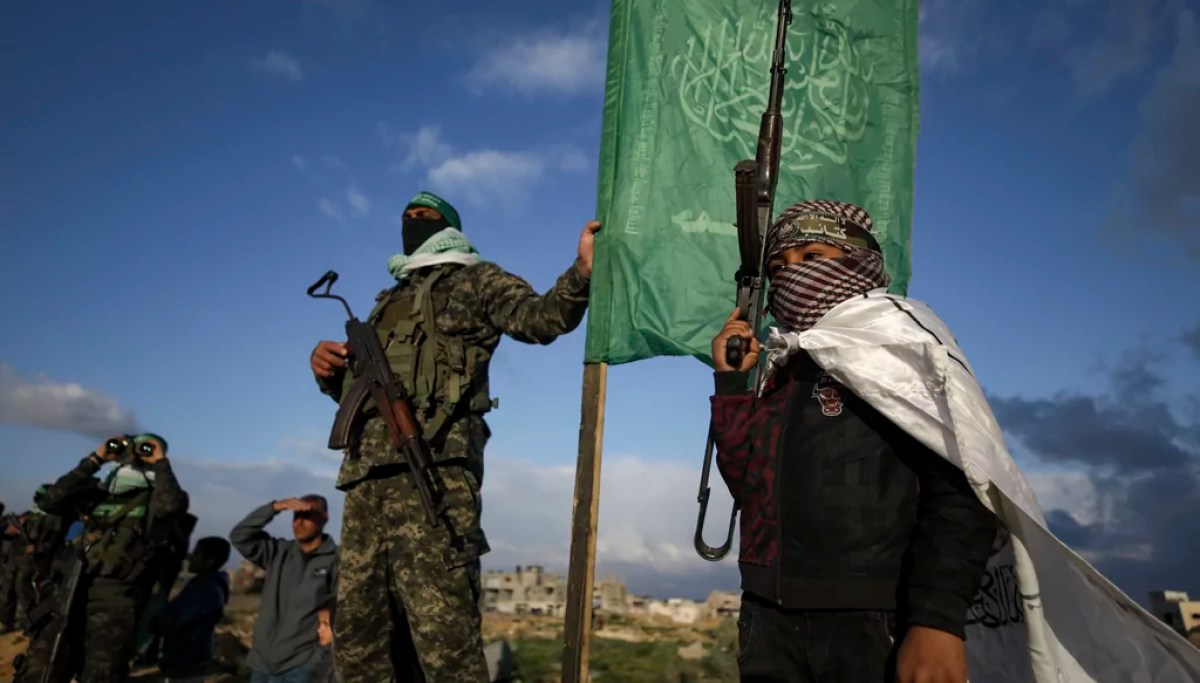
🔮 ABC News Australia’s new documentary, Ukraine’s Stolen Children, released this week, brought me to an image I couldn’t shake: a young child holding a rifle, smiling proudly.
🔮 Watching coverage of the flight, I saw a network bring a pilot into a simulator to explain how an aircraft could survive such a dramatic descent and still land safely.
🔮 And it requires the courage to recognize that even while America reaches out its hand to build a more peaceful world, there will still be people determined to strike it.
🔮 They wanted to know what more they could learn about Israel and the Jewish people.
🔮 Their actions offer something every generation needs: evidence that conscience can become courage, and that one person’s decision can change the future of people they may never meet.
🔮 It does not measure the strength of Israel’s relationships, the number of countries willing to engage privately, or the diplomatic work continuing after the cameras move on.
🔮 My objection is straightforward: Governments that demand explanations from Israel should be willing to sit through one.
🔮 What voters cannot always know is how much it will matter, or how far its effects will reach across generations and national borders.
🔮 Behind the announcement is the memory of their 21-year-old son, the life he chose, and the future they will always wish he had.
Also by Ariella Noveck
Nothing else under this byline is closely related to this article, so these are simply their most recent.
All 17 articles by Ariella Noveck →

Topics

Gaza Hamas Russia Russian Ukrainian

Subjects

Hamas ORG · 5× Russia GPE · 4× Ukrainian NORP · 4× Gaza GPE · 2× Russian NORP · 2× U.N. ORG · 2× ABC News ORG · 1× Australia GPE · 1× The United Nations ORG · 1× Ukraine GPE · 1×

Narrative

It places the weapon inside a larger system concerned not only with training a child to handle it, but with conditioning a developing mind to understand what that weapon represents, where loyalty belongs, and who has been designated the enemy.
framing: assertive · carried by 1 article(s) · first seen 2026-10-04
🔮 ABC News Australia’s new documentary, Ukraine’s Stolen Children, released this week, brought me to an image I couldn’t shake: a young child holding a rifle, smiling proudly.
2026-10-04 · Washington Examiner
Russia’s stolen children are being taught to kill — using Hamas’s playbook · assertive framing

Claims (46 extracted, 5 hedged)

ABC News Australia’s new documentary, Ukraine’s Stolen Children, released this week, brought me to an image I couldn’t shake: a young child holding a rifle, smiling proudly. asserted
I → steal → rifle
I had seen it before. asserted
I → see → it
What was impossible to ignore, however, was the similarity in what children were being taught and the methods being used to teach them. asserted
children → ignore → them
The documentary examines Russia’s removal of Ukrainian children, including children taken from orphanages, care facilities, and camps. asserted
documentary → examine → orphanages
More than 20,000 have been identified by Ukrainian authorities as deported or forcibly displaced, although the true number may be considerably higher. uncertain
number → identify → authorities
Yet it was what happens to some of these children afterward that caught my attention. asserted
that → happen → attention
International investigators have documented efforts to absorb Ukrainian children into Russian society through citizenship, adoption, and what authorities call “patriotic education.” asserted
authorities → document → what
That education is not confined to flags, songs, and lessons about national history. asserted
education → confine → history
The United Nations has documented military drills and practical weapons training for older children, alongside programs intended to reinforce Russian national identity and loyalty. asserted
Nations → document → identity
That context makes the rifle in the documentary more than a disturbing image. asserted
rifle → make → image
It places the weapon inside a larger system concerned not only with training a child to handle it, but with conditioning a developing mind to understand what that weapon represents, where loyalty belongs, and who has been designated the enemy. asserted
who → place → what
That is also why the footage immediately made me think about Gaza. asserted
me → make → Gaza
For years, Hamas has exposed children to its own version of ideological and military preparation. asserted
Hamas → expose → preparation
The U.N. has documented Hamas’s al-Qassam Brigades and Palestinian Islamic Jihad’s al-Quds Brigades organizing summer camps where children were exposed to military content and activities. asserted
children → document → content
Previous U.N. reporting described weeklong camps involving children as young as 14, while earlier reporting said Hamas’s military wing had reportedly operated a military camp involving 25,000 children and young people between the ages of 15 and 21. uncertain
wing → describe → 15
The numbers matter, but the pattern matters more. asserted
pattern → matter → ?
Children are placed in military settings and exposed to rifles, drills, and ideological instruction. asserted
Children → place → rifles
Weapons are introduced not simply as instruments of violence, but alongside messages about identity, loyalty, and struggle. asserted
Weapons → introduce → identity
This is where the psychological component becomes as important as the military one. asserted
component → become → one
Teaching a child how to hold a rifle is one thing. asserted
Teaching → teach → rifle
Teaching him from a young age what that rifle represents, who his enemy is, and why violence against that enemy should be associated with loyalty, duty, or pride goes considerably further. asserted
violence → teach → loyalty
The ideological conditioning taking place alongside it may ultimately be more consequential. uncertain
conditioning → take → it
That was the connection I could not shake while watching the documentary. uncertain
I → shake → documentary
Russia and Hamas are not the same, nor do they need to be for the comparison to matter. asserted
comparison → need → ?
What is recognizable is the method: reach children young, surround them with an ideology, define the enemy, and make military preparation part of how they understand their place in that struggle. asserted
they → reach → struggle
The younger the child, the more disturbing that process becomes. asserted
process → become → ?
It is an effort to shape how a developing mind understands history, identity, allegiance, and the people it has been taught to regard as enemies before that child has the maturity or independence to interrogate those lessons for himself. asserted
child → shape → himself
Russia’s treatment of Ukrainian children adds another dimension. asserted
treatment → add → dimension
Some have been removed from the country and communities that formed their identities in the first place. asserted
that → remove → place
They can then encounter a different version of history, a new national identity, and, increasingly, military preparation. asserted
They → encounter → history
Calling this “patriotic education” does not make the implications any less disturbing. asserted
implications → call → this
It also raises a question I cannot understand why we are not asking more loudly: Where is the outrage? asserted
outrage → raise → question
People have filled streets, university campuses, and public squares around the world over causes they believe demand moral attention. asserted
they → fill → attention
Surely deliberately preparing children for warfare should produce outrage, too. asserted
preparing → prepare → outrage
Where is the international movement against putting rifles into children’s hands? asserted
movement → put → hands
Why does the world become so loud when discussing what war does to children, yet seem comparatively quiet about those deliberately preparing children for war? asserted
war → become → war
People should, no pun intended, be up in arms about it. asserted
pun → intend → it
Because this is not simply about a photograph of a child carrying a rifle. asserted
this → carry → rifle
The weapon is what we can see. asserted
we → see → what
The ideological conditioning taking place alongside it may ultimately be more consequential. uncertain
conditioning → take → it
…and 6 more, not listed.

💬Give feedback
🕘History 🎫Support