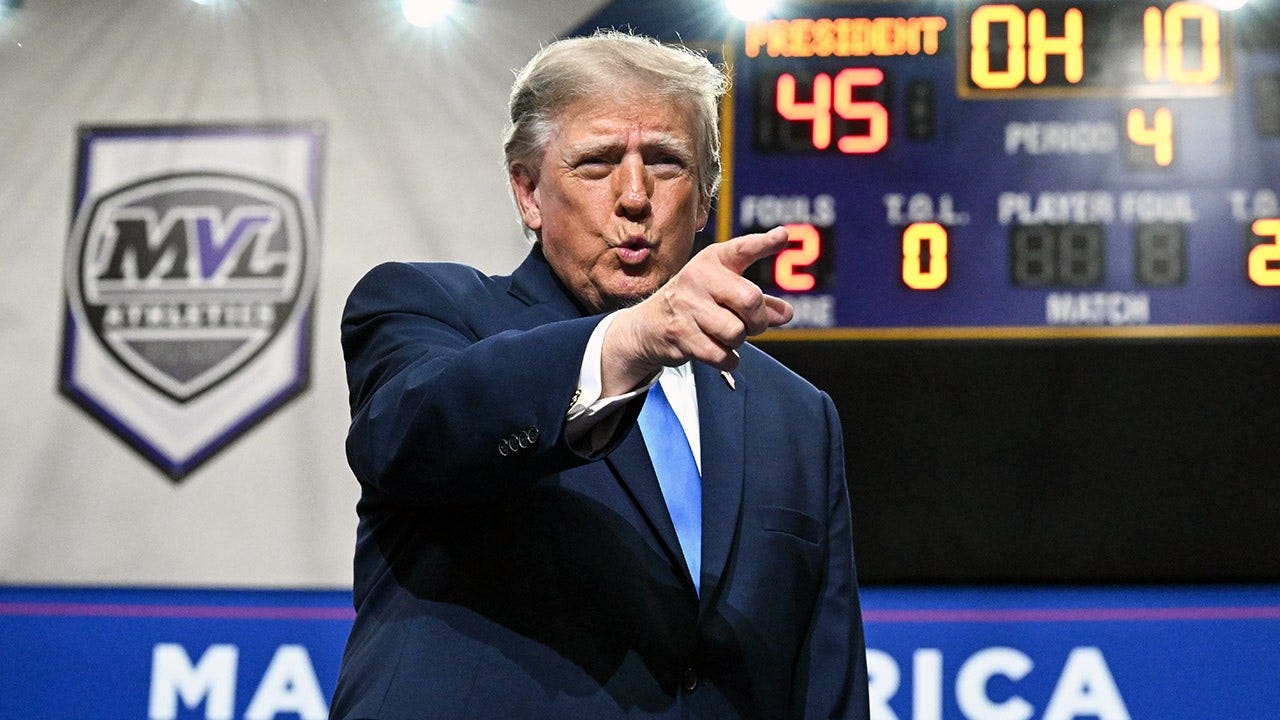
Photo via The Guardian

Republicans say they hate communists. So why do they like Donald Trump?

Read the original at The Guardian ↗
Cite

Porter, E. (2026, October 4). Republicans say they hate communists. So why do they like Donald Trump? The Guardian. https://www.theguardian.com/business/2026/oct/04/trump-communism-republicans

Dated when The Aporia collected the article, usually within hours of publication. Check the original for its exact date and byline.

The Guardian · collected 2026-10-04 · by Eduardo Porter

Quick Summary

Republicans are using fear of communism to secure votes in the upcoming midterm elections, with Donald Trump promising to defeat communism. However, data from the V-Dem project shows that under Trump's second term, state control over the US economy has increased significantly compared to previous years. From 2002 to 2024, the U.S. ranked among countries with minimal state ownership of the economy; however, by November last year, it had spent over $10 billion on stakes in various companies deemed essential for national security. This shift challenges Trump's image as an opponent of government control over industries and highlights a stark contrast to his predecessors' market-focused policies.
Written by AI on 2026-10-04, from this article's own text only (the story summary below draws on all the coverage).

AI analysis

Story summary

Eduardo Porter writes in The Guardian that Republicans are using fear of communism to win support despite Donald Trump's actions aligning more closely with state control than typical leftist policies. In recent TV ads, Trump has promised to defeat communism, playing into the Republican narrative that Democrats are pushing America towards socialism. However, data from the V-Dem project shows an increase in state ownership of the economy since 2002, largely due to actions by Trump rather than left-wing policies. This suggests that while Republicans are successfully mobilizing fear of communism among Americans ahead of the midterm elections, it may be based on a misdirection, as the actual shift towards a command and control economy is more closely tied to Trump's leadership.

Written for “Donald Trump And Communism Concerns” on 2026-11-02, grounded in this article and the 0 other(s) covering the same event.

Story

📰 Donald Trump And Communism Concerns
Politics · 1 article(s) covering the same event.

Compared with similar articles

This article reads leans left and hedges 13% of its claims. Each row says how that neighbour differs.
The Bulwark
⚖️ Leans left Hedges 1 of 12 claims
“The articles discuss different aspects related to Republican and Trump supporters but describe distinct events with varying focuses and dates.”
Fox News
⚖️ Leans strongly right further right than this Hedges 0 of 22 claims Outlet record 69/100
“The articles describe different parts of a broader campaign effort: Article A discusses Republicans' strategy and Trump's ads, while Article B reports on a specific rally in Dayton, Ohio.”
Fox News
Hedges 1 of 18 claims Outlet record 69/100
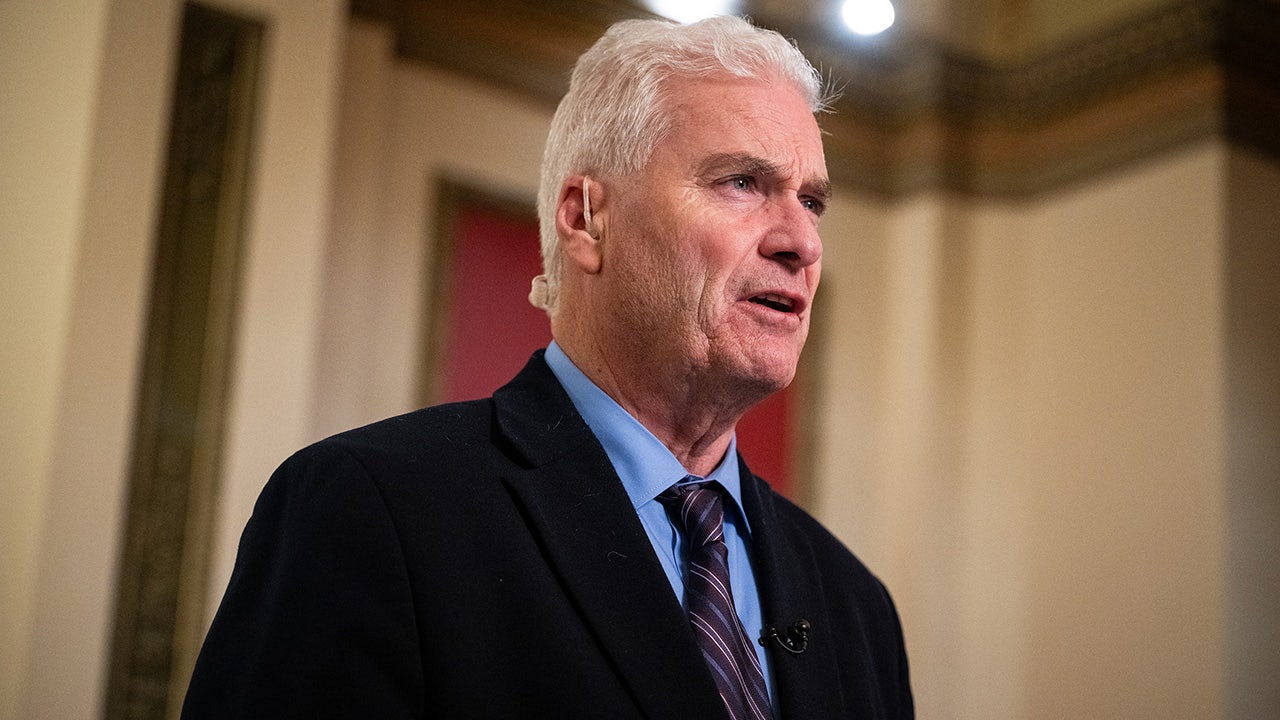
“The articles discuss different political figures (Trump vs. Tom Emmer) and their reactions to left-leaning Democrats, without clearly reporting on the exact same incident.”
How this article was measured signals, leaning charts, publisher record, byline, topics and claims

Signals How these are calculated →

Claims extracted
53
sentences that state something as happening or true
Uncertain
13%
7 of 53 hedged ("reportedly", "may", "according to")
Leaning
Leans left
of the writing, not the subject · beta estimate
Publisher signals
66/100
The Guardian's corrections and hedging, across everything collected from it. Not a measure of accuracy.
Outlets on this story
1
Politics
Same framing elsewhere
1
articles that frame the event the way this one does
Analyzed 2026-10-04 · how these are computed

How this is being covered How these are calculated →

Article leaning vs. publisher reliability
Source leaning vs. consistency

Publisher

The Guardian · 1894 article(s) · 6 correction(s) detected
Running correction rate · 6 correction(s)

Who wrote this

Eduardo Porter
7 article(s) here · 1 carrying a prediction
🔮 Under the radar, the world is marching toward an economic war of potentially epic proportions, one that, history suggests, could well spill over into the real thing.
🔮 Taylor may have committed crimes worse than social security fraud.
🔮 Maybe Trump can somehow dupe the Maga base into believing that “we’re growing at a faster rate than we’ve ever grown before.”
🔮 Americans will never accept the Democratic party’s slide to the left, or so desperate Republicans are hoping.
🔮 The Stanford ethicist Rob Reich was once invited to a dinner organized by a Silicon Valley mogul to discuss what a state designed to maximize science and tech powered by commercial models might look like.
🔮 Warsh’s resolve – raising rates just a few weeks before elections that will determine whether Republicans retain control of Congress – appeared even more resolute in the face of a veiled threat from White House economic adviser Kevin Hassett, who pointed out to his chums on Fox that “if you want an independent Fed, then one thing the Fed does is it stays out of the way of elections”.
🔮 It goes without saying that the new detective will not restore factory jobs to Toledo, Hickory or Phoenix.
Also by Eduardo Porter
Nothing else under this byline is closely related to this article, so these are simply their most recent.
All 7 articles by Eduardo Porter →

Topics

Americans China Democratic Republicans Washington

Subjects

Trump PERSON · 8× Republicans NORP · 3× Washington GPE · 3× American NORP · 2× China GPE · 2× Congress ORG · 2× Americans NORP · 1× Democratic NORP · 1× New York City GPE · 1× Zohran Mamdani’s PERSON · 1×

Narrative

Marx proposes that his tome The 18th Brumaire of Louis Bonaparte, about the 1851 coup that brought Louis-Napoléon Bonaparte to power in France, was meant to “demonstrate how the class struggle in France created circumstances and relationships that made it possible for a grotesque mediocrity to play a hero’s part”.
framing: assertive · carried by 1 article(s) · first seen 2026-10-04
🔮 Americans will never accept the Democratic party’s slide to the left, or so desperate Republicans are hoping.
2026-10-04 · The Guardian
Republicans say they hate communists. So why do they like Donald Trump? · assertive framing

Claims (53 extracted, 7 hedged)

Americans will never accept the Democratic party’s slide to the left, or so desperate Republicans are hoping. asserted
Republicans → accept → left
With the midterm elections fast upon us, Zohran Mamdani’s promise of a few city-run bodegas in New York City will scare the bejeezus out of middle America. asserted
promise → fast → America
Disgust over the democratic socialists’ unicorn-and-puppy promises of a world without capitalism will keep the Republicans in power. asserted
Disgust → keep → power
Leading the charge against the new reds-under-the-bed is Donald Trump. asserted
Trump → lead → bed
“Together, we will defeat communism,” Trump promised in his recent TV ads. asserted
Trump → defeat → ads
Trump’s supporters might be surprised to discover that the United States is, indeed, sliding in the direction of a command and control economy. uncertain
States → discover → economy
But the state takeover of the means of production is not being driven by the left. asserted
takeover → drive → left
The grab for the US’s productive resources is the project of none other than Trump – who, it’s a fair guess, has never read Lenin. asserted
it → ’ → Lenin
The latest evidence comes in data crunched by the V-Dem project in Sweden, which measures the erosion of democracy around the world. asserted
which → come → world
It built a scale to gauge “state ownership of the economy”. asserted
It → build → economy
As noted by Cullen Hendrix from the Peterson Institute for International Economics, from 2002 to 2024, the US ranked among the four countries with the least state control. asserted
US → note → control
In 2025, the first year of Trump’s second term, it dropped from second place to 16th. asserted
it → drop → 16th
By November of last year, the Trump administration had spent more than $10bn taking stakes in companies he deemed essential for national security, from Intel to a range of ventures mining for critical minerals. asserted
he → spend → minerals
It also acquired an option to take a stake in Westinghouse, which makes nuclear reactors. asserted
which → acquire → reactors
And it blackmailed Nippon Steel into granting Trump’s Washington a “golden share” in exchange for the go-ahead to purchase US Steel. asserted
it → blackmail → Steel
, the US is not even close to flirting with the flavor of socialism favored by the Soviet Union and its satellites in the second half of the 20th century. asserted
US → flirt → century
Government-run companies are a standard feature in many market economies. asserted
companies → run → economies
The Norwegian government has a majority stake in its massive oil company, which puts the country in 18th place. asserted
which → have → place
Even “communist” countries are pretty capitalist: private companies contribute 60% of China’s GDP. asserted
companies → contribute → GDP
And in a geopolitical landscape shaped by competition with China, there is a reasonable case to be made for Washington to take equity stakes in industries that are critical for American leadership and security, and which might not develop autonomously in competition with rivals heavily subsidized by Beijing. Yet Trump’s wanton lunge for private assets lacks the discipline required for this kind of strategic positioning. uncertain
lunge → shape → positioning
The president’s statist leanings mark a dramatic break with the market-focused presidencies of his recent predecessors, Democrat and Republican. asserted
leanings → mark → predecessors
The question is, what motivates him? asserted
what → motivate → him
His appetites are embedded in a body of thought that is skeptical, if not outright hostile, towards essential building blocks of the global market economy. asserted
that → embed → economy
He has pushed back against globalization since his first term in office, seemingly drawn to the Marxist-inspired dependency theory, which washed across Latin America in the 1960s and 1970s proposing protectionism and state industrial policy as a path to economic development. asserted
which → push → development
His lust to control the economy is there for all to see. asserted
all → control → economy
Though the supreme court already slapped down his attempt to take over trade policy from Congress, he is still threatening to “STOP TRADING WITH COUNTRIES WITH WHICH WE HAVE A DEFICIT”. asserted
WE → slap → DEFICIT
His promise to give $5,000 to every American if Republicans maintain control of Congress in November’s elections underscores how he views the state’s coffers as his private piggy bank. asserted
he → give → bank
Even his commie-bashing ads were paid for by taxpayer dollars. asserted
ads → bash → dollars
Still, he clearly has no interest in the dictatorship of the proletariat, caring little if at all for the fate of the downtrodden. asserted
he → have → downtrodden
His preferred flavor of redistribution takes from those on the bottom to give to those on the top. asserted
flavor → prefer → top
If anything, Trump reminds us that socialism is not the only ideological justification for state projects to take control over resources and wealth. asserted
projects → remind → resources
Watching the US president bow to Xi Jinping last week, it’s tempting to think that Trump wants to emulate China’s leader. asserted
Trump → watch → leader
Xi gets to rule unimpeded over more than one billion Chinese. asserted
Xi → get → Chinese
He gets to shape China’s society and economy at will – purging this rival, raising that sycophant to power. asserted
He → get → power
But Xi’s China is too disciplined for Trump. asserted
China → discipline → Trump
The Chinese leader still relies on hordes of technocrats to execute a coherent strategy aimed to achieve technological superiority. asserted
leader → rely → superiority
The US president doesn’t have the attention span for this kind of thing. asserted
president → have → thing
Rather, Trump’s model might be Vladimir Putin, who rules Russia like a fiefdom. uncertain
who → rule → fiefdom
Or maybe one of those dictators the US used to support in Latin America during the cold war: Haiti’s Papa Doc Duvalier or Anastasio Somoza in Nicaragua, who saw government as a tool to enrich their families and cement dynasties in power. asserted
who → use → power
If nothing else, Trump’s dealings with crypto suggest he views his administration as a road to family riches. asserted
he → suggest → riches
…and 13 more, not listed.

💬Give feedback
🕘History 🎫Support