Tracy Menzies had been at war with slugs in her backyard garden as they’ve always managed to beat her to the harvest, but not this year.
asserted
they → manage → harvest
The strawberries in her garden this season turned out to be “absolutely beautiful.”
asserted
strawberries → turn → garden
It turns out the slugs are facing a formidable foe — the invasive European wall lizard, which experts say are spreading fast and eating everything in their path, from insects and spiders to slugs.
asserted
experts → turn → slugs
Menzies, who lives near the Gorge Waterway in Saanich, said she started noticing the lizards in her yard in growing numbers a few months ago, darting through her garden and scurrying under foot.
asserted
she → live → foot
“I don’t have a slug in my yard, so I can only assume, given the start of me seeing the wall lizards, that they’re feasting on the slugs,” said Menzies.
asserted
Menzies → have → slugs
Most of them are just a few inches long, and many are even smaller, she said.
asserted
she → say → them
“However, I have seen them in North Saanich to be at least eight- to 10-inches, and I’ve seen them in crawl spaces,” said Menzies, who is a real estate agent.
asserted
who → see → spaces
Gavin Hanke, curator of vertebrate zoology at the Royal BC Museum, said it’s estimated that there are about 800,000 to a million European wall lizards in B.C., mostly on Vancouver Island, and they have spread as far as Campbell River, 260 kilometres north of Victoria.
asserted
they → say → Victoria
He worries their rapid spread could have a “serious impact” on the environment.
uncertain
spread → worry → environment
“They’re spreading fast and furious, and we’re stuck with them,” said Hanke.
asserted
Hanke → spread → them
“We will have to learn how to live with them.”
asserted
We → have → them
“The unfortunate thing is these lizards are impacting invertebrate populations.
asserted
lizards → impact → populations
They do kill baby garter snakes.
asserted
They → kill → snakes
Every lizard eating something every day is really impacting the insects and spiders on Vancouver Island,” he added.
asserted
he → eat → Island
Biologist Nicholas Wong, science and operations manager with the Invasive Species Council of BC, said there aren’t any official management programs to oversee the population growth.
asserted
Wong → say → growth
Wong said the lizards are “competing with some of our native lizards for food and space as well.”
asserted
lizards → say → food
Hanke, who lives in Victoria, said the lizards reached his garden around 2019, when he saw a few that year, but they have surged to about 100 lizards thriving in his front and back yards.
asserted
they → live → yards
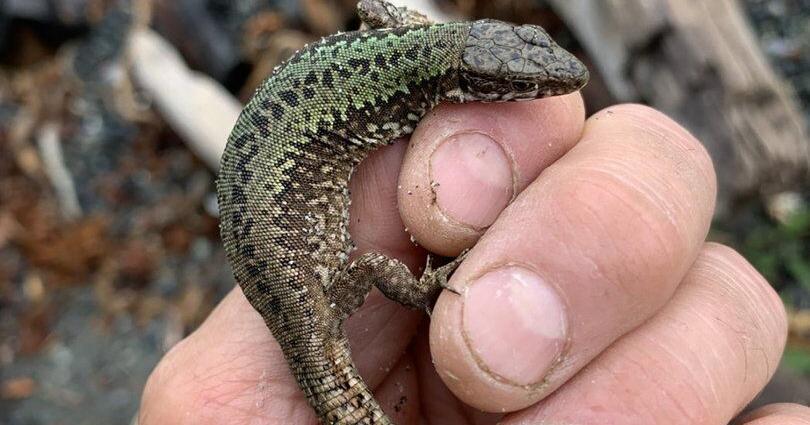
Male lizards have black and green marks on their bodies with a whip-like tail, while the smaller females are brassy with a wash of green over them.
asserted
females → have → them
Hanke said the population explosion in B.C. originated from an intentional release of 12 lizards in 1970 after a roadside zoo, Rudy’s Pet Park, in Central Saanich closed following the death of its owner.
asserted
zoo → say → owner
Southern Vancouver Island’s cooler winters mixed with its hot, dry summers make these lizards from Italy feel at home.
asserted
lizards → mix → home
The Invasive Species Council of BC said they typically spread at a rate of about 160 kilometres every year, travelling on vehicles, firewood and building materials to help expand their footprint.
asserted
they → say → footprint
“I do know someone who cut open a bale of hay to use for mulch in their garden, and five lizards came out of that,” said Hanke.
asserted
Hanke → know → that
The lizards are omnivores, feeding on a variety of insects, spiders and other invertebrates.
asserted
lizards → feed → insects
“If a fig falls to the ground and it’s ripe, they will eat that,” said Hanke.
asserted
Hanke → fall → that
Although the wall lizards helped to safeguard her strawberries this year, Menzies said she’s has concerns about their spread.
asserted
she → help → spread
“I don’t want to exterminate them.
asserted
I → want → them
But I also don’t want them in my house,” she said.
asserted
she → want → house
“Now, I haven’t seen one in my house yet, but the first time I do see one in my house, I’m probably going to feel differently about killing them.”
asserted
I → see → them
Hanke said the best way to get rid of the lizards is to have a “really boring” garden.
asserted
way → say → garden
“A very plain, closely cut lawn, that’s the kind of habitat they don’t want,” said Hanke.
asserted
Hanke → cut → habitat
Wong said the tricky thing is that if you try and remove them from your backyard and your neighbours don’t, they’ll just re-invade from your neighbours’ property.
asserted
they → say → property
“It needs to be quite a collective effort in the location,” said Wong.
asserted
Wong → need → location
Hanke said the reality is it’s too late to exterminate the lizards.
asserted
it → say → lizards
“If we were gonna wipe them out, we should have done it probably about 1972, 1973, because once they were outside of that initial release point, it’s impossible,” he said.
asserted
he → go → point
He said humans have done a lot of damage to our ecosystem, and ironically, these lizards thrive in manufactured environments.
asserted
lizards → say → environments
“It’s no surprise that, as an invasive, they can just occupy any sort of habitat that’s available, as long as we’ve messed up the original habitat that was available,” he said.
asserted
he → ’ → habitat
“So, we’re to blame, and we’re also to blame for bringing them here.”
asserted
we → ’re → them
Hanke said people should not catch the lizards and bring them to new locations because there is a risk they could spread further south.
uncertain
they → say → locations
“I think it’s a matter of years before we see them in Washington State.”
asserted
we → think → State
This report by The Canadian Press was first published Oct. 4, 2026.
asserted
report → publish → Press
 The Aporia