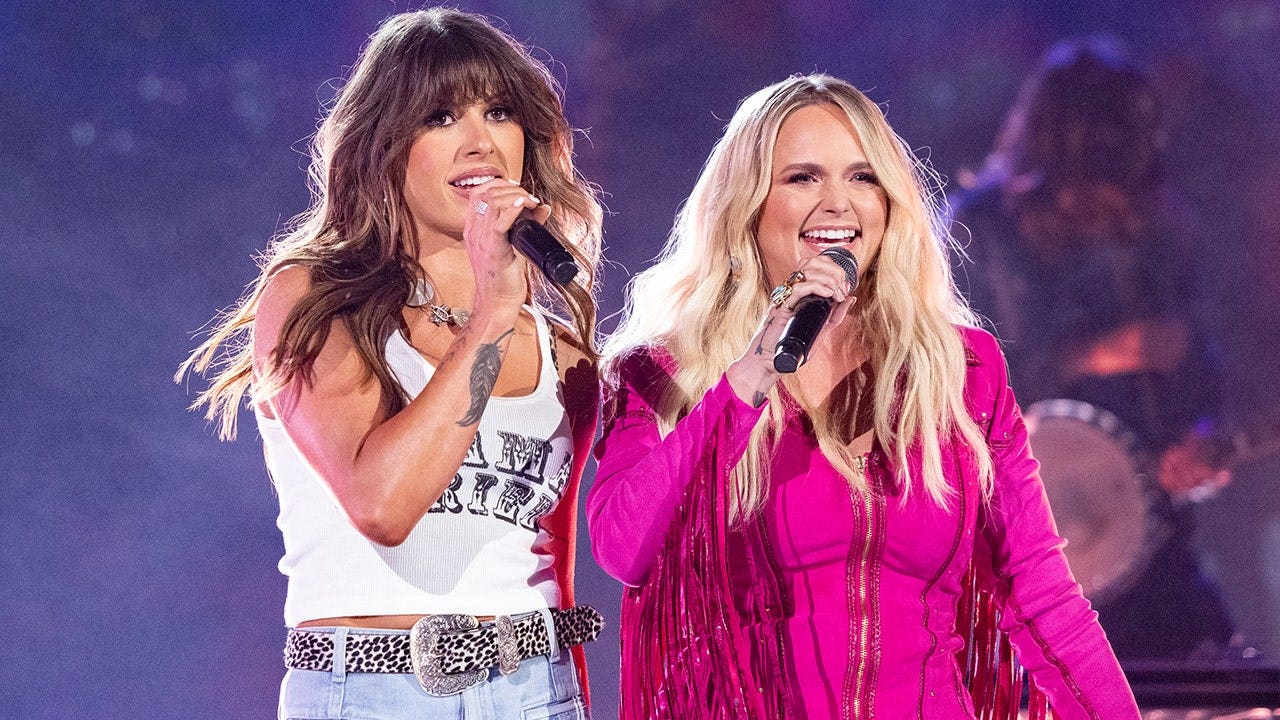
From the moment I sit down at my desk at 7:30 a.m. until the dogs tell me its tools down at around 5, I listen to, analyze, evaluate, research, and write about music.
asserted
I → sit → music
My job requires me to listen to music professionally.
asserted
job → require → music
So when I encountered a story about Ella Langley, a singer I’d never heard of, setting a new record for having longest-running hit single in this history of the Billboard Hot 100 charts, I was confused.
asserted
I → encounter → charts
Did my music journalism have a giant blind spot?
asserted
journalism → have → spot
Was I failing at my job?
asserted
I → fail → job
How was it possible that a song that had been number one on Billboard for almost half a year not graced my ears?
asserted
that → grace → ears
At first, I chalked it up to being a country song, and country is just not my jam.
asserted
country → chalk → it
But that shouldn’t matter.
asserted
that → matter → ?
To be number one on Billboard is to have the hittiest of hit songs, regardless of genre.
asserted
be → have → genre
I should have heard Choosin’ Texas floating through the air on some radio station. Or on TV. Or at the supermarket.
asserted
Choosin → hear → supermarket
Yet when I clicked on the YouTube video, I heard it for the very first time.
asserted
I → click → time
This required its own analysis, evaluation, and research.
asserted
This → require → analysis
And the answer turned out to be very simple.
asserted
answer → turn → ?
Mainstream music ain’t what it used to be.
asserted
it → ai → what
In the era before the internet, the amount of music we got to hear was tightly controlled by record labels, radio stations, record stores, music magazines and video channels.
asserted
we → get → labels
They were all-powerful filters, the cultural gatekeepers, that determined what we got to hear.
asserted
we → determine → what
And even if your song managed to be approved by all of them, competition for attention was fierce.
asserted
competition → manage → attention
Billboard became the de facto scorekeeper for music in North America.
asserted
Billboard → become → America
In the old days, the magazine would call out to a panel of select record stores to find out which 45 RPM, seven-inch singles sold the most over the previous seven days.
asserted
singles → call → days
They’d do the same with a panel of radio stations: which songs were played the most on the air?
asserted
songs → do → air
This data was tabulated, resulting in a statistically relevant ranking of the most popular songs in America.
asserted
data → tabulate → America
Anyone who’s ever listened to American Top 40 Casey Kasem knows that.
asserted
who → listen → that
We heard these songs everywhere, largely through radio, which was our primary source of music discovery.
asserted
which → hear → discovery
Mainstream music was so ubiquitous that we couldn’t escape it.
asserted
we → escape → it
Because we couldn’t skip the song that was coming at us over the radio through through our TV screens on MuchMusic, we ended up knowing all the words to even the songs we hated.
asserted
we → skip → songs
The hits were heard were everywhere.
asserted
hits → hear → ?
I can still sing along to You’re the One That I Want by Olivia Newton-John and John Travolta because during the summer of 1978, it was played roughly every hour and 15 minutes on the AM radio perched above the grill at the cheeseburger place where I worked that summer.
asserted
I → sing → place
A number one song actually meant that it was the number one, most-heard and most-purchased and, ergo, most popular song in the land Therefore, having a long run at number one was rare.
asserted
having → mean → number
It was a big deal in 1995 when Mariah Carey and Boyz II Men stayed at the top for 16 weeks with One Sweet Day, a stretch many thought would never be broken.
asserted
many → stay → Day
But in the digital era, the Hot 100’s methodology has changed, Sales of 45s are no longer relevant.
asserted
Sales → change → 45s
And while radio airplay is still important, streaming numbers factor in heavily.
asserted
numbers → factor → ?
Thanks to the way things are weighted, number one songs started to get number one-ier.
asserted
songs → weight → number
Despacito by Luis Fonsi and Daddy Yankee (and featuring Justin Bieber) tied Mariah and Boys II Men in 2017.
asserted
Despacito → feature → 2017
Then came Lil Nas X and Billy Ray Cyrus who held down the top spot with Old Town Road for an incredible 19 weeks in 2019.
asserted
who → come → 2019
But since then — and as streaming data became more important under Billboard’s rules — longer-standing hits kept coming.
asserted
hits → become → rules
Last Night from Morgan Wallen stuck around for 16 weeks in 2022.
asserted
Night → stick → 2022
Then A Bar Song (Tipsy) by Shaboozey tied Old Town Road at 19 weeks in 2024.
asserted
Song → tie → 2024
Which brings us to Choosin’ Texas, which reached the top for the first time since February of this year.
asserted
which → bring → year
It’s now October.
asserted
It → ’ → ?
This new Billboard methodology has also resulted in weird situations like the one we saw for the chart ending May 30 of this year, where Drake songs occupied 42 of the 100 slots.
uncertain
songs → result → slots
…and 13 more, not listed.
 The Aporia