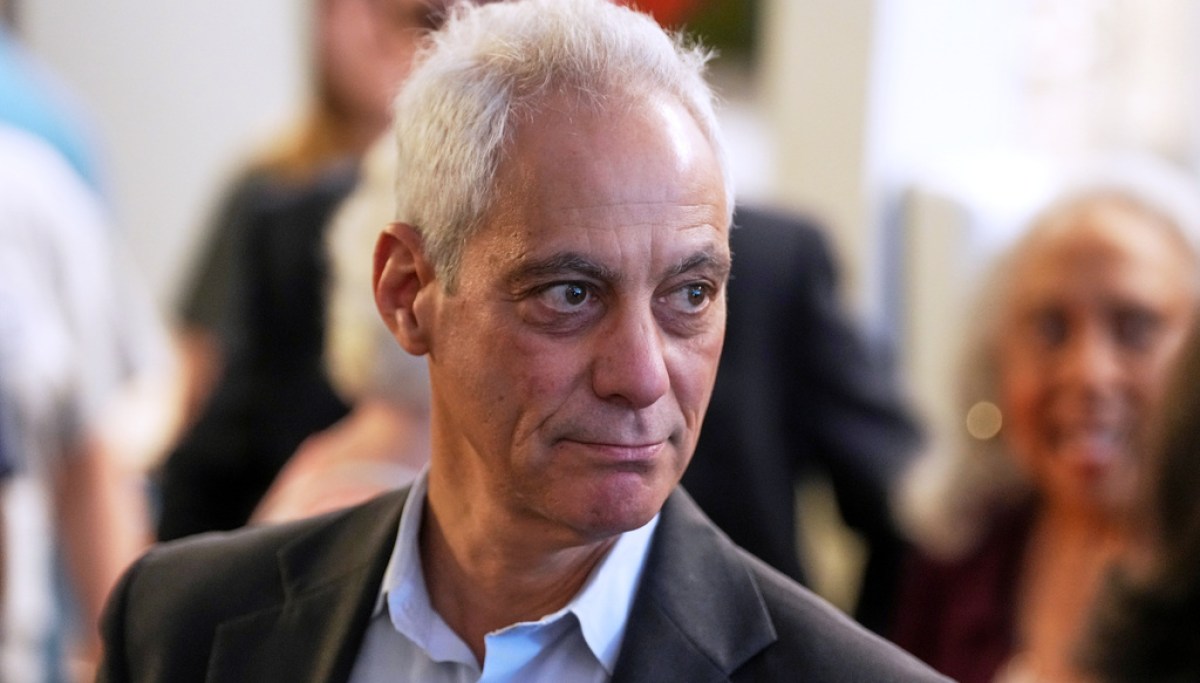
Former Chicago Mayor Rahm Emanuel said the United States is ready for a Jewish president but emphasized his religion should not be an issue for voters who feel leadership has “lost faith” in them.
asserted
leadership → say → them
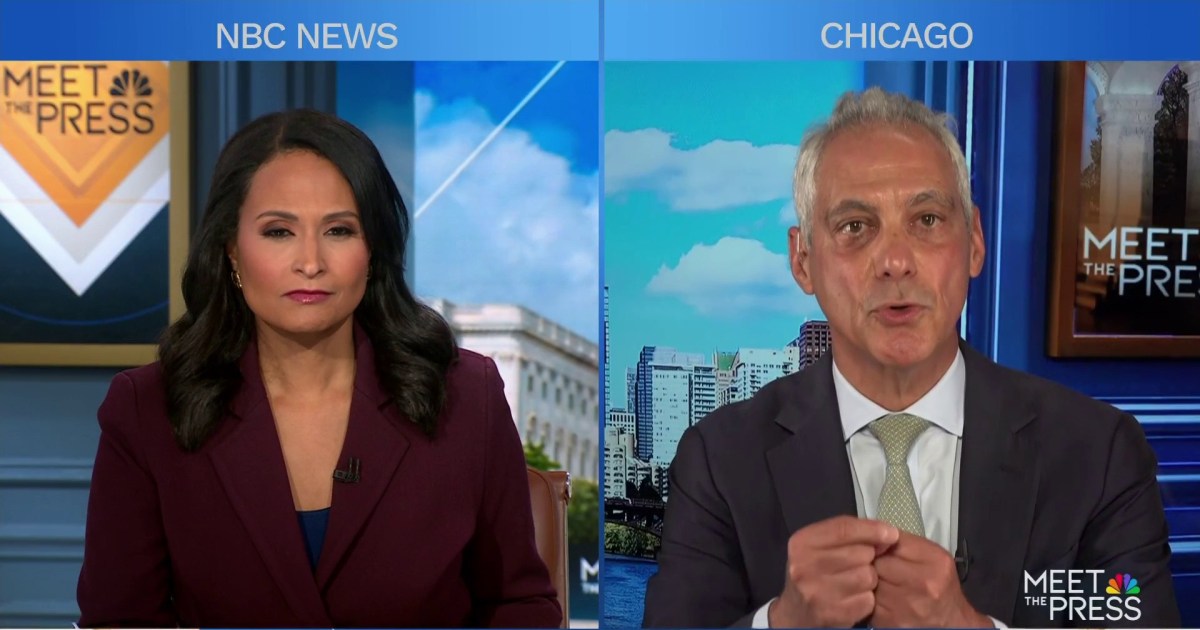
In an interview with Kristen Welker on Meet the Press, Emanuel, who is Jewish, was pressed on the Democratic Party’s source of division in the midterm elections: support for Israel.
asserted
who → press → Israel
As he weighs a 2028 presidential bid, Emanuel was asked about the possibility of a Jewish president given the interparty divide over the Jewish state.
asserted
Emanuel → weigh → state
“My faith is not your problem,” Emanuel said.
asserted
Emanuel → say → ?
“The fact that Americans have lost faith in America — that’s our problem, and we should work on that.
asserted
we → lose → that
Because I’ve seen a generation of people with an emptiness who’ve lost faith in America because they think America lost faith with them.
asserted
America → see → them
That’s our problem.
asserted
That → ’ → ?
It’s not my faith.”
asserted
It → ’ → ?
Emanuel said that if being Jewish is an issue for voters, he does not need to be their candidate.
asserted
he → say → voters
“Now, to be frank: If my faith is a problem for you, don’t vote for me.
asserted
faith → vote → me
I’m not changing my faith,” he said before listing his accomplishments as mayor and in Congress, which he said were guided by faith.
asserted
he → change → faith
“I believe, as a member of Congress who got elected in a district with not many Jews, or a city with not many Jews, I believe in the goodness and the grace of the American people.
asserted
I → believe → people
But I will not change my faith.
asserted
I → change → faith
I worry about the fact that we have a generation of people who have lost faith in America, and they think America lost faith with them.
asserted
America → worry → them
And that, if I decide to run, that is our collective mission, is to restore that faith.
asserted
that → decide → faith
During the interview, Emanuel was asked about whether he believes Israel is committing genocide in Gaza, a claim that has been made by several Democrats, including Michigan Senate nominee Abdul el Sayed.
uncertain
that → ask → Sayed
Emanuel recalled his visits to Israel in 2009, while serving as then-President Barack Obama’s chief of staff, and as recently as this summer.
asserted
Emanuel → recall → summer
“I didn’t need a war to realize that the policies by the Israeli government were going to lead to perpetual conflict and also perpetual isolation,” he said.
asserted
he → need → conflict
“And back in June, I went to Israel to deliver a full speech about how to do peace, two-state solution, how to integrate the country economically into the region, and then to make sure that the United States taxpayers weren’t funding the defense budget for the state of Israel.
asserted
taxpayers → go → Israel
He also emphasized the importance of spreading focus to include other conflicts around the globe that are seeing large numbers of deaths.
asserted
that → emphasize → deaths
Otherwise, he said the word “genocide” is politicized.
asserted
genocide → say → ?
“Having one conversation about one country means you are politicizing a term that has huge historic moral implications,” Emanuel said.
asserted
Emanuel → have → implications
“I have no problem having that conversation, but the fact that a questioner ignores Sudan that’s happening today, ignores Ukraine that is happening today, tells me more about the question and the questioner that does tell the answer will reveal.
asserted
that → have → answer
As for el Sayed, who has been a staunch critic of Israel and opposed sending financial support to the Jewish state, Emanuel said he would still support the Michigan hopeful but noted that “my support is not important.
asserted
support → oppose → hopeful
It’s the Michigan voters’ support that’s important.”
asserted
that → ’ → ?
 The Aporia