Photo via Times of India

3 million face masks could be used to build 1 km road, Australian study finds

Read the original at Times of India ↗
Cite

TOI Science Desk. (2026, October 4). 3 million face masks could be used to build 1 km road, Australian study finds. Times of India. https://timesofindia.indiatimes.com/science/discovery/in-2021-australian-engineers-mixed-shredded-single-use-face-masks-with-processed-building-rubble-for-road-bases-the-material-met-engineering-standards-and-1-km-of-two-lane-road-could-use-about-3-million-masks/articleshow/134680086.cms

Dated when The Aporia collected the article, usually within hours of publication. Check the original for its exact date and byline.

Times of India · collected 2026-10-04 · by TOI Science Desk

Quick Summary

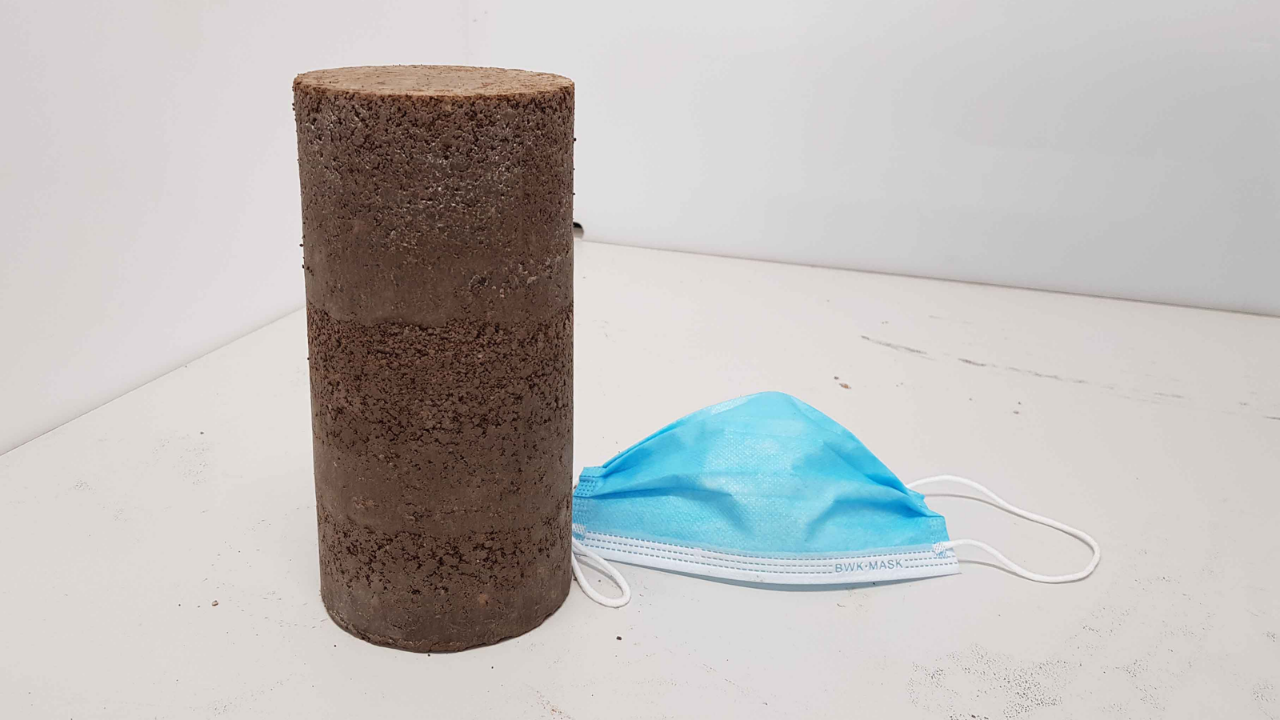
Engineers at RMIT University in Australia discovered that 3 million discarded face masks can be used to construct one kilometre of a two-lane road base when mixed with recycled concrete aggregate (RCA). The study, published in Science of the Total Environment, found this mixture met necessary engineering standards and could help reduce waste by removing about 93 tonnes from landfills. Conducted during the peak of mask usage due to the COVID-19 pandemic, the research aims to repurpose both face masks and construction debris for sustainable road building materials.
Written by AI on 2026-10-04, from this article's own text only (the story summary below draws on all the coverage).

AI analysis

Story summary

Engineers at RMIT University in Australia found that about 3 million single-use face masks, combined with recycled concrete aggregate (RCA), could be used to build one kilometer of a two-lane road. Published in *Science of the Total Environment*, this study aimed to address the waste generated by disposable masks during the COVID-19 pandemic and construction debris worldwide. The research, conducted in 2021, determined that using this mixture would divert about 93 tonnes of waste from landfills while meeting civil engineering specifications for road base and sub-base layers. This method could provide a sustainable solution to managing both mask waste and construction waste.

Written for “Face Masks In Road Construction” on 2026-10-31, grounded in this article and the 0 other(s) covering the same event.

Story

📰 Face Masks In Road Construction
Environment · 1 article(s) covering the same event.

Compared with similar articles

Nothing to compare against. No article is close enough to this one for the pipeline to have linked or judged the pair.
How this article was measured signals, leaning charts, publisher record, byline, topics and claims

Signals How these are calculated →

Claims extracted
27
sentences that state something as happening or true
Uncertain
30%
8 of 27 hedged ("reportedly", "may", "according to")
Leaning
not political
takes no side on a contested political question
Publisher signals
59/100
Times of India's corrections and hedging, across everything collected from it. Not a measure of accuracy.
Outlets on this story
1
Environment
Same framing elsewhere
1
articles that frame the event the way this one does
Analyzed 2026-10-04 · how these are computed

How this is being covered How these are calculated →

Article leaning vs. publisher reliability
Source leaning vs. consistency

Publisher

Times of India · 3798 article(s) · 2 correction(s) detected
Running correction rate · 2 correction(s)

Who wrote this

TOI Science Desk
295 article(s) here · 1 carrying a prediction
🔮 She explored whether an inexpensive device could capture airborne genetic material and support the detection of bacterial pathogens.
🔮 This control may help it maintain its orientation and move along a narrow path without losing its bearings.
🔮 The university says the sculpture will subsequently go on permanent display at its Turner Museum of Glass.
🔮 By bringing together nature, wellness facilities and educational spaces, Winter Garden aimed to create a setting where visitors could exercise, learn about nutrition and gardening, and spend time outdoors.
🔮 Also discovered was a 4,500-year-old humanoid idol, which archaeologists hope will help shed light on the cultural traditions of the region.
🔮 When garlic mustard spreads across the forest floor, other plants may struggle to obtain the resources they need to survive.
🔮 The train delay that could not have happened in 1841 The mystery originated in an account published anonymously in the scientific journal Nature on October 5, 1871.
🔮 A late-night snack may do more than add extra calories to your day.
🔮 The work offers a glimpse of such a future, where living organisms could become an active part of the robotic systems.
🔮 A centuries-old archaeological puzzle at Westminster Abbey in London may finally be nearing a resolution, with new research suggesting that a skeleton discovered inside a Roman stone coffin belonged to a medieval abbot rather than the Roman-era man named on its inscription.
Wire or desk byline, not an individual reporter.
Also by TOI Science Desk
Nothing else under this byline is closely related to this article, so these are simply their most recent.
All 295 articles by TOI Science Desk →

Topics

Australia RMIT RMIT University Science of the Total Environment

Subjects

RMIT ORG · 3× Australia GPE · 2× Mohammad Saberian PERSON · 1× RMIT University ORG · 1× Saberian PERSON · 1× Science of the Total Environment ORG · 1×

Narrative

The research was carried out in 2021, when the widespread use of disposable masks during the Covid-19 pandemic had created another stream of waste alongside the huge volumes of construction and demolition material generated worldwide.
framing: mixed · carried by 1 article(s) · first seen 2026-10-04
🔮 About 3 million single-use face masks could be used to build the base of a one-kilometre, two-lane road, according to research by engineers at Australia's RMIT University that explored a way to turn discarded masks and construction waste into road-building material.

Claims (27 extracted, 8 hedged)

About 3 million single-use face masks could be used to build the base of a one-kilometre, two-lane road, according to research by engineers at Australia's RMIT University that explored a way to turn discarded masks and construction waste into road-building material. uncertain
that → use → material
The researchers shredded single-use face masks and combined them with processed building rubble, known as recycled concrete aggregate (RCA). asserted
researchers → shred → aggregate
Tests showed that the resulting material met relevant civil engineering specifications for use in road base and sub-base layers. asserted
material → show → layers
The study, titled “ Repurposing of COVID-19 single-use face masks for pavements base/subbase,” published in Science of the Total Environment, found that using the material for one kilometre of a two-lane road could consume about 3 million masks while keeping 93 tonnes of waste out of landfill. uncertain
using → title → landfill
The research was carried out in 2021, when the widespread use of disposable masks during the Covid-19 pandemic had created another stream of waste alongside the huge volumes of construction and demolition material generated worldwide. asserted
use → carry → material
How the mask-and-rubble mixture works A road typically consists of four layers: subgrade, sub-base, base and the asphalt surface. asserted
road → work → layers
The lower layers need to withstand the pressure from heavy vehicles while retaining sufficient flexibility to minimise cracking. asserted
layers → need → cracking
RCA, produced from processed building rubble, can potentially be used in these layers. asserted
RCA → produce → layers
The RMIT researchers found that adding shredded face masks could improve the material's stiffness and strength while also providing a way to reuse two different waste streams. uncertain
adding → find → streams
The researchers identified a mixture containing 1% shredded face masks and 99% RCA as the optimum combination in their study. asserted
researchers → identify → study
The material was tested for properties including strength, deformation, stress, acid and water resistance and dynamic performance. asserted
material → test → strength
It met the relevant civil engineering requirements in the tests, suggesting the mixture could have potential as a road-base material. uncertain
mixture → meet → material
The study described its work as the first investigation into the potential use of disposable surgical face masks in civil construction. asserted
study → describe → construction
A waste problem on two fronts The research was driven partly by the enormous increase in personal protective equipment use during the pandemic. asserted
research → drive → pandemic
The study estimated that about 6.8 billion disposable face masks were being used around the world every day. asserted
masks → estimate → world
At the same time, construction, renovation and demolition activities account for about half of the waste generated each year globally. asserted
activities → account → waste
In Australia, around 3.15 million tonnes of recycled concrete aggregate was being added to stockpiles annually rather than reused, according to the study. The researchers therefore looked at whether one waste material could help improve another recycled material while keeping both out of landfill. uncertain
material → recycle → landfill
Dr Mohammad Saberian, the study's first author, said the findings showed that recycling single-use masks into roads was technically feasible and could provide engineering benefits. “This initial study looked at the feasibility of recycling single-use face masks into roads, and we were thrilled to find it not only works, but also delivers real engineering benefits,” Saberian said. uncertain
Saberian → say → benefits
He said further work was needed to address health and safety issues involved in handling used PPE on a larger scale and to determine whether other forms of protective equipment could also be recycled in construction. uncertain
forms → say → construction
The RMIT experiment used a small quantity of unused surgical masks. asserted
experiment → use → masks
That distinction is important because the researchers were testing the engineering properties of the material rather than demonstrating a large-scale system for collecting and processing contaminated PPE. asserted
researchers → test → PPE
The study noted that other research had examined methods for disinfecting and sterilising used masks, including techniques capable of killing viruses. asserted
research → note → viruses
However, the RMIT work said further research would be needed to address the health and safety risks of recycling used PPE at scale. asserted
research → say → scale
The researchers had also explored another possible application for shredded disposable masks, using them as an aggregate in concrete. asserted
researchers → explore → concrete
Those preliminary findings were described as promising. asserted
findings → describe → ?
Professor Jie Li, who leads the RMIT School of Engineering research team, said the idea emerged after researchers saw discarded masks littering local streets. asserted
masks → lead → streets
The approach reflects a broader circular-economy concept: rather than treating discarded masks and construction rubble solely as waste, both materials could potentially become inputs for new construction products. For now, however, the road study remains an experimental demonstration of feasibility rather than evidence that mask-based road materials are ready for widespread use. uncertain
materials → reflect → use

💬Give feedback
🕘History 🎫Support